

Iran after the agreement: Stability or transformation ahead?
As external confrontation recedes, Iran enters a decisive phase where internal pressures, governance choices, and public demands may shape its future more than foreign conflict.




 Messenger
 Whatsapp
 Threads
 Email
Email
 Print
Print
 X
X
 Facebook
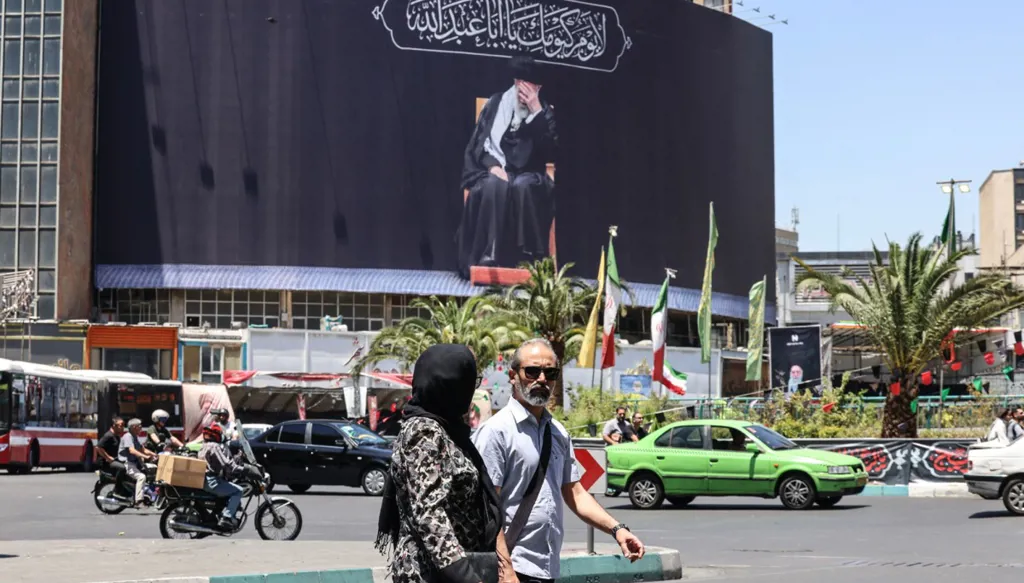


When wars stop, the real assessment of outcomes begins. And while many are busy identifying the winner and the loser of the recent agreement between the United States and Iran, a deeper strategic reading suggests that the major effects may not appear at the negotiating table but inside Iran itself in the coming years.
The United States succeeded in achieving its main objective of containing the confrontation and preventing it from turning into a prolonged war, and the global economy managed to avoid an extended shock that would have affected energy and international trade. As for Iran, despite remaining a state, it is emerging from this confrontation in a completely different form from what it was before.
The recent strikes did not target military sites only but also hit important parts of the security and military infrastructure and led to the loss of a number of influential leaders who for decades formed the pillars of the regime and its centers of decision making.
With the decline in the ability of security institutions to impose the same level of dominance that the country previously knew, Iran is moving from a phase of external confrontation to a more difficult test represented by managing its internal situation.
A beginning of stability or a beginning of transformation?
Here arises the most important question: does the agreement represent the beginning of stability or the beginning of transformation?
It is still too early to speak of the fall of the regime, but it is clear that the agreement has removed from the Iranian leadership one of its most important tools of political mobilization, namely the presence of a direct external enemy.
With the renewed focus on the economy, living standards, public freedoms, and future opportunities, the regime will find itself facing questions raised by the Iranian citizen more than by any other party.
Perhaps the paradox is that Iran’s future is no longer in the hands of external powers to the same extent but has become more dependent on Iranians themselves. If the street, political forces, and intellectual elites decide to invest this moment to demand substantive reforms, the agreement could turn into the beginning of a new historical phase.
However, if state institutions return to producing the same tools and policies as before, the agreement may simply be a temporary pause before tensions return in a different form.
A relaxation capsule
It is also a mistake to view the agreement as the end of the conflict. Political agreements are often tools for managing crises rather than resolving them definitively. Some may see this phase as a “relaxation capsule” that allows the parties to reorder priorities and focus on other more urgent files before later returning to unresolved issues that have not been fundamentally settled.
Arably, the coming phase may represent a historic opportunity to reestablish the concept of the nation state and sovereignty. As the ability of transnational regional projects to exert influence declines, Arab countries gain greater opportunities to focus on development, the economy, technology, and building international partnerships. The balance of power in the region may also gradually shift from a logic of ideological influence to a logic of economic achievement and institutional stability.
Strategically, this agreement may not be remembered in history simply as the end of a war, but rather as the moment when the Middle East began transitioning from an era of open conflicts to an era of reshaping balances of power and sovereignty. Iran, meanwhile, may be facing the most important crossroads in its modern history, where the final decision shifts more than ever into the hands of its people toward change.
Disclaimer: The opinions expressed by the writers are their own and do not necessarily represent the views of Annahar