

Regional proxies and the crisis of state sovereignty in the Middle East
As external interventions and armed non-state actors expand across the region, fragile state institutions struggle to assert authority, deepening questions over sovereignty, governance, and long-term stability.



 Messenger
 Whatsapp
 Threads
 Email
Email
 Print
Print
 X
X
 Facebook
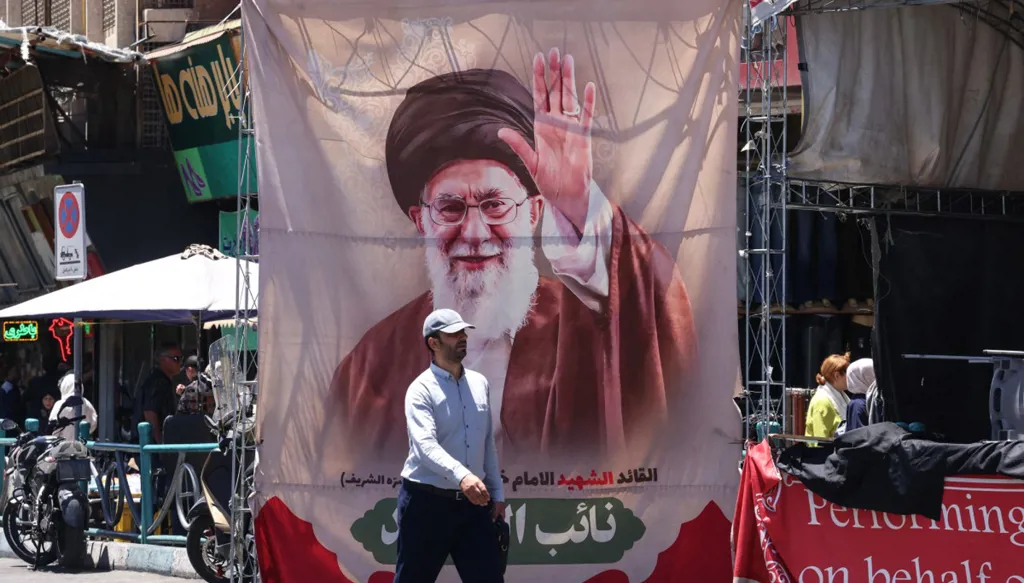


The final stages of the US negotiations with Iran aimed at reaching an agreement to end the conflict between them showed a lack of focus on the issue of Iran’s regional proxies, while the issues of navigation through the Strait of Hormuz and the Iranian nuclear program took center stage in US priorities.
Even after Washington and Tehran announced that they had reached a memorandum of understanding to end the war between them, no solid information emerged about what had been agreed regarding Iran’s proxies. Iranian reports said that groups belonging to the “Axis of Resistance” are not at all concerned by the agreement, even though they pose a serious challenge in the region.
Iraq, Lebanon, and Yemen
The situation has gone so far that a country like Iraq cannot confirm whether missiles and drones are being launched from its territory toward vital targets in neighboring countries. After Ali al Zaydi assumed the premiership, Iraqi authorities announced their intention to confront the uncontrolled behavior of militias loyal to Tehran.
The United States welcomed the acceptance by a number of militias to hand over their weapons and come under state authority, but some saw this step as merely tactical concessions resulting from US pressure, without meaning a fundamental disengagement between Tehran and its proxies.
The situation is no less unusual in Lebanon, where Hezbollah alone decided to enter the military confrontation with Israel in support of Iran, and continued to challenge state authority by monopolizing decisions of war and peace.
By all standards, the concept of sovereignty has lost its meaning in Lebanon after the government decided to declare the Iranian ambassador persona non grata, while the foreign diplomat refused to comply with the decision and found support for his position from the Speaker of Parliament.
Such a situation is not limited to Iraq and Lebanon. In Syria, Libya, and Yemen there are armed groups and factions that receive support from external powers and compete with the central state over the authority to possess weapons and make decisions.
This network of proxies would not have been able to advance foreign agendas far removed from the interests of their own countries had it not been for internal fragmentation, weak state structures, and the sectarian, ethnic, and regional divisions that divide their societies.
Failure of governance
The disruption of security systems has facilitated all forms of infiltration. Baghdad, for example, is no longer able to deny or confirm whether Israel has established one or two military bases in its desert. What has paved the way for all kinds of breaches is the failure of governance, which has rendered the state unable to meet the needs of its citizens without discrimination, whether resources are available or not.
This has opened the door wide to the expansion of the shadow economy outside the framework of taxation and the law, as an alternative to development policies that the state was supposed to implement before anyone else.
There is, of course, no actor like Iran that has established such an extensive network of regional proxies on an ideological and sectarian basis, organically branching out from its internal systems in order to advance external agendas, foremost among them at least in the current phase, hostility toward the United States and Israel.
The reality is that stability in the region cannot be achieved as long as policies of foreign intervention and regional proxies continue. This places states across several parts of the Arab region in a severe dilemma that prevents them from exercising full authority within their borders or dealing credibly with other states. The notion of sovereignty loses its real meaning when loyalties are divided and decision making and weapons are dispersed among factions and militias.
Today, the issue is not whether the United States will once again put Iran’s regional proxies on its agenda. The more important question is the extent to which Arab states are able to impose the logic of the state and sovereignty over the logic of proxies and armed networks, and over the calculations and wars of great powers in the region.
Disclaimer: The opinions expressed by the writers are their own and do not necessarily represent the views of Annahar.