

Netanyahu Faces Tough Political Test Amid U.S.-Iran Deal
Far-right threats, U.S. pressure, and election rumors are converging into one of the biggest political tests of the Israeli prime minister's career.



 Messenger
 Whatsapp
 Threads
 Email
Email
 Print
Print
 X
X
 Facebook
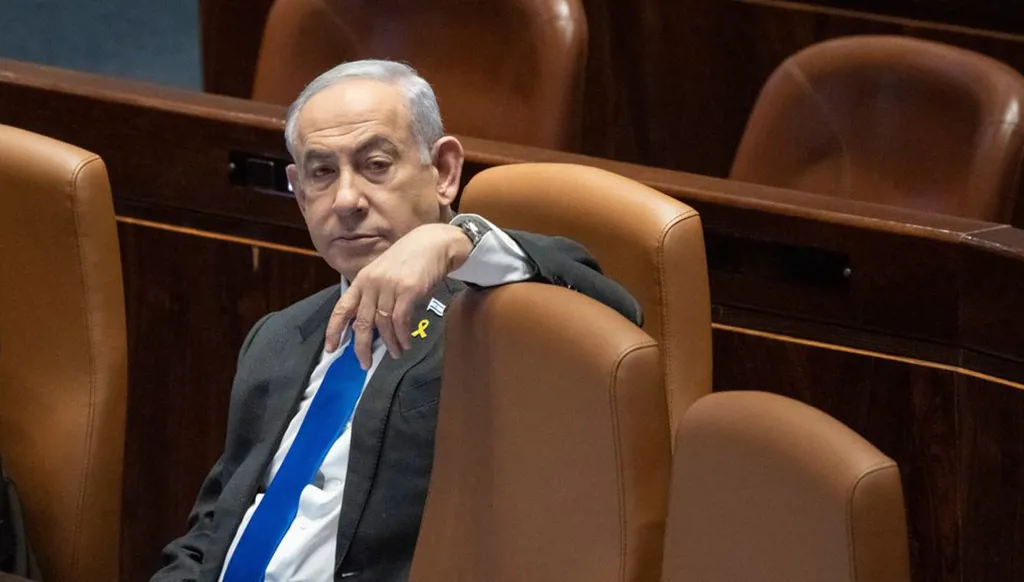

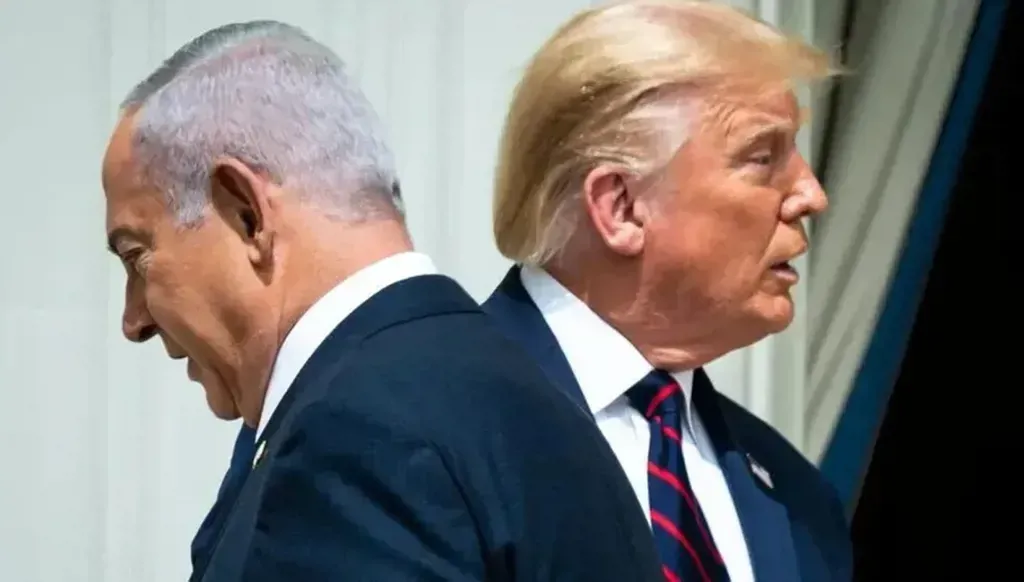


The announcement by U.S. President Donald Trump that an understanding had been reached with Iran has placed Israeli Prime Minister Benjamin Netanyahu in a complex political equation.
Caught between Washington's pressure to de-escalate and threats from his far-right partners to bring down the government, Netanyahu now faces what could be one of the toughest political tests since the outbreak of the war.
But how serious are these threats? Does the Israeli prime minister still have room to maneuver, or has Israel already entered the countdown to elections?
The Right-Wing Drama and Trump's Cards
Opinions are divided between those who view the far-right's threats as little more than electoral posturing and those who believe mounting U.S. pressure is accelerating the end of the governing coalition and pushing Israel into a new political phase.
Amir Makhoul, a writer and researcher at the Center for Policy Advancement, told Annahar that the train to topple the Israeli government "has already left the station." According to him, the coalition is anticipating its legal end in October or November.
Once the Knesset sets an election date, legal loopholes close and the country enters a parliamentary recess ahead of the vote. He described the threats made by Itamar Ben Gvir and Bezalel Smotrich as "political consumption" and "pure electoral performance."
At the same time, Makhoul argued that Trump "holds the reins of Israeli decision-making entirely," noting that even the far-right can do little more than respond with a "resounding silence" once cabinet doors close.
He pointed to growing Israeli assessments that the American president is "systematically planning to end Netanyahu's era," citing Trump's remarks casting doubt on Netanyahu's electoral future, as well as reports of stormy leaked phone conversations that damaged the prime minister's image among Likud supporters.
Netanyahu's Manoeuvres and the Dilemma of Alternatives
Assessing Netanyahu's options, Makhoul said the prime minister "knows very well the dead end that awaits him within the opposition camp." As a result, he is focused on consolidating the right-wing bloc and preventing even a 4 or 5 percent leakage of votes to rival camps, which, in his view, would guarantee Netanyahu's downfall.
Makhoul revealed what he described as Netanyahu's plan to engineer new parties within the right-wing camp. He argued that ending the partnership with Foreign Minister Gideon Sa'ar came "by mutual agreement," allowing Sa'ar to temporarily lead a party outside the coalition in preparation for a future alliance.
Although the prevailing atmosphere suggests the end of Netanyahu's rule, Makhoul cautioned against underestimating his ability to "manage the game and produce surprises." At the same time, however, he stressed that Netanyahu's room for maneuver "has completely eroded" following the political failure of the Lebanon and Iran files, amid a growing Israeli consensus that "the military achievements of the army have been dissipated by the government's political defeat."
/WhatsApp%20Image%202026-06-15%20at%207.20.13%20AM.jpeg)
The Coalition and the "Madmen"
For his part, Israeli affairs researcher Adel Shadid believes Ben Gvir and Smotrich will not dare take the step of toppling the government for one simple reason: they have "no alternative."
Shadid described the duo's fiery rhetoric and repeated threats as "frantic moves" that are carefully calculated and, in effect, commissioned by Netanyahu himself. Their role, he argued, is to relieve pressure on the prime minister while portraying him internationally as a balanced and pragmatic leader attempting to restrain a group of "madmen."
He added that "the option of toppling the government is no longer on the table," arguing that a halt in the fighting would automatically trigger the path toward elections within three months, as previously pledged. That scenario, he said, would bring a decisive end to the current coalition without the need to actively bring it down.
Israel: The Exclusive Agent
"Trump is not merely an employee in the White House, but the absolute decision-maker," Shadid said, while Netanyahu "does not go beyond being an agent of the American project in the region."
He dismissed Netanyahu's efforts to forge new alliances as "a lost effort with no real value," arguing that the curtain is already falling on the current government and that Israel's political train is moving swiftly and irreversibly toward elections.