

From revolution to statecraft: Iran at the threshold of strategic reassessment
If a US-Iran settlement materializes, it may not only reshape geopolitics but also force Iran to rethink its identity, its regional role, and the foundations of its political legitimacy.



 Messenger
 Whatsapp
 Threads
 Email
Email
 Print
Print
 X
X
 Facebook
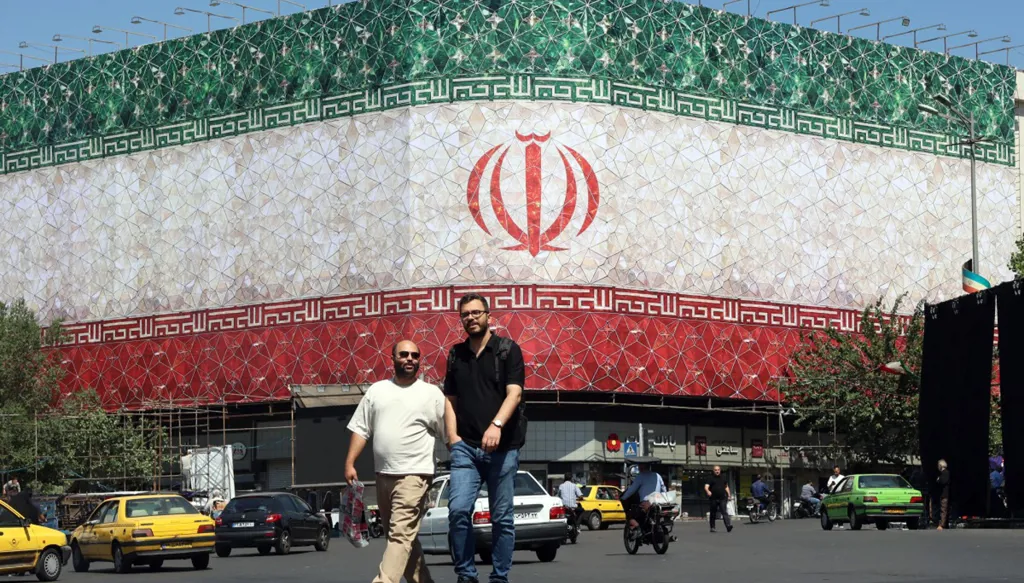


If we assume that the coming days, weeks, or even months will witness a final agreement between the United States and Iran, and that the two sides have reached a settlement that ends decades of tension and direct and indirect confrontation, then the most important question may not be what each side has gained at the negotiating table, because each side will initially market the agreement as a “victory,” which is expected.
Rather, the more important question is how Iran will view itself after the agreement, and what might change in its political behavior domestically and regionally. The answer to this broader question is of importance to us in the region.
What has Iran gained from its external project?
Over nearly half a century, Iranian policy has been built on a mixture of ideology, security considerations, and revolutionary identity. This framework has succeeded in mobilizing segments within Iran against the “other,” and has also succeeded to varying degrees, in building influence beyond its borders.
However, recent years, along with their economic crises, social pressures, and direct and indirect military confrontations, have led many Iranians to raise old questions in a new form: what has Iran gained from its external project? And what is the cost that the state and society have paid in return? These questions were previously raised only within limited circles, and one of the most prominent figures to express them publicly was Mohammad Javad Zarif, among others.
These questions will be raised more broadly once the guns fall silent. Among the ideas that may be subject to wider reconsideration is the notion that “Iran fights abroad so it does not have to fight at home.” This logic assumed that expanding regional influence constitutes the first line of defense for Iranian national security.
However, recent developments have shown that continuous involvement in external conflicts does not necessarily prevent tensions from reaching the domestic arena; rather, it can sometimes contribute to increasing political, economic, and security pressures, and then ignite conflict inside Iran itself, as the world has witnessed.
As a result, writings have begun to emerge within some Iranian circles, both inside the country and among elite groups living abroad who remain sympathetic to the system, discussing the possibility of a gradual shift from a revolutionary identity toward an identity more closely tied to Iran’s direct national interest.
The intention here is not a complete abandonment of the ideological legacy of the Islamic Republic, but rather a reordering of priorities so that the Iranian state and the interests of its citizens come first. This implies moving away from an “internationalist” call toward a retreat into “nationalism,” and even the emergence of multiple forms of “nationalisms.”
Within this context, the issue of what became known as the “regional arms” comes to the forefront. For many years, these networks were considered a central part of Iran’s deterrence strategy. However, the military, financial, political, and security costs associated with them have grown larger than their returns. Increasing segments of Iranian society have begun to question the usefulness of continuing to drain resources beyond Iran’s borders at a time when the country is facing severe economic and social challenges.
Some actors linked to the Iranian project may have recognized this shift early. In Iraq, for example, recent months have seen increasing attempts by certain armed groups that previously declared allegiance to Iran to integrate into state institutions and transition from the logic of armed organization to the logic of political participation. If we assume that a settlement between Washington and Tehran stabilizes, this trend is likely to strengthen rather than decline.
In Lebanon as well, recent years have imposed harsh reassessments on actors aligned with Iran. The human and economic cost of repeated conflicts has led many to question the balance between national stability and civil peace on the one hand, and involvement in broader regional projects on the other, especially as such involvement has contributed to state collapse.
Any shift in Iran’s vision toward its affiliates would likely have direct repercussions on the nature of relationships within the Lebanese arena. These actors have already lost significant leadership figures, resources, and, most importantly, public sympathy.
In Yemen too, new opportunities may emerge to prioritize political settlements over long military confrontations that have exhausted the country. Prolonged wars drain all parties involved, and any change in major regional calculations is usually reflected in the files most closely tied to them.
As for the Palestinian issue, it may also become the subject of a different kind of internal debate within Iran. Some argue that political support for the cause can continue without necessarily remaining tied to the same instruments of conflict that have prevailed over past decades.
This could lead to a reassessment of the relationship between slogans and practical outcomes on the ground, especially as Gaza has been nearly devastated and its population lives in extreme uncertainty under heavy Israeli pressure, while Iran has been unable to deliver on much of what it promised. To the extent that it has even removed the “cause” from its negotiation files, while maintaining an apparent attachment to Lebanon.
On what basis will legitimacy be built?
But the most significant and expected transformation may not lie in foreign policy alone, but in political discourse itself and in practice. Since 1979, the vocabulary of revolution and confrontation with the “Great Satan” has occupied a central place in political mobilization.
If Washington and Tehran succeed in reaching a stable settlement in the coming days, weeks, or months, an important part of this discursive framework will lose its traditional function. At that point, the question will become: on what new basis will the state build its political legitimacy and its vision for the future?
History shows that major states do not change direction overnight. But it also shows that ideas which appear fixed can be revised when surrounding conditions change. Iran is no exception to this rule. We may not witness a complete rupture with the revolutionary era, but we may see the beginning of a slow yet clear transition from the logic of permanent revolution to the logic of the permanent state; from prioritizing external expansion to prioritizing internal development; and from the pursuit of influence to the pursuit of stability.
When the sound of guns fades and the noise of slogans diminishes, Iran may discover that the most important battle is not outside its borders, but in its ability to construct a new social contract between state and society, one that answers the questions of the future more than it recalls the battles of the past.
In such a scenario, the “Great Satan” becomes a friend, and the “Lesser Satan” becomes a partner. And anyone who considers this scenario imaginary should reconsider the history of conflicts in our modern era.