

Gulf security recalibrated: Lessons from regional war and the shift toward strategic autonomy
A regional conflict reshapes defense thinking in the Gulf, accelerating moves toward self-reliance in missiles, drones, naval power, and early warning systems amid a shifting global order.



 Messenger
 Whatsapp
 Threads
 Email
Email
 Print
Print
 X
X
 Facebook
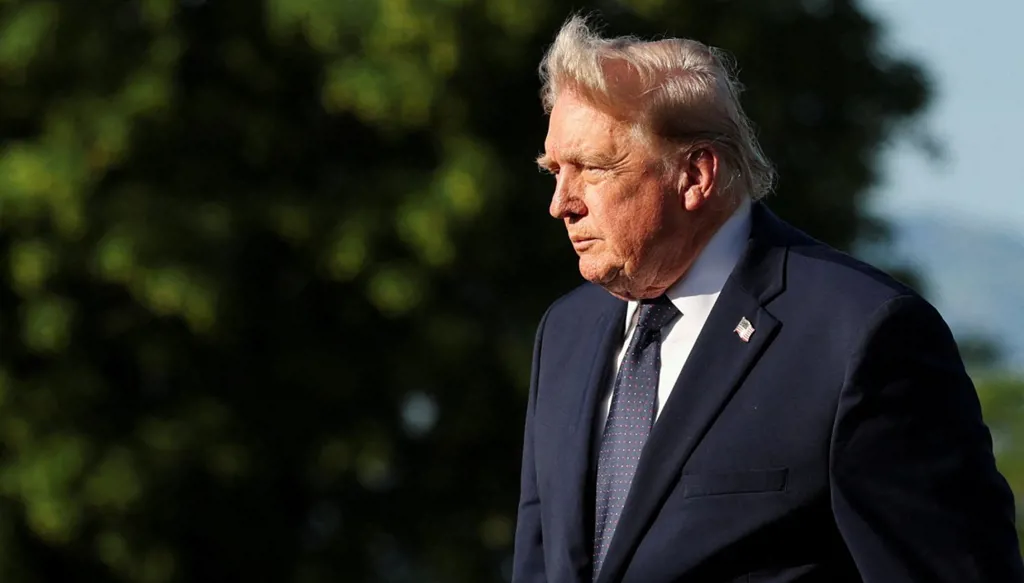


After several weeks of anticipation, President Donald Trump announced the end of the war with Iran after more than 100 days since its start, without a clear understanding of the political and strategic gains of each side, despite each party speaking about major achievements and victories.
Defeat of the Axis of Resistance
Militarily, the war was a severe defeat for Iran and the Axis of Resistance, which lost the Gaza front, saw its influence in Lebanon significantly decline, its impact in Iraq weaken, and its presence in Yemen almost completely disappear. However, the Iranian regime did not collapse. Instead, new leadership emerged that is more hardline and will have to deal with a difficult internal situation resulting from the war and the long period of sanctions and blockade.
The world still has to see the form and outcome of the negotiations over the sixty days and whether they will proceed peacefully without implementation problems and whether each side will abide by its obligations. It is worth noting that a memorandum of understanding will be signed to extend the ceasefire, which means the war has not actually ended.
The war, however, left major lessons for the Gulf countries, which faced most of the Iranian attacks on their territory, leaving wounds that will not heal for generations. It also showed that the United States is no longer an ally that can be relied upon to guarantee their security, and that their armament and defense policies need urgent review and reconsideration in order to increase deterrence.
It is true that the armed forces of these countries demonstrated highly advanced and effective capabilities in defending themselves against ballistic missiles, cruise missiles, and drones, but they did not fully use their offensive capabilities. Despite having large air forces, the nature of the threat and the type of war they found themselves in imposed limitations on them. They also realized the importance of naval power in protecting their ports, coasts, and the Strait of Hormuz from threats and potential closure.
Gulf countries must allocate a larger budget to building naval forces that give them qualitative superiority over their opponents, similar to their air forces, which are far superior to what Iran possesses. The human factor may be the biggest challenge in this regard, as naval forces require a larger number of personnel for various types of warships.
They also require an air force of their own and a dedicated system to manage submarine warfare. These countries rely on sea routes for most of their exports and imports, so they must invest in naval forces capable of protecting maritime corridors.
The only way to overcome the manpower challenge is for these countries to integrate their capabilities so they operate as a joint force. Iran losing its navy in the war creates an opportunity for Gulf states to remain ahead and potentially achieve naval dominance in the Gulf, the Red Sea, and the Arabian Sea.
It is not enough for Gulf states to possess air forces alone. They must also develop their missile capabilities so they have offensive counterstrike options. They should rapidly develop domestic programs to produce ballistic and cruise missiles. Saudi Arabia already has an existing ballistic missile development program that was established with Chinese assistance. It is time for the Kingdom to activate it and begin public testing to build its missile arsenal in a way that allows it to reach all parts of Iranian territory.
Conducting public missile tests from time to time would increase its deterrence level. Other Gulf states can cooperate with Saudi Arabia or with countries such as Pakistan, India, and South Korea to obtain ballistic and cruise missile technologies and develop them locally, as well as establish bases for them inside tunnels and missile cities within mountains, as Iran has done.
Expansion of Gulf Programs
Gulf countries such as Saudi Arabia and the United Arab Emirates have already begun manufacturing offensive suicide drones locally, and these programs are expected to expand as regional militaries show increasing interest in them. They are expected to become an important element in future warfare, especially if equipped with artificial intelligence and given a range of no less than 1,000 kilometers. To be properly relied upon, consideration must also be given to using satellite-based guidance systems so that they are not limited to the American GPS system alone but can also rely on European and Chinese systems.
The most important objective Gulf states should pursue is building an independent early warning system that they can rely on. Without sovereign and effective early warning, none of the defensive or offensive missile systems will be effective. This requires investment in building a satellite network in the coming years capable of detecting missile and drone launches against them and providing their offensive forces with coordinates of enemy targets and enemy military movements.
The recent war in the region and the war in Ukraine represent an important lesson for regional countries about the drawbacks of excessive reliance on allies in an era where the rules of the political game have changed, interests have become intertwined, and right-wing forces have risen internationally calling for prioritizing their own interests even at the expense of allies and alliances.
Europe, Japan, South Korea, and other countries have decided to begin armament programs and defense policies that do not depend on US support. Other countries, such as India, have also taken several steps toward independence from Russia in their armament programs due to Moscow’s inability to meet their needs because of the war with Ukraine.
Even Israel is now developing a ten-year plan to become independent from US military support. In this latest war, the United States may have won militarily, but it has lost the trust of most of its allies in the region and beyond. The world has entered an era of multipolar powers filled with risks and conflicts.
Disclaimer: The opinions expressed by the writers are their own and do not necessarily represent the views of Annahar.