

Israel's Concerns Over US-Iran Deal and Netanyahu's Strategy
As Washington and Tehran move toward a potential agreement, Israeli officials, analysts, and commentators warn of strategic setbacks, internal blame over Netanyahu’s policies, and limited ability to influence the emerging regional deal.



 Messenger
 Whatsapp
 Threads
 Email
Email
 Print
Print
 X
X
 Facebook
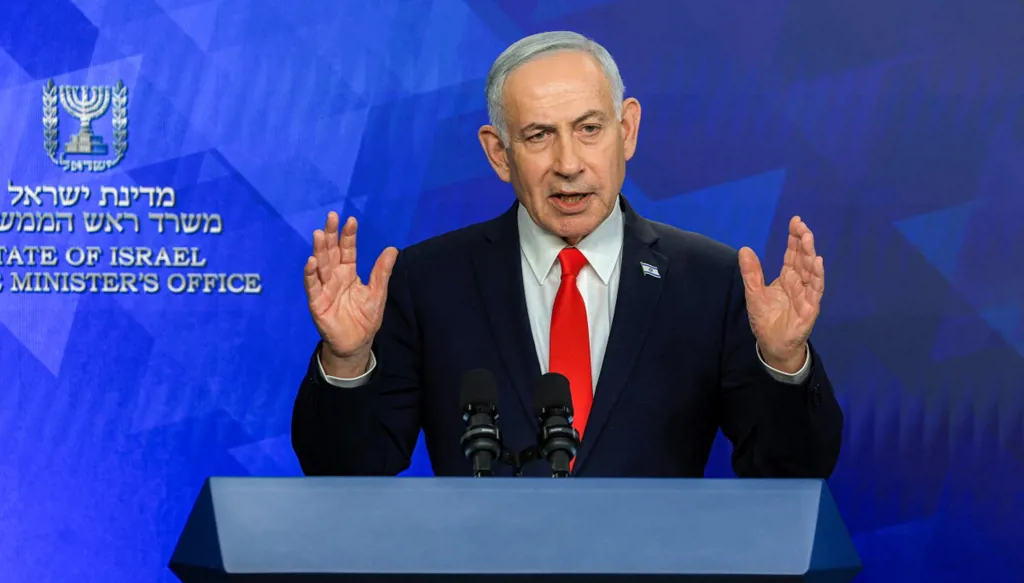


While Washington and Tehran are moving toward consolidating an agreement that would end months of escalation, concerns are emerging in Israel about its terms.
Recent Israeli reports, along with criticism from politicians and commentators inside Israel, raise a central question about attempts by Prime Minister Benjamin Netanyahu to use the escalation in Lebanon to obstruct the negotiating track with Iran.
The internal debate in Israel has not been limited to the provisions of the expected US Iranian agreement but has also expanded to holding Netanyahu responsible for what many see as a strategic failure to influence its course.
Criticism was highlighted in a report published by the Yedioth Ahronoth website, which quoted Israeli security sources as saying that the Israeli airstrike carried out on the southern suburb of Beirut did not disrupt the negotiations as expected, but instead produced the exact opposite result.
According to the account in the report, the escalation accelerated the reaching of an agreement between Washington and Tehran and pushed Trump to express willingness to offer additional incentives to the Iranians in order to prevent the negotiating process from collapsing.
The sense of tension between Washington and Tel Aviv was further reinforced by leaks about a heated phone call between US President Donald Trump and Netanyahu, during which Trump reportedly expressed anger over the attack on the southern suburb, considering that it had endangered the negotiations.
In the view of Netanyahu’s critics, this incident formed additional evidence of a decline in Israeli influence within the US administration compared to previous periods.
This sentiment was also reflected in comments by several Israeli writers and analysts. In the newspaper Maariv, Ben Caspit argued that Israel is “now paying the price for its bet on confrontation with Iran,” criticizing earlier promises of achieving a “total victory” or bringing down the Iranian regime.
He went further, holding Netanyahu responsible for a series of policies that have left Israel in a position where it finds itself excluded from negotiations over what it considers its most existential threat.
The most frequently repeated criticism in the Israeli media is that the agreement is being drafted in practice without meaningful Israeli participation. Some commentary describes the situation as a strategic paradox, in which the United States is negotiating directly with Iran over issues that Israel views as tied to its national security, from the nuclear program to ballistic missiles and Tehran’s regional proxies, while Tel Aviv appears unable to influence the final outcomes.
Concerns are not limited to the opposition. Figures from the Israeli right have also expressed rejection of the agreement, though from a different angle. National Security Minister Itamar Ben Gvir argues that any understanding that does not lead to dismantling Hezbollah and reducing Iranian influence in the region “will not bring security to Israel,” stressing that “Tel Aviv is not bound by any arrangements that may impose restrictions on it in Lebanon.”
For his part, Israeli Defense Minister Israel Katz said that Israel will not withdraw from the territories it has occupied in Lebanon and warned that if Iran launches an attack on Israel in connection with developments in Lebanon, Israel will respond in kind.
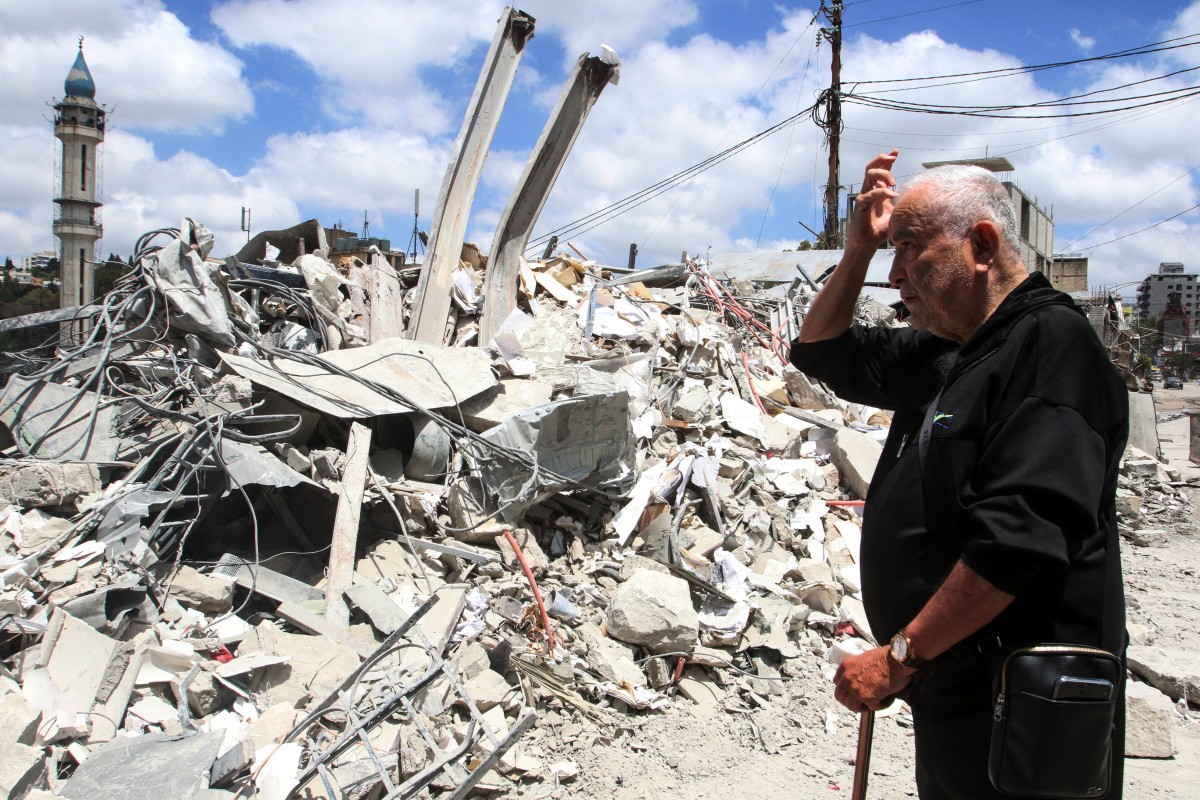
Katz stressed his rejection of withdrawing the Israeli army from Lebanon despite all current and future pressure, noting that Benjamin Netanyahu had clarified this matter to Donald Trump and senior US officials.
The question being raised is whether Netanyahu is once again seeking to obstruct the agreement through the Lebanon front.
Netanyahu's failure: a prelude to what's next?
Israeli affairs expert Fayez Abbas told Annahar that Netanyahu “will not dare attempt to obstruct the agreement through the Lebanon front.”
He believes that Netanyahu’s failure is a prelude to what is coming in the region, because Netanyahu will not take any decision related to the war on Lebanon without returning to Donald Trump, who has become the only decision maker on war and peace in the region.
He adds that Netanyahu will soon try to convince Trump of the importance of continuing the war on Hezbollah and maintaining the occupation of southern Lebanon. However, Trump will not agree to this and will instead work to ensure the success of direct negotiations between the Lebanese and Israeli governments.
Israel is displeased with the agreement
For his part, writer and journalist specializing in Israeli affairs Nihad Abu Ghoush told Annahar that “Israel is very displeased with the agreement, which some have described as a disaster and a strategic defeat,” noting that “many are blaming Netanyahu as primarily responsible for this outcome.” He points out that “the opposition is openly harsh in its criticism, as are analysts and reserve generals.”
He adds that “Netanyahu always has a margin to maneuver independently of US policy, although in general he operates within its main frameworks. Therefore, he is moving within a very narrow and sensitive space between two strict limits: on one hand, he does not want equations to be imposed on him by Hezbollah and Iran and insists on what he calls Israel’s right to self defense and freedom of action; on the other hand, he does not want to appear as someone seeking to sabotage the agreement or clash with Donald Trump.”
What are the possible scenarios?
Regarding the scenarios Israel may pursue to obstruct the agreement, Abu Ghoush says that “Israel cannot object to Trump’s decision, but it can rely on delaying tactics and controlling timelines.
For example, regarding violations, it may insist on what was stated in the November 2024 agreement in Lebanon about the right of self defense, and on the accompanying US Israeli memorandum of understanding that speaks about Israel’s right to enforce Resolution 1701.”
He adds that “after the agreement, Israel will insist on what it calls the right to preempt direct and planned threats through so called ‘focused prevention’ or precise surgical operations. It will limit its operations to the south and may reduce the scope of the security zone, not only because of US Iranian pressure but also due to clear Israeli demands stemming from the lack of a clear strategy and fears of being drawn into a war of attrition."
"This would effectively establish the principle of withdrawal but postpone its implementation to an unspecified time, certainly not before the elections, while claiming that there are serious negotiations with the Lebanese government. If it offers anything, it will offer it to the Lebanese government rather than to Hezbollah or Iran.”