




 Messenger
 Whatsapp
 Threads
 Email
Email
 Print
Print
 X
X
 Facebook
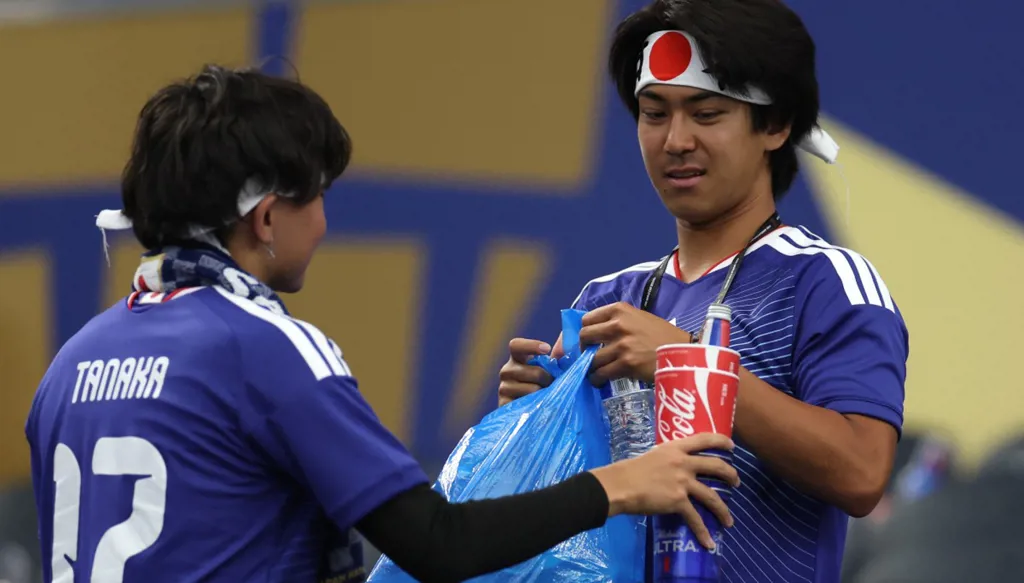


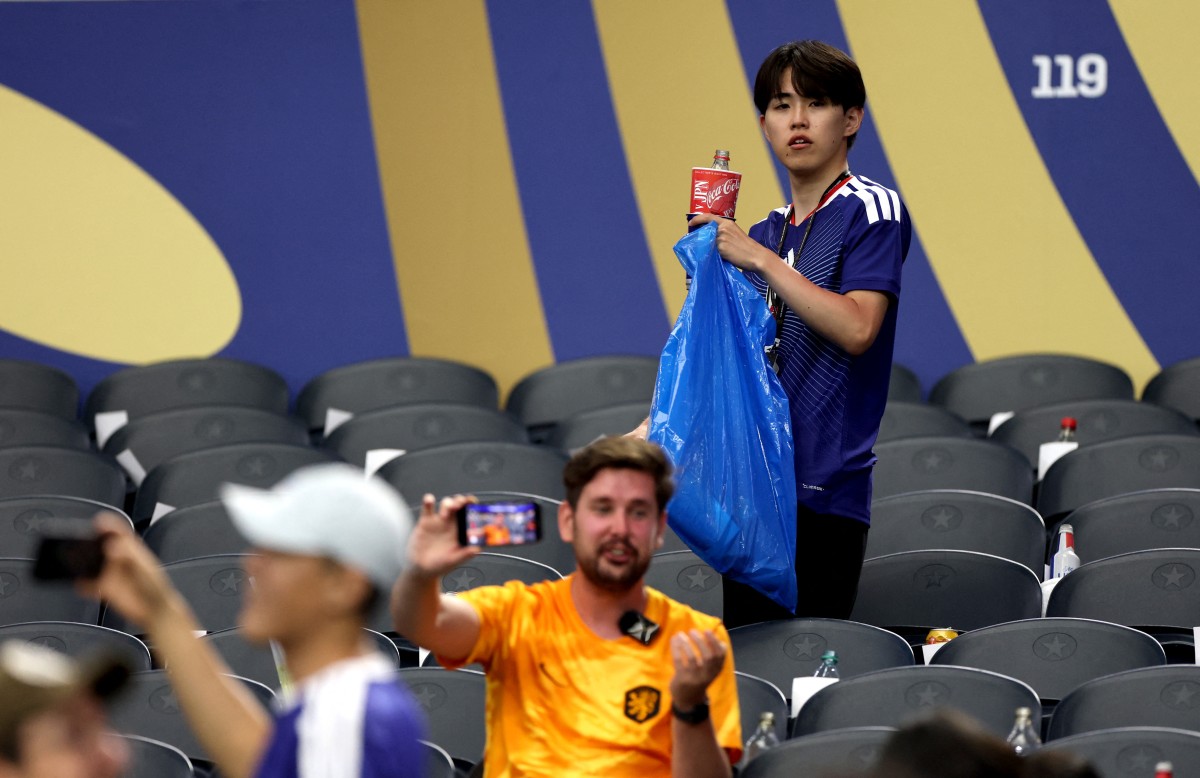
Japanese culture emphasizes refinement and responsibility
Even American football player Jameis Winston was seen taking part in the cleanup after Sunday’s match, wearing a blue Japan jersey with his name on the back.
Fan Futo Hagiwara said he was proud that the behavior of his fellow countrymen had been positively appreciated.
He explained, “This is our culture, and it means that wherever we go we must clean up after ourselves. It is our spiritual approach and our way of dealing with things.”
A sociologist and philosopher, Masachi Osawa, believes that a combination of social responsibility and peer pressure lies behind this behavior.
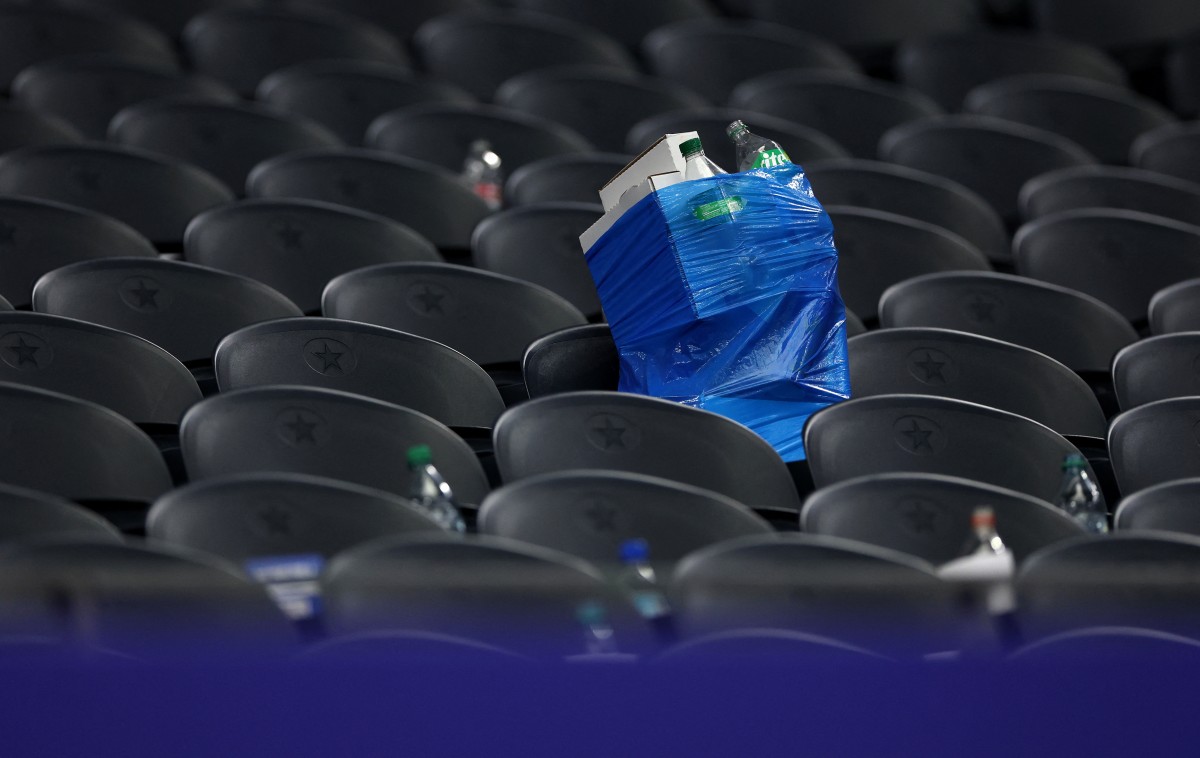
He said, “Japanese people tend not to pay much attention to broad issues of justice, such as global inequality, conflicts, or climate change, but they are highly sensitive to ethical considerations on a smaller scale.”
He added, “When it comes to people who share the same space with them or with whom they have direct contact, they feel a strong desire not to disturb them or cause them any inconvenience.”
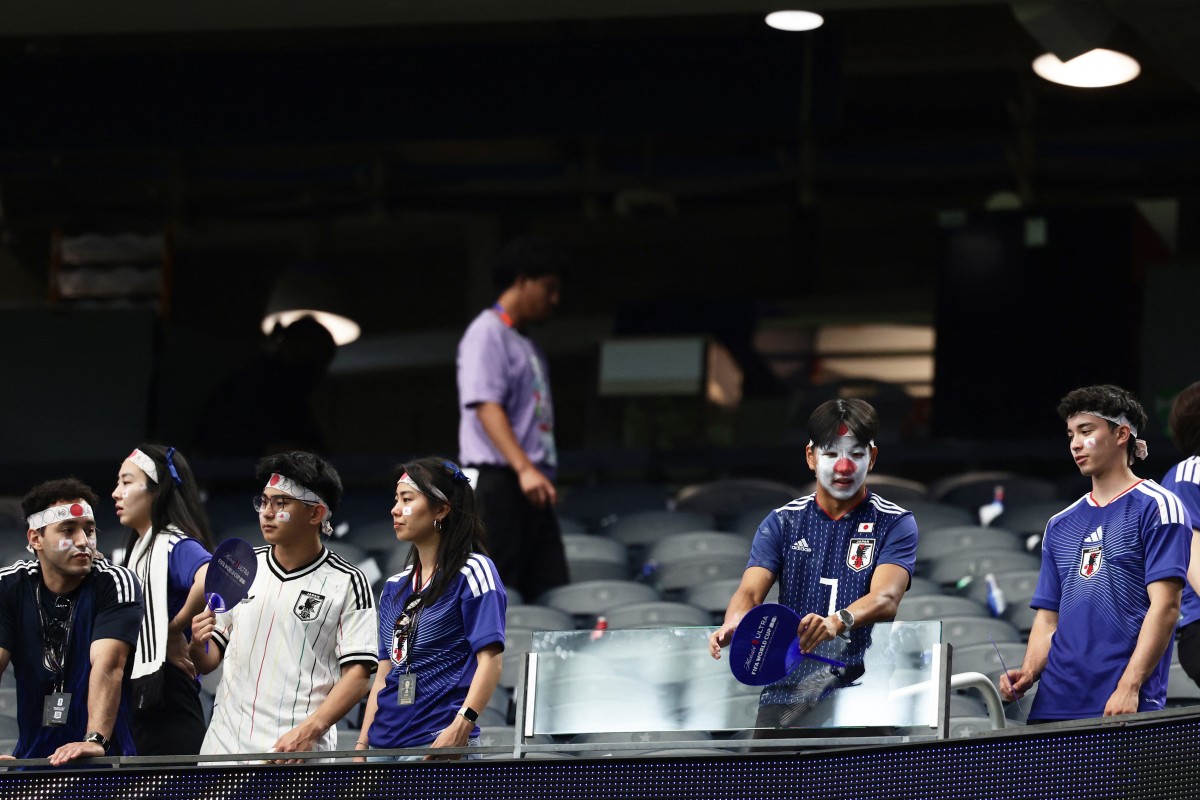
Why does Japan clean the stadium stands at the 2026 World Cup?
Cleaning is part of Japanese education from an early age, and children can be seen daily cleaning floors and desks in schools.
Public trash bins are also rare in the country, and people are expected to take their waste home with them.
Disposing of household waste is often a complex process that requires sorting it into different categories.
Scott North, professor emeritus of sociology at Osaka University, said he meets his neighbors twice a year to remove weeds and collect debris.
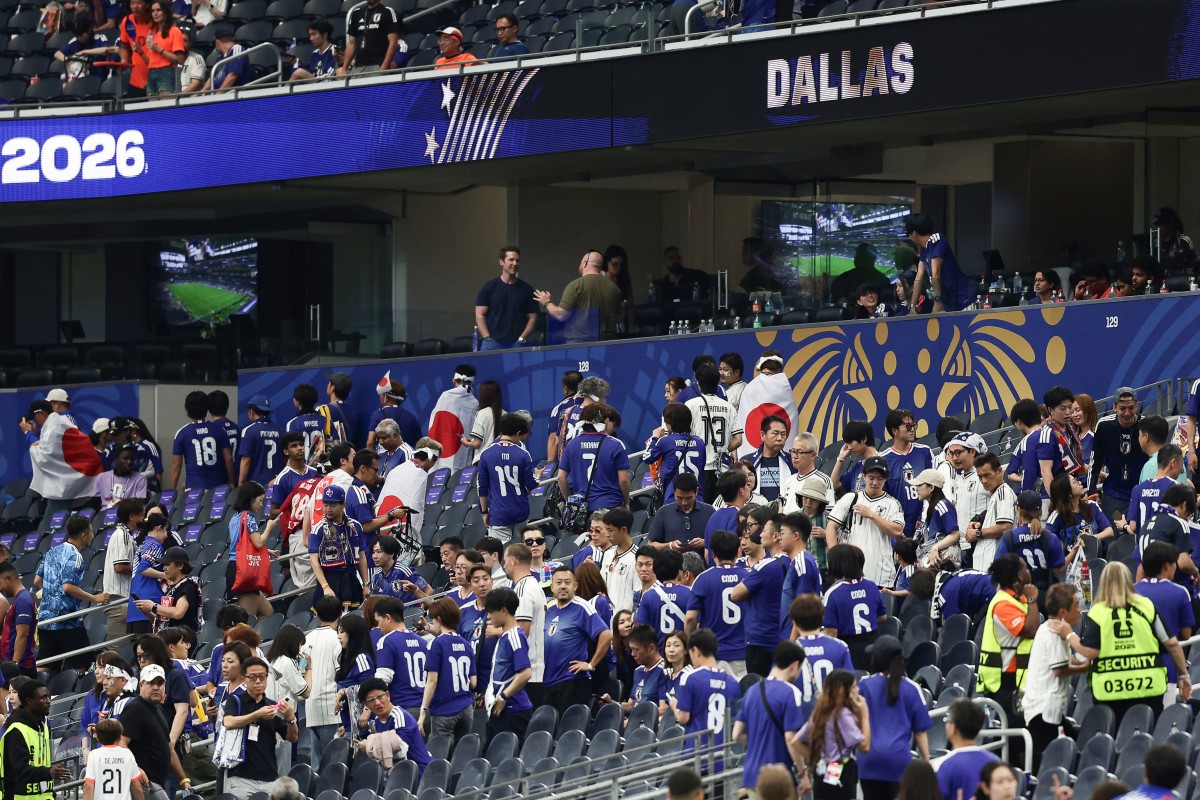
He explained that such groups are typically organized with leaders and followers, and they operate in a way similar to football fans in Japan.
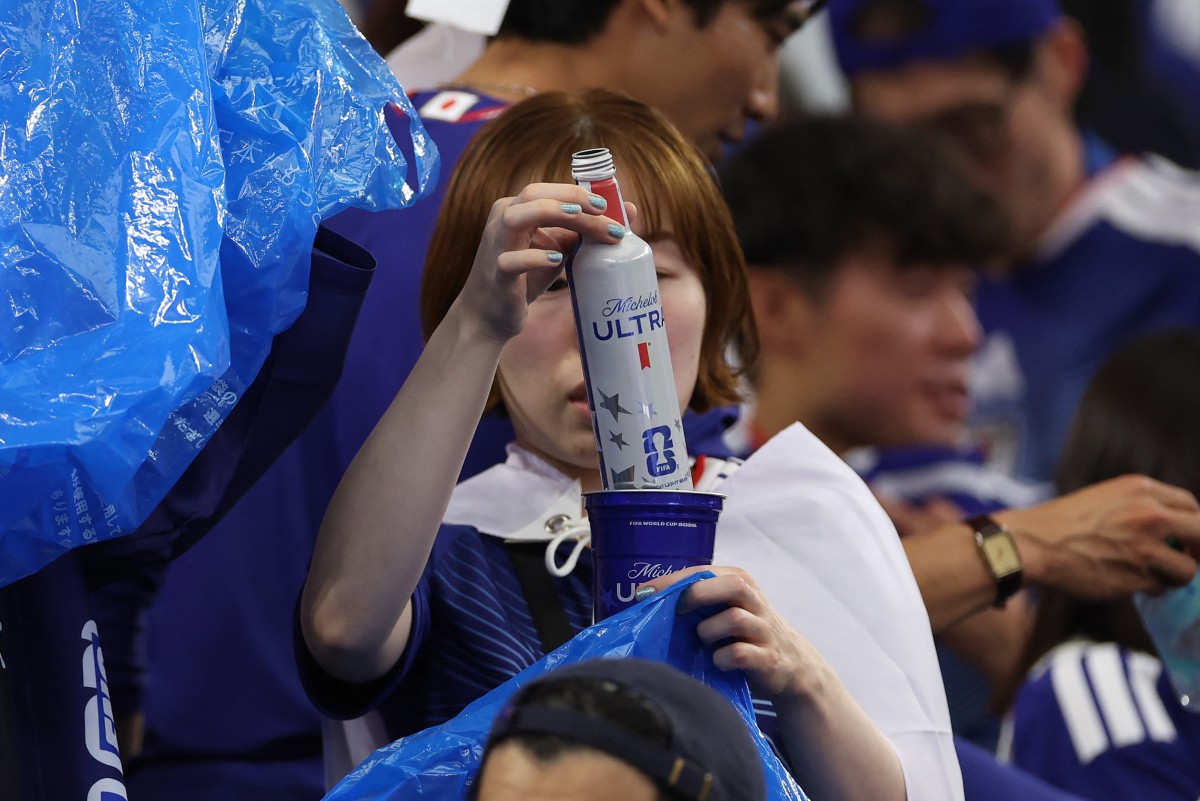
Will Japan’s fans clean the stadium stands at every match of the 2026 World Cup?
Osawa believes the explanation for this behavior may lie in a concept known in Japan as “reading the atmosphere” or “sensing the mood of the situation.”
He explained, “In Japan, even if only one person starts picking up trash, others around them will feel obliged to join in.”
He added, “That is because if they do not, people around them may think they are bad people.”
He pointed out that peer pressure is a powerful social force, and “in this case, the main motivation is not primarily the desire to keep the stadium clean or to avoid inconveniencing cleaning staff later on.”
He added, “Rather, it is mostly the desire not to appear as a disruptive person within one’s group.”
In any case, Japan’s fans will continue cleaning spaces as long as they remain in the tournament.