

Reviving the Hejaz railway: A new Eurasian trade corridor in the making
Amid Red Sea disruptions and shifting geopolitics, Saudi Arabia and Turkey move to resurrect a historic railway link that could reshape regional trade routes between the Gulf and Europe.



 Messenger
 Whatsapp
 Threads
 Email
Email
 Print
Print
 X
X
 Facebook
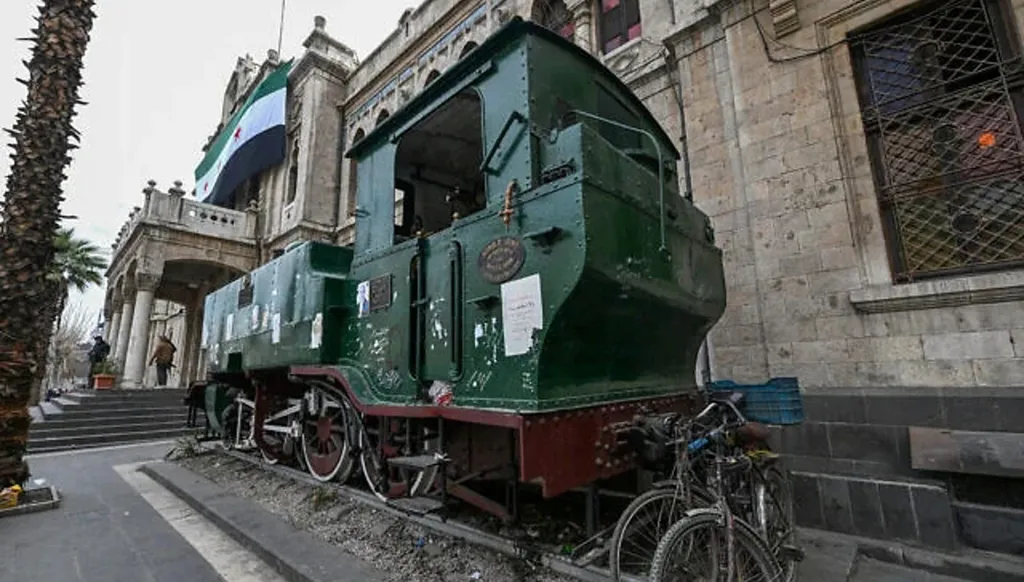


More than a century ago, steam rose from locomotives cutting across the Hejaz Desert, heading north toward Damascus and then on to Istanbul. The Hejaz Railway, inaugurated in 1908 during the reign of the Ottoman Sultan Abdul Hamid II, carried pilgrims, goods, and mail across thousands of kilometers, linking at that time what today appears to be a fragmented region divided by borders.
But the First World War, followed by the turmoil that came after it, turned this artery into scattered wreckage buried under the sand. For decades, the line remained more of a historical trace than a living project, until Tuesday, 9 June 2026.
Riyadh, 9 June 2026
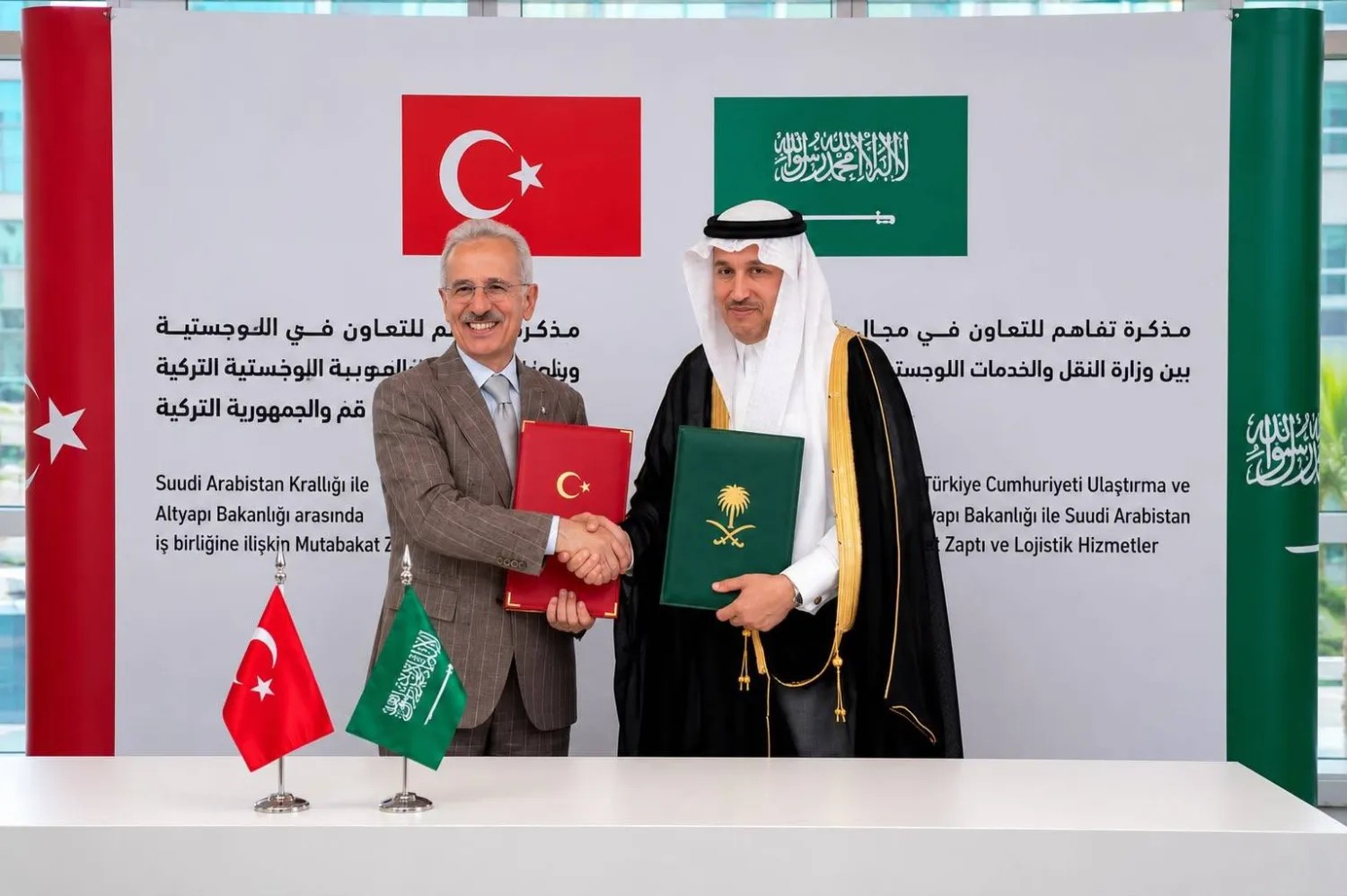
In the Saudi capital, Saudi Minister of Transport and Logistics Services Saleh Al Jasser and his Turkish counterpart Abdulkadir Uraloğlu signed two memoranda of understanding. The first concerns cooperation in the railway sector between the Turkish Ministry of Transport and the Saudi General Transport Authority, and the second relates to logistics services between the transport ministries of the two countries.
The project being revived through these agreements is based on rehabilitating and developing a railway network connecting Turkey to Saudi Arabia via Syrian and Jordanian territory, along a route exceeding 3,000 kilometers from Riyadh to Istanbul. The first phase focuses on linking and upgrading rail networks between Turkey, Syria, and Jordan, while the Saudi railway network currently extends to the Jordanian border via the Al Haditha crossing, which is expected to integrate in the future with the network coming from the north.
Al Jasser confirmed that joint feasibility studies for the project will be completed by the end of 2026.
The Turkish Minister of Transport Abdulkadir Uraloğlu set the timeline for completing the railway link project between Saudi Arabia and Turkey within the next three years, also expecting that the project could extend to the European continent.
In remarks following the signing, the Turkish Transport Minister said that details of the financial cost of linking the railway between Riyadh and Ankara will become clear soon and suggested the possible inclusion of Iraq and the rest of the Gulf countries in the project.
He noted that the Saudi Turkish railway link runs from Saudi Arabia through Jordan and Syria to Turkey, stressing that Saudi Arabia has completed the railway lines reaching the Jordanian border, while Turkey has reached the Syrian border, leaving only the Jordanian and Syrian segments remaining.
More than one train...
Joseph Salem, partner and head of the travel, transport, and hospitality practice at Arthur D. Little in the Middle East, believes what happened in Riyadh goes beyond the signing of agreements:
“The revival of the Hejaz Railway represents one of the most significant infrastructure projects in the modern history of the region. The two memoranda of understanding signed in Riyadh between Saudi Arabia and Turkey, one for logistics services and the other for railway technology, bring the project one step closer to implementation.”
Salem adds: “A functioning line would provide the Gulf with a direct overland trade corridor to Europe, reducing reliance on sensitive maritime routes at a time when supply chain resilience has become an increasingly strategic priority.”
However, he warns that “the most important challenge remains implementation, whether in terms of financing, the stability of transit routes, or translating feasibility studies into actual investments.”
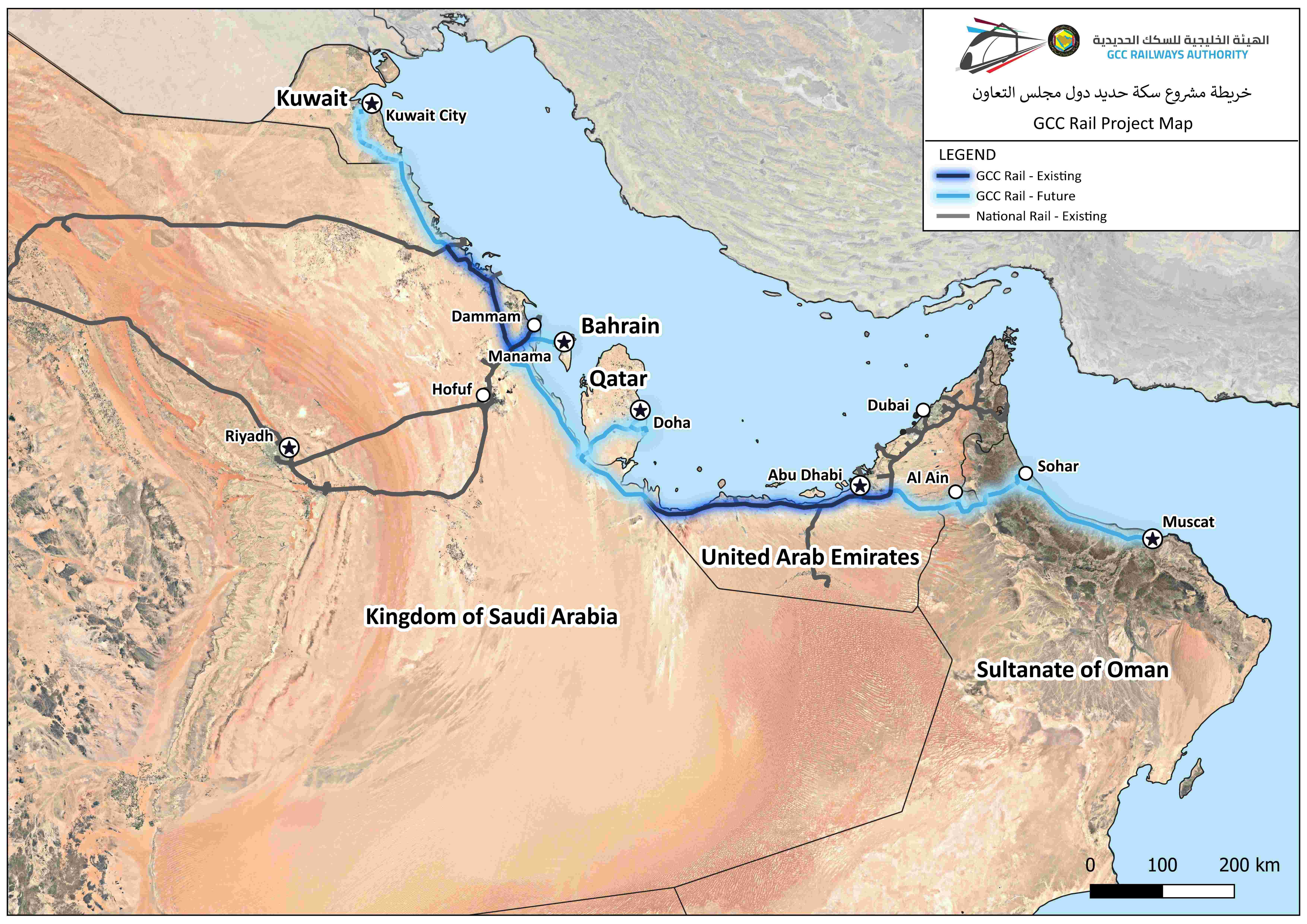
In this context, a parallel large-scale transport system is taking shape in the region: the Gulf Railway, which has surpassed 50 percent completion, with a total length of 2,117 kilometers linking Kuwait to Muscat and aiming for full operation by 2030. The United Arab Emirates has advanced the furthest, launching Etihad Rail passenger services in 2026, while Saudi Arabia is issuing tenders for the design of its 672-kilometer segment, and Kuwait is beginning construction of its border line. This makes linking the Gulf network with the Hejaz line a natural extension of an already maturing regional transport system.

The Gulf: a rising logistics bloc
Al Hazmi adds a broader dimension to the picture, seeing the project as transforming the Gulf from six neighboring states into an integrated logistics bloc. This would increase intra regional trade, reduce land transport costs, and support ports, economic zones, industrial hubs, and export oriented areas. It would also grant Saudi Arabia a position that could be described as a “logistics hub,” attracting Gulf shipments and channeling them north toward Turkey and Europe.
Al Hazmi notes that Saudi Arabia represents the geographic backbone separating the Gulf from the north, pointing out that the Gulf Railway project is planned to extend for more than 2,000 kilometers from Kuwait through Saudi Arabia, Bahrain, Qatar, and onward to Oman, with Saudi Arabia accounting for more than 670 kilometers of the network. Economic indicators in recent years have shown a notable rise in Saudi re export volumes, partly attributed to the development of the logistics sector under Vision 2030.
Data from the General Authority for Statistics (GASTAT) shows a sharp acceleration in Saudi re exports, rising from 32.3 billion riyals (8.6 billion dollars) in 2017 to 148.9 billion riyals (39.7 billion dollars) in 2025, a growth of 361 percent in eight years. More importantly, their share of non oil exports increased from 16.7 percent to 40.7 percent over the same period, making re exports today a strategic pillar rather than a marginal trade activity.
Redrawing regional balances
But the impact would not be limited to economics alone. Dr. Neil Quilliam, Managing Director of Azure Consultancy, believes the project could reshape the regional balance by “reviving an older corridor and giving new importance to overland connectivity at the expense of existing maritime routes.” This would place both Saudi Arabia and Turkey at the center of the Gulf–Europe link, “potentially shifting economic and logistical weight away from arrangements that included Israel and the UAE since normalization agreements, as trade would no longer need to pass through those channels.”
Quilliam goes further, suggesting that a functioning overland route would reduce reliance on maritime corridors linked to the port of Jebel Ali and on straits near Iran, “which could narrow the space in which both the UAE and Iran benefit from current trade flows.”
He also believes the project could encourage closer cooperation among Gulf Cooperation Council states, “adding weight to Saudi Arabia’s position within the group.” On a broader regional level, he sees the corridor as potentially supporting “the emergence of a more cohesive regional route linking Asia to Europe, contributing to the development of Syria’s and Jordan’s economies,” thereby strengthening the collective influence of participating states in “shaping regional connectivity and determining the political direction of the region.”

Obstacles still remain
Available indicators do not hide the existence of major challenges. The route passes through Syrian territory, which is still undergoing a fragile phase of institutional reconstruction after years of war.
In addition, unifying technical standards across rail networks in four countries Turkey, Syria, Jordan, and Saudi Arabia represents a complex engineering and regulatory challenge.
Salem summarizes this equation by saying: “The importance of these two memoranda lies in the fact that they address the core pillars of any cross-border railway project, including the unification of technical specifications, signaling standards, and regulatory alignment.”
He adds: “If these conditions are met, the Hejaz Railway could regain its position within the next decade as one of the most important strategic overland corridors linking Europe and the Gulf.”