

Al-Sharaa’s Washington Trip in Doubt as US Ties Syria Engagement to Security Concessions
A possible Syrian presidential visit to the United States exposes a widening negotiation in which political engagement is increasingly tied to security restructuring and regional power balances.



 Messenger
 Whatsapp
 Threads
 Email
Email
 Print
Print
 X
X
 Facebook
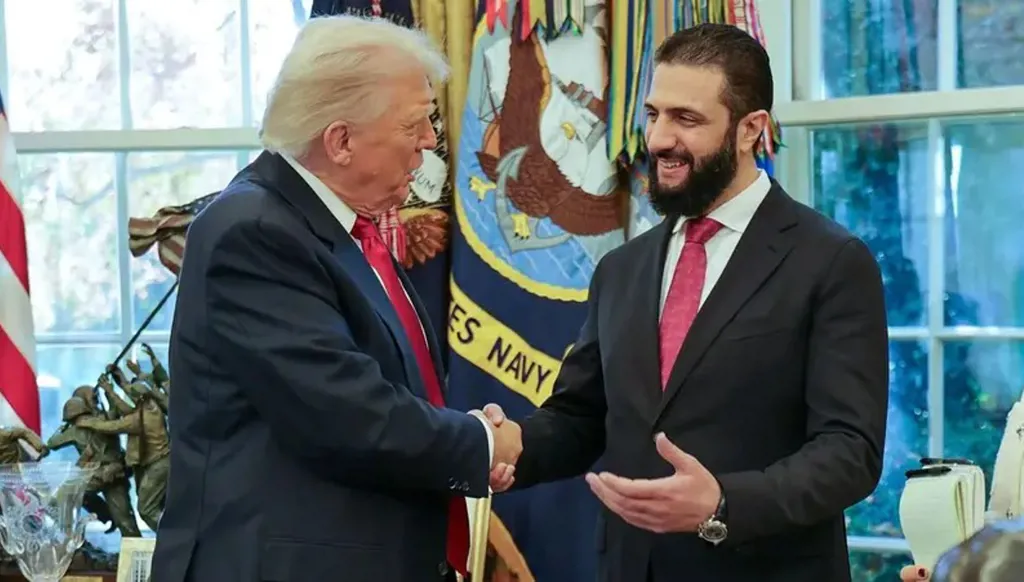


The ambiguity surrounding a possible visit by Syrian President Ahmed Al-Sharaa to Washington has revealed the extent of sensitivity that now governs the relationship between Damascus and the White House.
Within a few days, the narrative shifted from leaks about contacts to arrange the visit, to setting Sunday as its date, before an official Syrian clarification stated that presidential visits are announced exclusively through official channels, followed by a confirmation from a US official that the visit is not on the agenda.
The uncertainty over the timing does not obscure the weight of the context. If it were to take place, the visit would come at a moment when multiple US files concerning Damascus are accumulating: a possible role in Lebanon, reducing Russian influence, integrating the Syrian Democratic Forces (SDF) into the military establishment, managing the issue of foreign fighters and jihadists, and continuing the process of lifting US legal restrictions, foremost among them the designation of Syria as a state sponsor of terrorism.
Accordingly, the matter has moved beyond the question of travel to Washington. The deeper issue concerns the nature of the bargaining framework that defines Syrian US relations: political recognition, economic facilitation, and further easing of legal restrictions in exchange for security and military commitments affecting Lebanon, Russia, the SDF, and the structure of the new Syrian army.
Damascus needs this open US channel. The transitional authority seeks international recognition, to attract investment, to reduce the risks of banking transactions, and to complete the removal of constraints that hinder Syria’s return to the international financial system.
However, Washington, as shown by developments over recent months, links every political or economic gain to a more sensitive security file. Therefore, the disruption of the visit’s timing became an indicator of the relationship shifting from a phase of breaking isolation to a phase of pricing openness.
Barrack and the Presidential Channel of Communication
The ambiguity surrounding the visit coincided with an expansion of the role of Tom Barrack, after Trump announced his appointment as a special presidential envoy to Syria and Iraq, while he continues to serve in Ankara.
This arrangement gives Barrack a position that goes beyond day to day management of the Syrian file and places him at the intersection of Turkey, Iraq, Syria, and Lebanon, meaning at the points Washington seeks to reshape in the post Assad era.
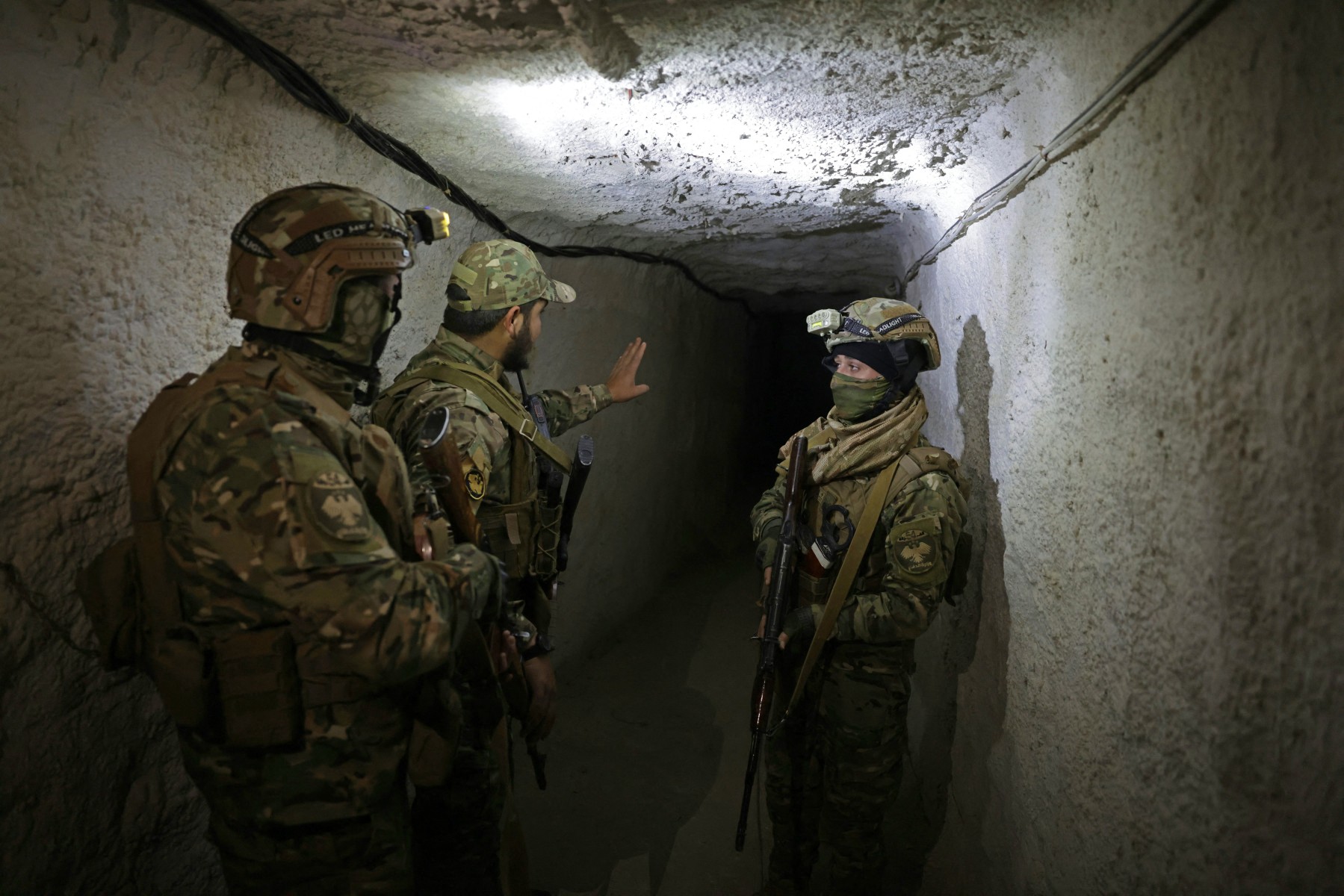
The Turkish factor complicates the picture further. Turkey is competing with Iran inside Syria, yet it is cautious about any outcome in which a complete defeat of the Iranian axis translates into unchecked Israeli dominance.
This is why the “balance” rhetoric used by Ghadban comes close to broader Turkish calculations, especially after President Recep Tayyip Erdoğan warned that Israeli strikes on Syria and Lebanon are now threatening Turkey’s own security.
On the other hand, amendments introduced by Republican Congressman Joe Wilson within a parallel track of the US defense budget have reopened the issue of Russian bases in Hmeimim and Tartus Naval Base. Here, the relationship with Moscow becomes part of the US bargaining package.
Washington seeks to reduce Russian influence or remove Russian forces from Syria, linking this objective to the security of the Turkish Incirlik Air Base, the war in Ukraine, the legacy of Russian support for the Assad regime, and Moscow’s ability to retain a strategic foothold on the Mediterranean.
Damascus, however, has recently dealt with Moscow through a logic of balance. Al Sharaa spoke in London about the possibility of turning Russian bases into training camps rather than pursuing a direct break with Russia.
The transitional authority understands that Moscow still holds practical leverage in oil, spare parts, armaments, and diplomatic veto power, in addition to the geostrategic importance of Tartus. The Israeli calculation also appears nontrivial; a complete Russian withdrawal could open the door to expanded Turkish influence, which Tel Aviv does not necessarily see as a clear gain.
Thus, the deal expands. Damascus is being asked, directly or indirectly, to rearrange its relationship with Russia on the coast, its borders with Lebanon, the position of the SDF in the east, and the structure of its new army. These are files that cannot be resolved in a single visit, but they explain why the timing of the visit itself becomes unstable.
Congress Sets the Terms of Passage
The Trump administration is pushing to open the political door to Damascus, while Congress is attempting to regulate and contain this opening. Alongside the issues of Russian bases, the integration of the Syrian Democratic Forces, and the development of Syrian military capabilities, a trend has emerged in the Senate linking US defense support to the Syrian government’s efforts to disarm foreign fighters and jihadists present in Syria.
This condition touches the core of the new military structure. The transitional authority is trying to form an army out of fragmented factions and overlapping chains of command, including foreign fighters who have shifted from being a jihadist and factional burden into a direct American test case.
Washington had previously shown some flexibility regarding the integration of certain fighters into the new Syrian army under conditions of control and transparency. However, turning this issue into a requirement for defense support signals a shift in US policy from containment toward structural reengineering.
The “big prize” for Damascus remains tied to a longer legal process: removing Syria from the list of state sponsors of terrorism. Although the US review process has advanced, formal delisting requires more than an administrative signature.
The presidential notification to Congress and the subsequent review period remain integral parts of the procedure. This designation, more than any single sanction, continues to weigh heavily on Syria’s return to the international financial system and pushes banks, companies, and governments to approach it with caution.
The equation appears clear. The White House opens the political channel, Congress converts openness into binding defense and security commitments, United States Central Command presents Syria as a central front in the fight against Islamic State of Iraq and the Levant, and the State Department manages sanctions and designations. Damascus, meanwhile, is attempting to translate this opening into gains without paying the full price at once.
From this perspective, the postponement or denial of the visit becomes part of its political substance. If it eventually takes place, it will not be a ceremonial occasion but a stage in a heavy negotiation over Syria’s new regional role.
September has been floated as a possible alternative date in unconfirmed discussions, but the conditions revealed by this ambiguity will not be postponed with it.
The Syrian-American relationship has entered a phase of major decisions. Damascus faces an open door in Washington, but behind it lies a broad political and security cost. The date may shift, but the agenda of conditions has already begun.