

Lebanon's Critical Talks in Washington Amidst Diplomacy
As preparations intensify for a pivotal fifth round of Lebanese Israeli American negotiations, Saudi mediation efforts gain momentum, Prime Minister Nawaf Salam accuses Iran of exercising decisive control over Hezbollah, and domestic tensions escalate over direct talks with Israel amid worsening conditions on the ground in southern Lebanon.



 Messenger
 Whatsapp
 Threads
 Email
Email
 Print
Print
 X
X
 Facebook
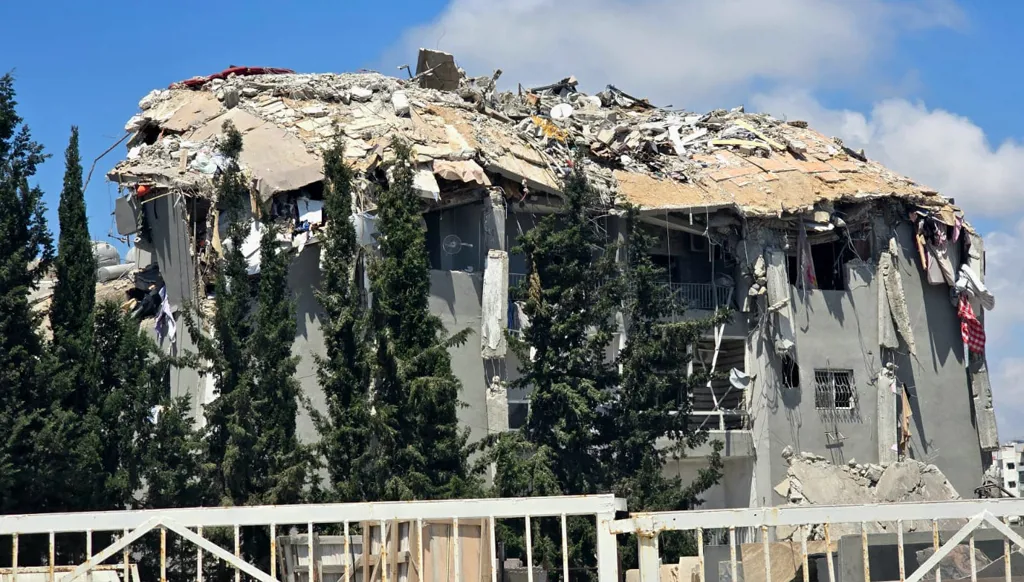


Although Lebanon has become increasingly concerned with tracking the phenomenon of the stark contradictions in the data and information released by both the American and Iranian sides regarding the memorandum of understanding, which is widely believed to be close to being announced, concluded, and signed in the near future, especially since these contradictions extend to the issue of a ceasefire in Lebanon, this has not overshadowed the growing diplomatic activity surrounding the specifically Lebanese track. This activity stems from preparations for the fifth round of Lebanese, Israeli, and American negotiations in Washington, scheduled to begin on 22 June.
Preparations for the upcoming round have coincided with notable Saudi diplomatic efforts, the developments of which have unfolded rapidly in recent hours. These efforts culminated in the arrival of the Kingdom's new ambassador, Fahd Al Dossari, in Beirut in preparation for presenting his credentials. At the same time, the Saudi envoy to Beirut, Prince Yazid bin Farhan, continues his meetings and contacts with senior Lebanese officials. These discussions cover political, security, and economic issues, with particular emphasis on the importance of maintaining internal unity.
Media reports indicated that contacts in recent hours among the Presidential Palace in Baabda, the Grand Serail, and Ain El Tineh revolved around what was described as a comprehensive Lebanese plan enjoying broad consensus, aimed at paving the way for a ceasefire with Saudi and Qatari support. The reports also referred to a meeting between the United States Ambassador to Beirut, Michel Issa, and Ali Hamdan, adviser to the Speaker of Parliament, focusing on details related to the pilot areas.
However, informed sources told Annahar that several communication channels are active on the Lebanese front, with the Saudi initiative being the most prominent among them. They stressed that talk of a specific plan remains within the framework of the ongoing negotiating option being pursued in Washington. Accordingly, it will be necessary to wait for the directions and proposals that are expected to emerge during the fifth round of negotiations. This round is expected to be highly significant from both an operational and field perspective, which explains the tendency to conduct it simultaneously on diplomatic and military tracks.
Al Sharaa rejects any possibility of interference in Lebanon
In this context, and in light of United States President Donald Trump's remarks regarding possible Syrian military intervention in Lebanon to eliminate Hezbollah, the denial issued yesterday by Syrian President Ahmad Al Sharaa carried important implications. Al Sharaa stated that reports suggesting that Syria would enter Lebanon are nothing more than rumours. He emphasized that Syria's approach is based on seeking to stop the war in Lebanon rather than expanding it or becoming involved in it.
Speaking before a delegation from the countryside of Damascus, he further explained that the issue of demarcating the border between Syria and Lebanon is not currently a priority, given the existence of more urgent matters, foremost among them the issue of approximately 1.4 million Syrian displaced persons in Lebanon and the need to establish an appropriate mechanism to ensure their return.
PM Salam: "we alone hold the final say", not Iran
As for domestic developments, Prime Minister Nawaf Salam made new and unequivocal remarks regarding Iranian involvement in the Israeli war on Lebanon. In an interview with the British newspaper The Times, he stated that "Iran's rejection of the ceasefire agreement with Israel did not come out of nowhere. Rather, it was intended to reaffirm that the real decision-making authority in Lebanon still rests solely with Tehran."
He added, "It is very clear why Iran rejected the ceasefire agreement. Iran wanted to tell the entire world that Lebanon is nothing more than a card in our pocket, and that we decide on Lebanon's behalf. We alone possess the final say."
Salam argued that Iran's rejection of the agreement, which came before Hezbollah had officially announced its own position, clearly reflects the extent of Iran's deep influence within the party and demonstrates the degree of its complete dependence on Tehran.
He continued, "If this rejection indicates anything, it points to the enormous level of control exercised by the Iranian Revolutionary Guard, not only over Hezbollah's military and security apparatus, but also over the party's internal decision-making process itself."
The Prime Minister also discussed the nature of Hezbollah's relationship with Iran during two different periods, noting that "things were entirely different during the tenure of the late Secretary General, Hassan Nasrallah." He added, "Nasrallah was, to a large extent, an integral part of the decision-making process, and he possessed both influence and a degree of relative independence."
Salam expressed the view that Iran now exerts direct and decisive influence over Hezbollah to an unprecedented extent. He went on to say, "Certainly, the only entity capable of mobilizing the resources necessary to rebuild what has been destroyed by the war is the Lebanese state itself. Reconstruction can only be carried out through the state and its institutions, just as Israel's withdrawal from occupied territories can only be achieved through negotiations conducted by the Lebanese state."
Hezbollah MPs reiterate condemnation of Washington negotiations
In contrast, the Loyalty to the Resistance Bloc escalated its campaign against the authorities, arguing that "the direct negotiations into which the government has drifted, in an attempt to bridge the gap of hostility toward the Zionist entity, have led to further internal division among the Lebanese people."
"These negotiations have proven to be in violation of the Constitution, the National Accord Document, and the applicable laws, all of which prohibit any relationship or communication with the enemy. The authorities, above all others, should be the most committed to implementing these provisions in defense of national principles and in protection of sovereignty and independence. Persisting with this course of action constitutes a foolish act of denial, making these negotiations a gratuitous act of political suicide that will achieve nothing."
The bloc specifically condemned "the latest round of direct negotiations conducted by the Lebanese authorities with the occupying Zionist enemy" and reiterated its complete rejection of all outcomes of what it described as unjust meetings that imposed unilateral obligations on Lebanon.
It also reaffirmed its rejection of the conditions and demands put forward by the enemy and adopted by the Lebanese negotiating delegation, despite the absence of any commitments requiring the enemy to cease hostilities, withdraw from Lebanese territory, facilitate the return of displaced persons, and contribute to reconstruction. According to the bloc, these are national priorities and fundamental principles that the political authorities should not overlook.
Intensified Israeli strikes and targets in the South
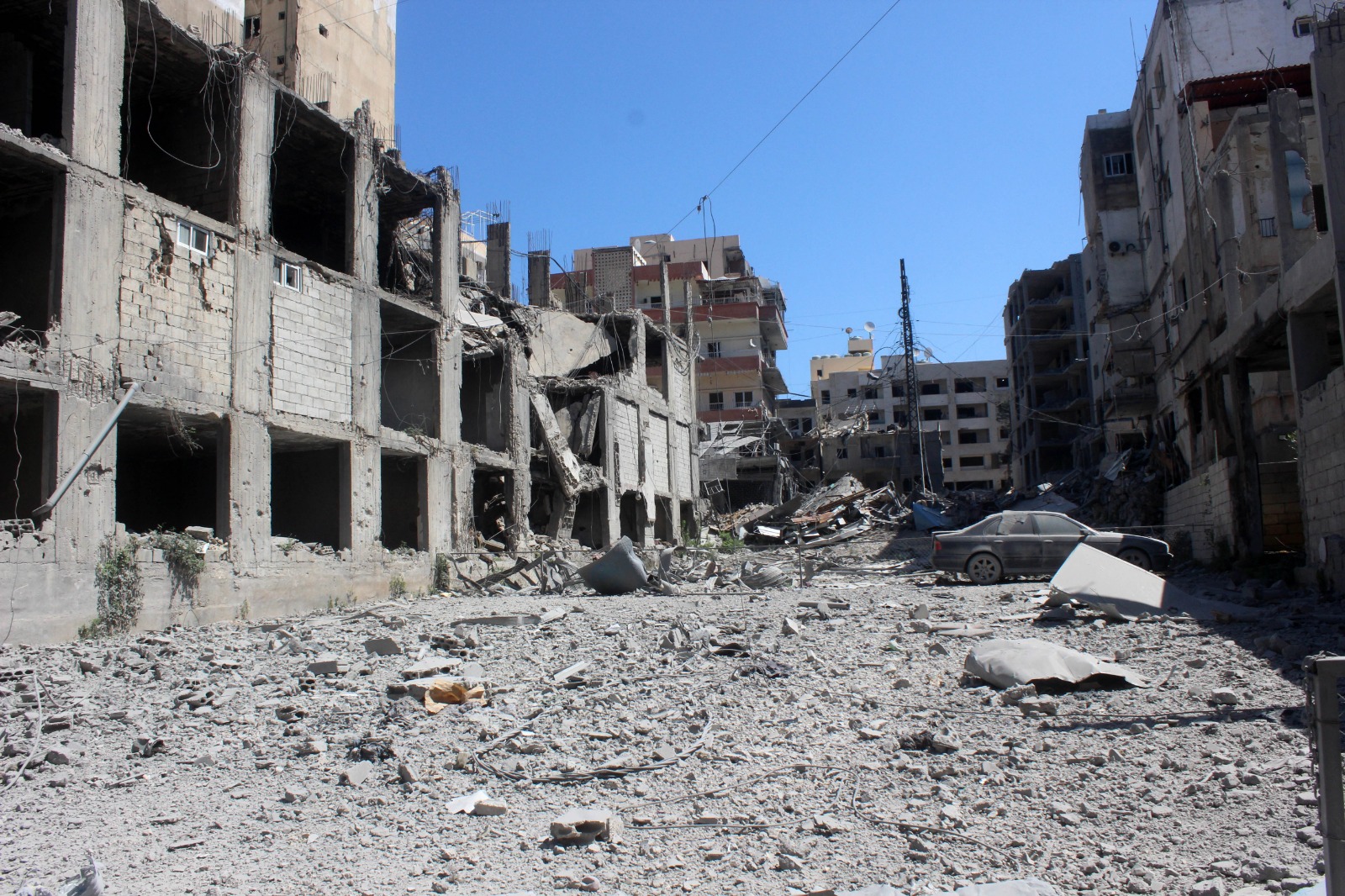
Meanwhile, as the situation on the ground intensified yesterday and Israeli airstrikes and warnings increased, the Israeli army announced the killing of Nasser Choucair, Hezbollah's commander for the Shaqif area, along with his successor, Ahmad Sbeilini, during the past few hours. The Israeli military also stated that more than ten Hezbollah field commanders had been killed in recent weeks, in addition to more than 1,300 fighters since the ceasefire came into effect.
As indications mounted that the Israeli army was approaching full control over the city of Nabatieh, attention turned to the appeal made yesterday by Sheikh Abdul-Hussein Sadiq, the Friday prayer leader of the city of Nabatieh, calling for the Lebanese Army to enter the city.
His statement came in the context of what he described as "our profound concern regarding reports broadcast by one of the media outlets, citing a Western source, alleging the existence of military infrastructure and extensive tunnels beneath the city of Nabatieh."
He urged the Lebanese state to "act urgently and assume its historic responsibility with regard to this dangerous and malicious report by investigating its background and conducting the necessary contacts to prevent any new targeting of the city and to protect what remains of its urban fabric, heritage, landmarks, and national legacy."
As part of this appeal to the state, he called for the Lebanese Army to be tasked with entering the city and for international media organizations, as well as any relevant international human rights bodies, to observe the reality on the ground, which he described as being clear for all to see, and to verify with ease the falsity of the suspicious report and refute its unfounded allegations.