

How war erased southern Lebanon's tourism industry: Resorts, hotels, and beaches reduced to rubble
From Tyre's once-crowded beaches to the hotels of Naqoura and the riverside retreats of Wadi Al-Hujeir, years of tourism investment have been wiped out, leaving southern Lebanon facing a long and uncertain road to recovery.



 Messenger
 Whatsapp
 Threads
 Email
Email
 Print
Print
 X
X
 Facebook
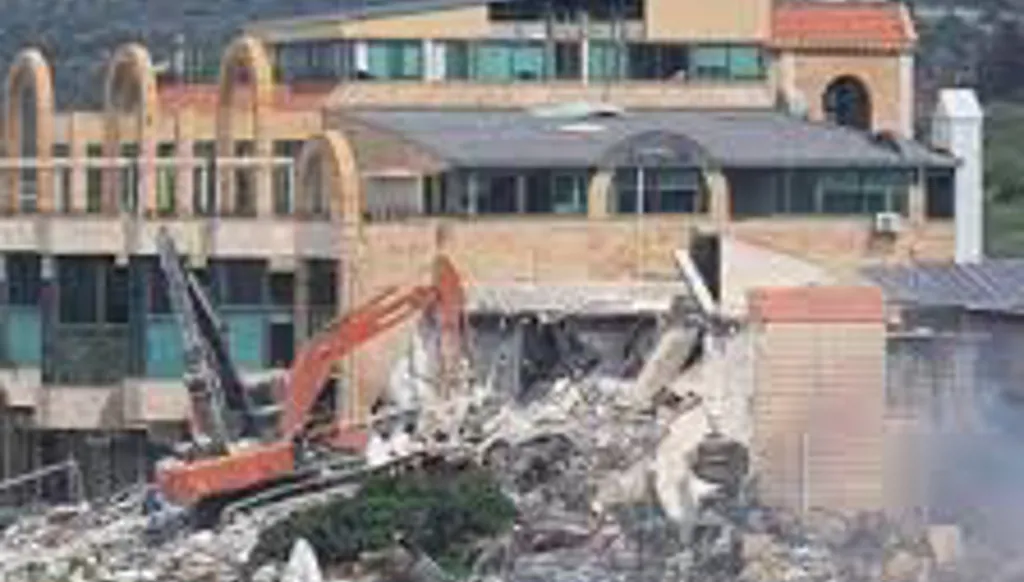


Southern Lebanon is no longer the same. Ongoing attacks have spared no city or town south of the Al-Zahrani River, with the most alarming consequence being the leveling of entire Lebanese communities, leaving no trace behind.
Beyond residential buildings, commercial institutions, hospitals, and places of worship, tourism establishments have also become targets of Israeli aggression, effectively devastating the tourism sector in the South.
From Wadi Al-Hujeir to Naqoura and Al-Bayada
At this time of year, the beaches of the city of Tyre would normally be crowded with visitors, as the coastline of the historic city is considered one of Lebanon's best swimming destinations thanks to its clean waters and beautiful sandy shores.
Today, however, different images dominate the scene. The Israeli army has circulated footage showing the destruction of depopulated Lebanese towns, deliberately publishing videos and photographs documenting the demolition of restaurants and hotels across the South, particularly in Naqoura and Al-Bayada.
The well-known "Amwaj Al-Bayada" and "Al-Safina" restaurants in Al-Bayada have become part of history, while Naqoura's hotels have been completely destroyed.
According to reports, despite objections from UNIFIL forces stationed near one of Naqoura's prominent hotels, the Israeli army brought in bulldozers to demolish the building and excavate the road leading into Naqoura to such an extent that it can no longer be normally traversed.
The destruction of tourist resorts also reached Wadi Al-Hujeir, once home to numerous restaurants, chalets, cafés, and rest areas. Today, there is virtually no trace of these establishments. The same fate befell resorts along the Litani River in the Nabatieh area.
Chalets in Bint Jbeil and Khiam were likewise not spared. Even municipal swimming pools were destroyed, including the municipal pool inaugurated by the Union of Bint Jbeil Municipalities around a year ago.
Incomplete Statistics
The Ministry of Tourism does not possess precise statistics on the number of resorts destroyed by the aggression for two reasons: the continued destruction and bulldozing, and the inability to access many of these locations to conduct inspections.
Nevertheless, the reality on the ground and aerial imagery reveal the near annihilation of tourism in the South, with reconstruction expected to take years.
The destruction of infrastructure began with attacks targeting bridges over the Litani River, particularly the Burj Rahal and Qasimiya bridges, in addition to Talbhessiyeh, Zarariyeh, and others. This severed a vital artery for tourism and erased hundreds of tourist establishments along the Litani River from Lebanon's map.
According to Ministry of Tourism estimates prior to 2023, southern Lebanon was home to approximately 200 tourist establishments, including hotels, chalets, and motels. Complete and partial destruction had reached around 65 percent. This year alone, roughly 50 percent has been destroyed, particularly along the Tyre coastline and the banks of the Litani.
In Naqoura, all chalets, hotels, and restaurants were destroyed. The same occurred in Al-Bayada and extended to Shemmah, where archaeological and tourist sites also fell victim to Israeli bulldozers.
In Khiam, chalets and parks surrounding the Dardara Spring were wiped out. In the Bint Jbeil district, rural restaurants, chalets, and furnished apartments were erased. Similar destruction affected the towns of Kfarsir, Qaaqaiyet Al-Jisr, Arab Salim, and others.
Lahoud: The Solution Lies in Negotiations
Tourism Minister Laura Lahoud told Annahar that the security situation in Lebanon affects not only hotels and restaurants, but the entire economic chain dependent on tourism activity, from transportation and car rentals to food suppliers, service providers, seasonal businesses, and freelance workers.
She explained that "when tourism stops, we do not only lose the revenues of specific establishments, but the flow of liquidity across a broad network of activities directly and indirectly linked to it also declines. The sector's ability to rescue itself remains, as always, and we have full confidence in that resilience. However, it faces genuine challenges. Lebanese tourism has traditionally been resilient, but it cannot single-handedly withstand open warfare or a regional shock that drives up travel, insurance, and energy costs."
Regarding losses, Lahoud said that "Ministry of Economy estimates indicate losses ranging between $60 million and $80 million during the escalation phase. However, these figures relate to the broader economy and do not represent tourism losses exclusively.
Current estimates suggest that the cumulative cost of the war has reached at least $10 billion. Therefore, assigning a specific daily figure to tourism losses at this stage would amount more to speculation than to sound professional estimation."
She added that the ongoing economic pressures continue to undermine confidence among tourists considering Lebanon as a destination.
Addressing losses in the South's tourism sector specifically, Lahoud clarified that "the figures come from unions, but conditions change daily. Even the unions' numbers are not presented in the form of official, detailed tables. They should therefore be treated as indicators of the direction in which the situation is heading rather than as final official statistics. This is a source of genuine concern, particularly given the inability to access many sites for field inspections."
She stressed that "the only path to rescue is ending the war and moving forward on the road to peace and negotiations led by President Joseph Aoun and Prime Minister Nawaf Salam (...)."