

Is Iran abandoning strategic patience? Tehran’s shift toward active deterrence
After decades of relying on proxies and calibrated responses, Iran's recent direct strikes against Israel and the United States raise questions about whether a new security doctrine is emerging.



 Messenger
 Whatsapp
 Threads
 Email
Email
 Print
Print
 X
X
 Facebook
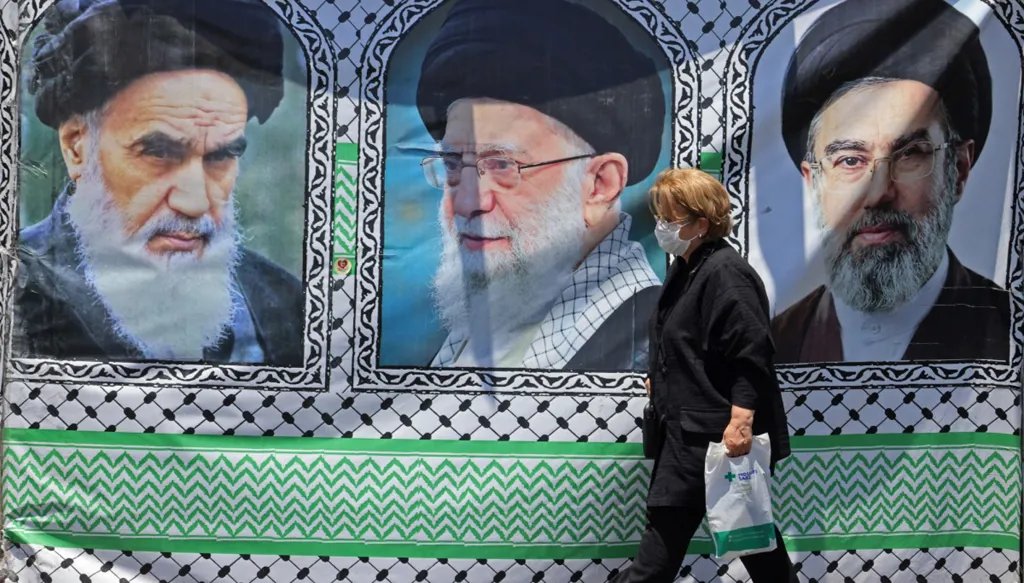


The recent Iranian strikes against Israel and the direct escalation with the United States have raised questions about whether Tehran is moving away from its traditional approach of "strategic patience" and indirect responses.
While some observers believe the current Iranian leadership appears more willing to take risks and employ force directly, others argue that what is unfolding amounts to a recalibration of deterrence tools rather than a fundamental shift in objectives or security doctrine.
These discussions have gained greater significance amid the growing direct confrontations between Iran and its adversaries, after Tehran spent decades managing much of its regional conflicts through allies, proxies, and carefully calibrated responses.
The Iranian strikes targeting Israel this week, along with the recent escalation involving the United States, were among the boldest steps in Tehran's efforts to redraw the boundaries of confrontation.
At dawn on Thursday, the region witnessed a dangerous military escalation between the United States and Iran, with both sides carrying out direct strikes, fueling concerns over the security of navigation through the Strait of Hormuz.
The two sides had also exchanged fire on Tuesday night into Wednesday following the downing of a U.S. Army helicopter earlier in the week, underscoring the continued state of tension and instability across the region.
By targeting Israel in response to attacks on its allies in Lebanon, Tehran appeared to be seeking to broaden the deterrence equation to include its regional partners as well, signaling that any attack against them could trigger a direct Iranian response.
The Legacy of 'Strategic Patience'
For years, Iran relied on a policy of avoiding direct confrontation whenever possible, favoring gradual or indirect responses that allowed it to preserve leverage and avoid slipping into full-scale war.
In 2020, the first Trump administration broke a long-standing taboo by assassinating Quds Force commander Qassem Soleimani, the highest-ranking Iranian official killed by the United States at the time.
Iran's response, led by the late Supreme Leader Ali Khamenei, reflected a preference for calculated retaliation rather than uncontrolled escalation. Tehran targeted the Ain al-Asad base in Iraq after providing indicators and warnings that enabled American forces to take preventive measures.
In June 2025, when the United States joined Israel in attacking Iran, Tehran once again opted for a measured response, reflecting its continued commitment to managing escalation and avoiding open confrontation.
From Traditional to Active Deterrence?
Observers believe the latest developments may indicate an Iranian attempt to establish a new equation—one that deters not only attacks on Iranian territory but also any targeting of its allies and wider regional influence network.
Dr. Firas Elias, an expert on Iranian affairs, told Annahar that "the recent Iranian strikes indeed reflect the rise of a more risk-taking leadership and security generation compared to the Iranian leaders who governed Tehran's behavior over past decades," while noting that "it is too early to say that Iran has completely abandoned the doctrine of strategic patience."
He added that "what we are witnessing is a redefinition of this doctrine rather than a departure from it. Previously, Iran tended to absorb pressures and delay responses or execute them indirectly through its allies and proxies in the region. Today, it seems more prepared to use force directly when it feels its deterrent status or national security is seriously threatened."
He further pointed out that "this shift reflects an increasing conviction within Iranian decision-making circles that not responding may weaken deterrence more than maintain stability."
A Change in Tools, Not Goals
However, Elias does not believe that "Iran has shifted to an open offensive policy, as its behavior remains governed by precise calculations aimed at avoiding full-scale war with the United States or Israel."
Therefore, it can be argued that Tehran has moved from a phase of "strategic patience" to one of "active deterrence" or "calculated escalation," seeking to send clear messages of strength without crossing into total confrontation.
Elias concluded that "the recent strikes do not reflect a change in Iran's strategic objectives as much as they reflect a change in the tools and means used to achieve these objectives, which may be one of the most significant transformations in Iran's security doctrine in the coming phase."
While it remains difficult to speak of a complete reversal in Iranian doctrine, current indicators suggest that Tehran has become more willing to use force directly when it believes traditional deterrence formulas are no longer sufficient—a shift that could have far-reaching implications for the nature of confrontation in the region in the years ahead.