

Inside Iran's quiet collapse: How war and economic despair are fracturing society
While global attention remains fixed on missiles and diplomacy, ordinary Iranians are grappling with a deepening social crisis that is eroding the middle class and testing the regime's grip on power.



 Messenger
 Whatsapp
 Threads
 Email
Email
 Print
Print
 X
X
 Facebook
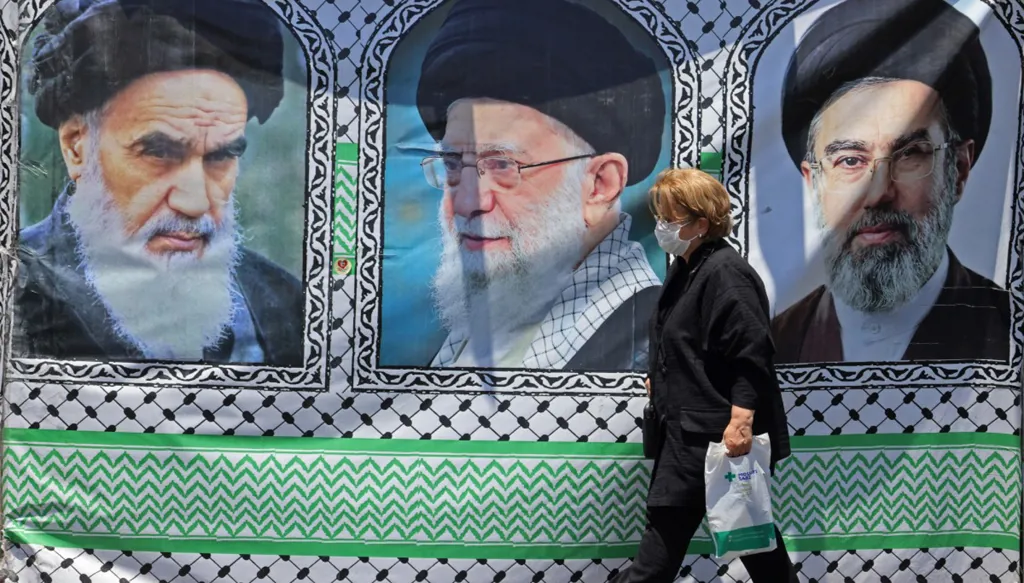


The renewed confrontation between the United States and Iran, following the unannounced failure of negotiations between the two sides, reveals that the era of crisis is far from over. It also suggests that the Revolutionary Guard is engaged in what it frames as a "sacred" war, driven by a deadly narrative that is increasingly aware of its declining ability to mobilize support at home.
As a result, the Iranian regime has chosen to confront internal dissent through the harshest forms of surveillance and control, relying on excessive violence and drawing support from ideological militias from abroad to reinforce the Basij forces.
For years, Iranian society has often been portrayed as submissive to the authority of an ideological regime, preoccupied with the routines of daily life under the weight of sanctions and recurring crises. Yet, before the war, Iranian society repeatedly demonstrated a remarkable capacity for mobilization through protests and demands that directly challenged the foundations of the regime and its ideological narrative.
The current wartime conditions have shifted attention primarily toward military operations, the future of the Iranian regime, the economic consequences of the conflict, and the fate of the regional order. Far less focus has been placed on Iranian society itself and the war's impact on ordinary people.
Meanwhile, the regime has pursued a policy of widespread denial and near-total isolation from the outside world, blocking internet access for extended periods. The partial easing of these restrictions days ago exposed fragments of the reality inside the country.
Reports from the Iranian opposition indicate that the crisis in Iran can no longer be reduced to figures in economic reports or sanctions discussed in diplomatic circles. Beyond these headlines lies the quiet unraveling of the country's social fabric. The impact is no longer confined to the poor; it now extends deeply into the middle class, long regarded as the safety valve of Iranian society.
The Iranian Middle Class and "Ledger" Books
Reports from the Iranian opposition suggest that domestic Iranian journalism has itself revealed the country's reality. Among the most striking examples was reporting by Shargh, an official newspaper, whose coverage proved more revealing than many opposition statements.
A field report from the heart of Tehran painted a stark picture of the crisis: "ledger books" have returned to shops in middle-class neighborhoods.
These daily accounting books, used by vendors to record purchases under customers' names to be paid later—often at the end of the month after salaries are received—reflect a painful reality: the middle class can no longer meet its basic needs. Bread is requested in halves, fruit is bought by the piece rather than by the kilogram, and tuna cans are moved from store shelves to behind the counter out of fear of theft. These are not insignificant details; they are symbolic indicators of a profound fracture in the daily dignity of Iranian citizens.
The crisis extends beyond questions of livelihood. Reports published by Donya-e-Eqtesad on resident doctors considering emigration—or regretting their choice of profession altogether—place the situation in an even deeper context. When elites and professionals begin to view emigration as the most rational option, society loses more than its workforce; it loses confidence in the possibility of a future worth building. Countries that lose their skilled professionals face not only shortages in expertise but also a gradual erosion of their capacity for progress.
Revolutionary Guard's Dominance over the Economy
The painful paradox is that the regime consistently presents this collapse as the consequence of external sanctions and foreign conspiracies, reinforcing a narrative of victimhood. Yet economic realities suggest that the roots of the crisis are largely internal: an economy dominated by the military establishment led by the Revolutionary Guard, organized corruption that safeguards its privileges through the force of law, and extensive spending on instruments of repression and regional expansion while society is left to cope with constantly rising prices and salaries that steadily lose their value.
Past uprisings across Iran, particularly those that erupted in cities before the current war, were not driven solely by political or ideological opposition to the system. They emerged, above all, from the depths of a social and economic crisis shaped by mounting inflation, daily humiliation, and the absence of meaningful prospects for the future.
The stability of any country is not measured merely by the absence of war on its streets. It is measured by its ability to give its citizens a reason to stay, to invest in their future, and to hope. That is precisely what Iran appears to be losing more with each passing day, beyond the reach of slogans and propaganda.
Disclaimer: The opinions expressed by the writers are their own and do not necessarily represent the views of Annahar.