

The Lebanese lesson Iraq is watching: Why disarming armed factions becomes a generational struggle
A three-decade Lebanese experience shows how exceptions turn into political realities, and why disarmament becomes harder once weapons merge with identity and power.



 Messenger
 Whatsapp
 Threads
 Email
Email
 Print
Print
 X
X
 Facebook
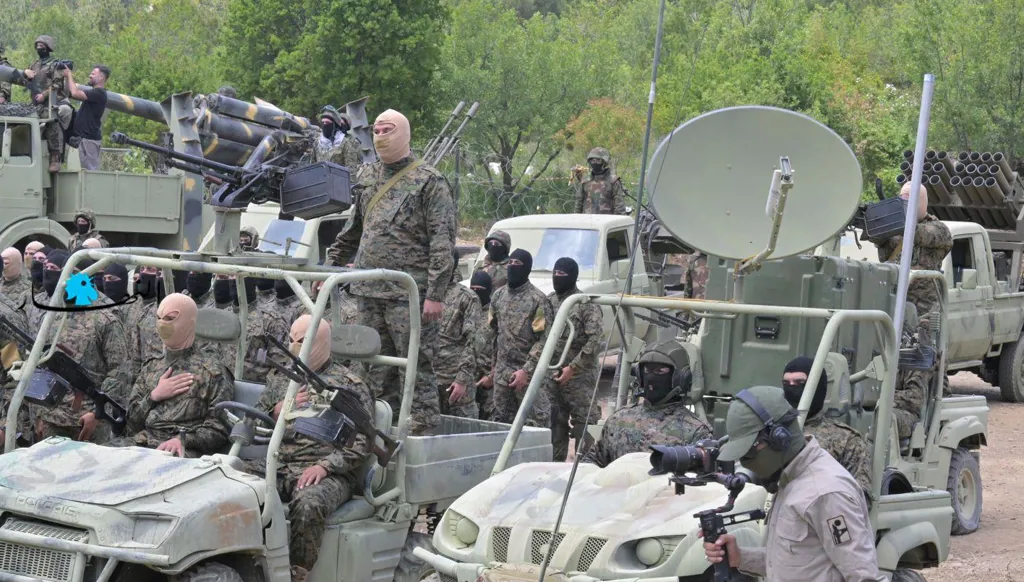


Whenever the discussion in Iraq turns to the future of armed factions’ weapons and the possibility of integrating them into state institutions or placing them under state authority, Lebanon often emerges as the closest reference point. Not because Lebanon succeeded in resolving this dilemma, but quite the opposite: because it has been living with it for over three decades without reaching a final settlement.
The Lebanese lesson does not lie in how to hand over weapons, but in how they gradually transformed from a purely military tool into a complex political, sectarian, and national issue, making their resolution increasingly difficult over time.
After the end of the civil war and the signing of the Taif Agreement in 1989, the Lebanese state followed a clear path based on dissolving militias and collecting their weapons. Most armed groups complied, particularly the Christian organizations, which ended their military presence and handed over their arsenals to the state. At that time, it appeared that Lebanon was moving toward a state monopoly over weapons. However, a single exception was enough to change the entire trajectory.
“Hezbollah” was exempted from the disarmament process under the pretext of resisting the Israeli occupation of southern Lebanon. This was understandable to many at that stage, but what followed was that this exception gradually turned into a fixed rule, while the idea of it being temporary and tied to specific circumstances steadily faded.
After the Israeli withdrawal from the south in 2000, some Lebanese believed the weapons issue would naturally enter a new phase. However, the party succeeded in re-legitimizing its retention of arms through various narratives, eventually consolidating a more critical equation: linking its weapons to the Shiite community’s position within the Lebanese system.
This marks the fundamental turning point in the Lebanese experience. The debate was no longer about a political party’s or armed organization’s weapons, but about whether challenging these weapons would amount to challenging the entire sect’s role and position within internal power balances. As this perception deepened within the party’s supportive base, any discussion of disarmament began to be viewed in a completely different light than it had been after the Taif Agreement.
Since 2005, dozens of national dialogue sessions have been held. Defensive strategies were proposed, and presidents, prime ministers, and political leaders repeatedly emphasized the necessity of restricting weapons to the state. Yet, nothing materially changed on the ground. The issue was not a lack of knowledge or information, but rather the absence of political capacity to translate these proposals into concrete action.
Even after the latest war and the understandings that followed in 2024, Lebanon did not witness an organized and comprehensive process of transferring Hezbollah’s weapons to the state. What actually took place was the deployment of the Lebanese Army in specific areas and its supervision over certain sites and points, while the major questions surrounding the core military arsenal remained unresolved.
In this context, one of the most widespread ideas in Lebanon is misleading. that the problem has always been about knowing the location of the weapons. In reality, the Lebanese state has not been unaware of much of the details related to the party’s military structure. The problem has always been, and remains, a political decision and the balance of power that determines how this reality is addressed.
The same applies to the Palestinian weapons issue in the camps. Despite dozens of initiatives and political declarations discussing the regulation, control, or collection of weapons, most steps have remained symbolic and media-focused rather than actual measures capable of producing fundamental change.
Therefore, when Iraqis reflect on their own experience today, it may be useful to closely examine the Lebanese experience. Weapons become more difficult to address the longer they persist and become embedded in the political and social identity of their constituency.
When any organization succeeds in convincing its community that its weapons are the guarantee of their existence, role, and future, the issue extends far beyond a simple governmental decision or security measure.
This is precisely what Lebanon tells Iraq today. The problem is not in collecting the weapons, but in preventing them from becoming part of the system’s structure itself. If they reach that stage, the process of returning them to state authority becomes long and arduous, potentially stretching over decades, just as happened in Lebanon.