

From Riyadh to Istanbul: The rail project that could redraw the Middle East's trade map
More than a century after the Ottoman-era railway fell silent, Riyadh and Ankara are betting on rails to reshape trade, reduce dependence on vulnerable sea routes, and redefine regional influence.



 Messenger
 Whatsapp
 Threads
 Email
Email
 Print
Print
 X
X
 Facebook
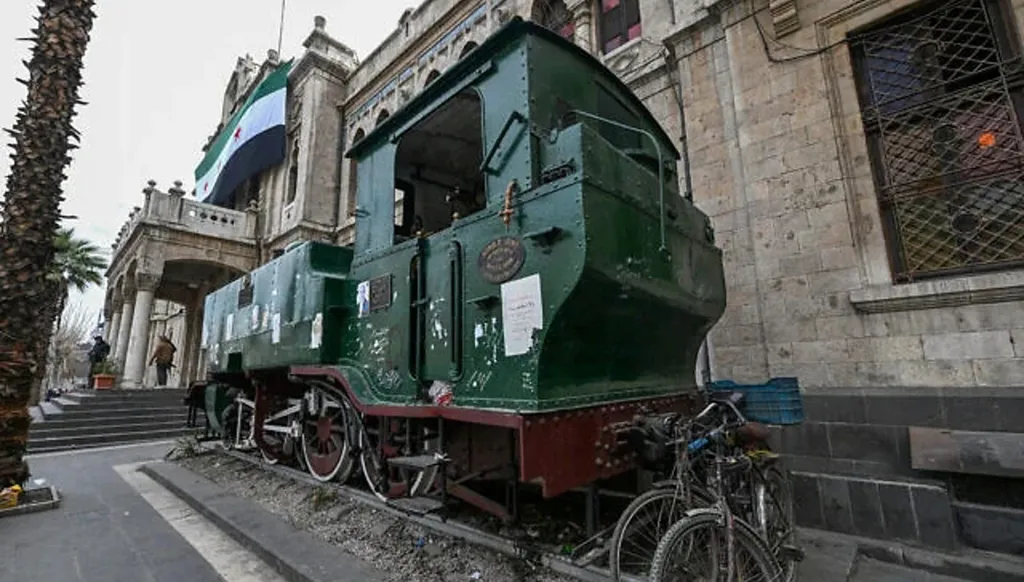


More than a century ago, steam rose from trains crossing the Hejaz desert, heading north toward Damascus and then Istanbul. Inaugurated in 1908 during the reign of Ottoman Sultan Abdul Hamid II, the Hejaz Railway carried pilgrims, goods, and mail across thousands of kilometers, linking territories that today appear fragmented by borders.
However, World War I and the unrest that followed buried this vital artery beneath the sands. For decades, it remained more a historical relic than a living project — until Tuesday, June 9, 2026.
Riyadh, June 9, 2026
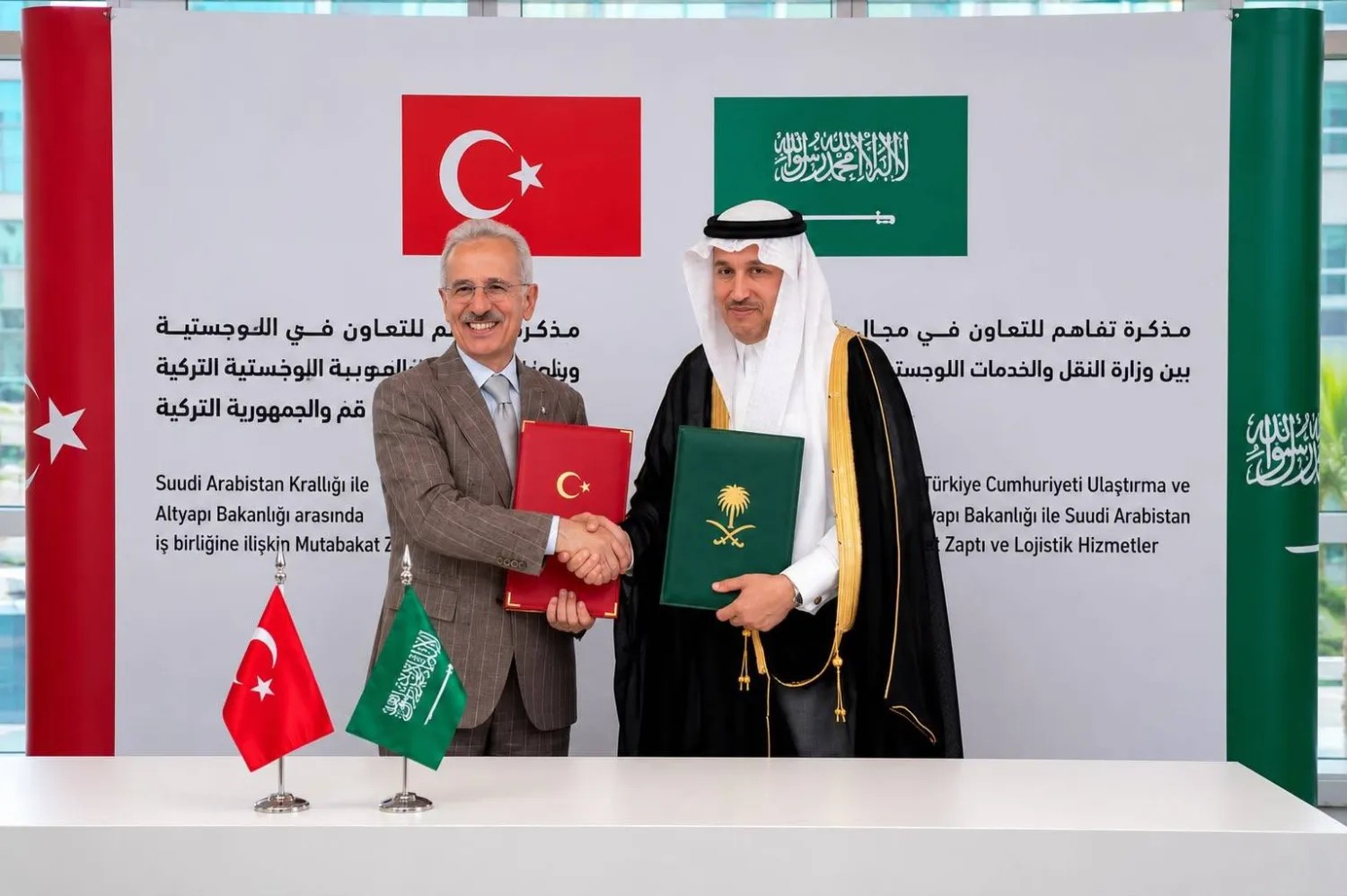
In the Saudi capital, Saudi Minister of Transport and Logistics Services Saleh Al-Jasser and his Turkish counterpart, Abdulkadir Uraloglu, signed two memorandums of understanding: the first on cooperation in the railway sector between Turkey's Ministry of Transport and Saudi Arabia's General Authority for Transport, and the second concerning logistics services between the two countries' ministries.
The agreements aim to revive and develop a railway network connecting Turkey and Saudi Arabia through Syria and Jordan. Stretching more than 3,000 kilometers from Riyadh to Istanbul, the first phase focuses on linking and modernizing the railway networks of Turkey, Syria, and Jordan. Saudi Arabia's railway already reaches the Jordanian border through Haditha Port and is expected to integrate with the network extending south from the north.
Al-Jasser confirmed that joint feasibility studies for the project will be completed by the end of 2026.
Turkish Minister of Transport Abdulkadir Uraloglu said the railway link between Saudi Arabia and Turkey could be completed within the next three years, adding that the project may eventually extend into Europe.
In a televised statement following the signing ceremony, Uraloglu said the financial details of the Riyadh-Ankara railway connection would soon become clear. He also suggested that Iraq and other Gulf countries could eventually join the initiative.
He noted that the Saudi-Turkish railway project would begin in Saudi Arabia, pass through Jordan and Syria, and continue into Turkey. Saudi Arabia has already completed the section reaching the Jordanian border, while Turkey's network extends to the Syrian border, leaving the Jordanian and Syrian segments still to be developed.
More than Just a Railway
Joseph Salem, partner and head of the transportation and hospitality sector practices at Arthur D. Little Middle East, believes that what happened in Riyadh goes beyond the signing of agreements.
"Reviving the Hejaz Railway is one of the most significant infrastructure projects in the modern history of the region. The two memorandums of understanding signed in Riyadh between Saudi Arabia and Turkey — one for logistics services and the other for railway technology — bring the project a step closer to implementation," he said.
Salem added that "an operational line would provide the Gulf with a direct land trade route to Europe, reducing reliance on sensitive maritime routes at a time when supply chain resilience is becoming an increasing strategic priority."
However, he cautioned that "the main challenge remains execution, whether in terms of financing, the stability of transit routes, or transforming feasibility studies into actual investments."
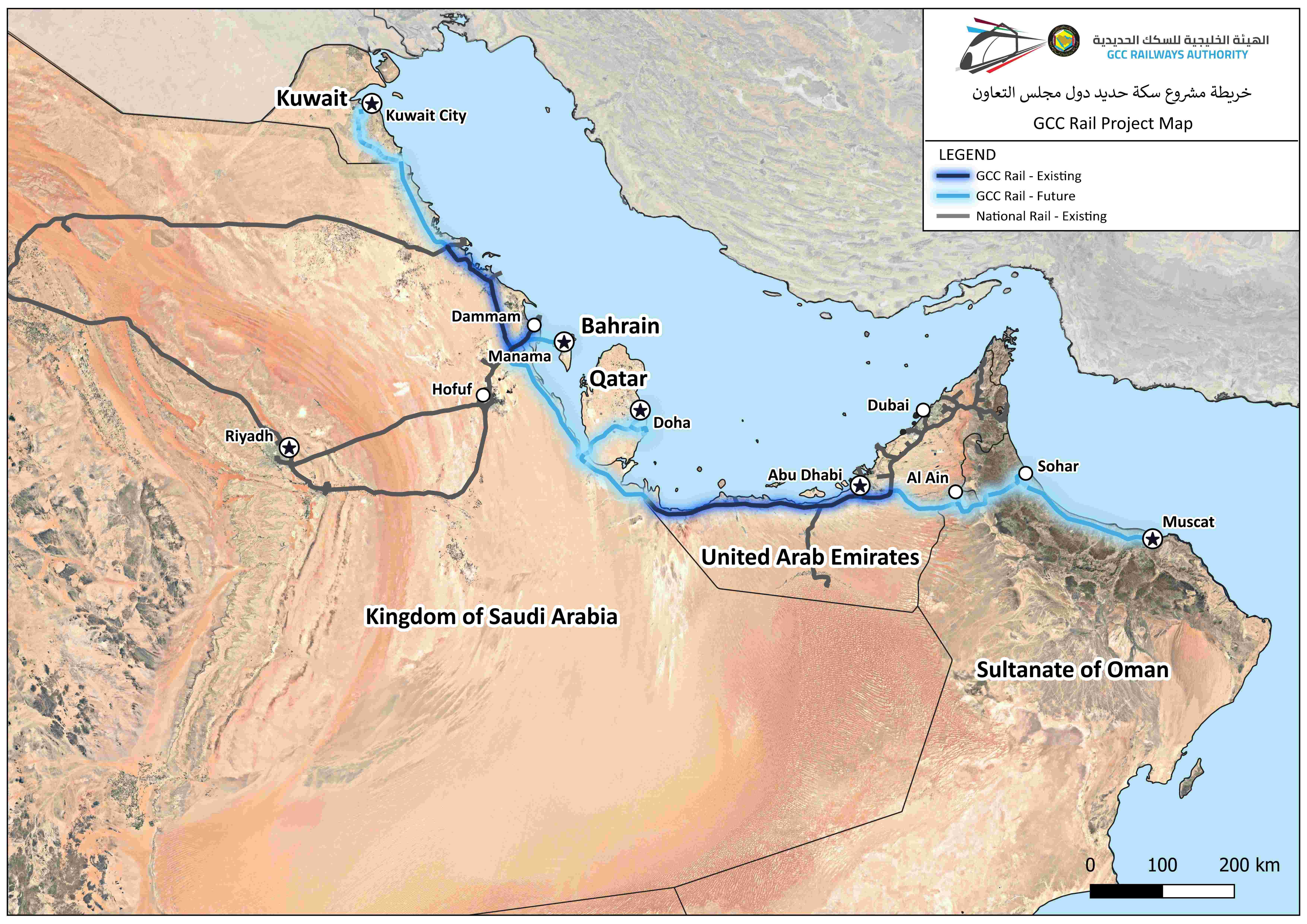
At the same time, another major transportation system is taking shape across the region. The Gulf Railway, now more than 50% complete, spans 2,117 kilometers and is designed to connect Kuwait to Muscat, with full operations targeted by 2030.
The UAE has advanced furthest, launching Etihad Rail's passenger services in 2026, while Saudi Arabia is issuing tenders for the design of its 672-kilometer segment and Kuwait has begun constructing its border line.
This makes linking the Gulf network with the Hejaz line a natural extension of a regional system already moving toward maturity.
A Highly Significant Timing
The project cannot be viewed in isolation from the broader geopolitical landscape.
Since 2023, Houthi attacks in Yemen have disrupted commercial shipping through the Red Sea and the Bab-el-Mandeb Strait, forcing major shipping companies to reroute around the Horn of Africa, adding both time and cost to their journeys. These disruptions have been compounded by heightened tensions between Iran and the West in the Strait of Hormuz.
Against this backdrop, Dr. Ali Al-Hazmi, an economic analyst and member of the American Economic Association, sees the initiative as far more than a railway connection. He describes it as "a large-scale re-engineering of trade."
Al-Hazmi said the land corridor linking the Gulf to Turkey and onward to Europe is "extremely important as either an alternative or a complement," particularly given recurring disruptions in the Red Sea and tensions in the Strait of Hormuz.
He added that the project "will significantly reduce transit times and increase supply chain reliability," potentially transforming Saudi Arabia from a terminal market into a hub for connectivity, transit, and re-export between Asia and Europe.

The Gulf as a Logistics Bloc
Al-Hazmi believes the project could transform the Gulf from six neighboring states into an integrated logistics bloc, boosting intra-regional trade, lowering land transport costs, and supporting ports, industrial zones, economic hubs, and export centers.
It would position Saudi Arabia as a "logistics congregation," attracting Gulf shipments and directing them north toward Turkey and Europe.
He noted that Saudi Arabia occupies the critical geographical position between the Gulf and the north. The Gulf Railway is expected to extend more than 2,000 kilometers from Kuwait through Saudi Arabia, Bahrain, and Qatar to Oman, with Saudi Arabia accounting for more than 670 kilometers of the network.
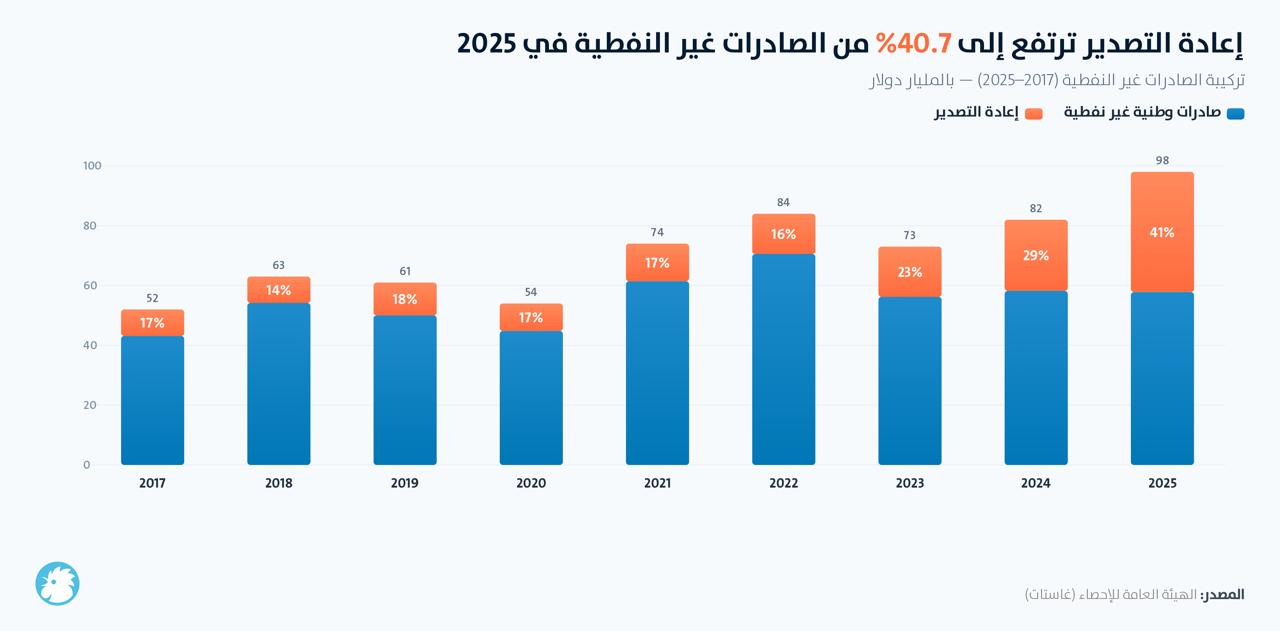
Recent years have also witnessed a noticeable increase in Saudi Arabia's re-export activity, partly driven by the expansion of the Kingdom's logistics sector under Vision 2030.
According to data from the General Authority for Statistics (GaStat), Saudi re-exports surged from 32.3 billion SAR ($8.6 billion) in 2017 to 148.9 billion SAR ($39.7 billion) in 2025, marking growth of 361% over eight years.
During the same period, the share of re-exports within non-oil exports rose from 16.7% to 40.7%, making re-exports a strategic pillar rather than a commercial margin.
Redrawing Regional Balances
The implications may extend beyond economics. Dr. Neil Quilliam, General Manager of Azure Consulting, believes the project could reshape regional balances by "reviving an older corridor and imparting new importance to land connectivity at the expense of existing maritime routes."
This would place Saudi Arabia and Turkey at the center of trade flows between the Gulf and Europe and "might pull economic and logistic weight away from arrangements involving Israel and the UAE, since trade will no longer need to pass through those channels."
Quilliam further suggested that an effective land corridor would reduce dependence on maritime routes associated with Jebel Ali Port and on straits close to Iran, "potentially narrowing the scope that both the UAE and Iran benefit from current trade flows."
He also argued that the initiative could encourage deeper cooperation among GCC countries, "adding weight to Saudi Arabia's position within the group."
On a broader regional level, he sees the corridor supporting "the emergence of a more cohesive regional route linking Asia to Europe, contributing to the economic development of Syria and Jordan," while enhancing the collective influence of participating countries in shaping regional connectivity and the political direction of the region.

Challenges Persist
The opportunities do not obscure the substantial challenges ahead. The proposed route passes through Syrian territory that remains in a fragile phase of institutional reconstruction following years of war. In addition, harmonizing technical specifications across the railway systems of Turkey, Syria, Jordan, and Saudi Arabia presents a complex engineering and regulatory task.
Salem summarized the challenge by noting that "the importance of these two memorandums lies in addressing the fundamental pillars of any cross-border railway project, including the unification of technical specifications, signaling standards, and regulatory alignment."