

Lebanon-Israel Conflict: 100 Days of Escalation
As the Israel-Hezbollah war enters its 100th day, Lebanon braces for crucial U.S.-backed talks amid expanding strikes, renewed diplomacy, and growing international involvement.



 Messenger
 Whatsapp
 Threads
 Email
Email
 Print
Print
 X
X
 Facebook
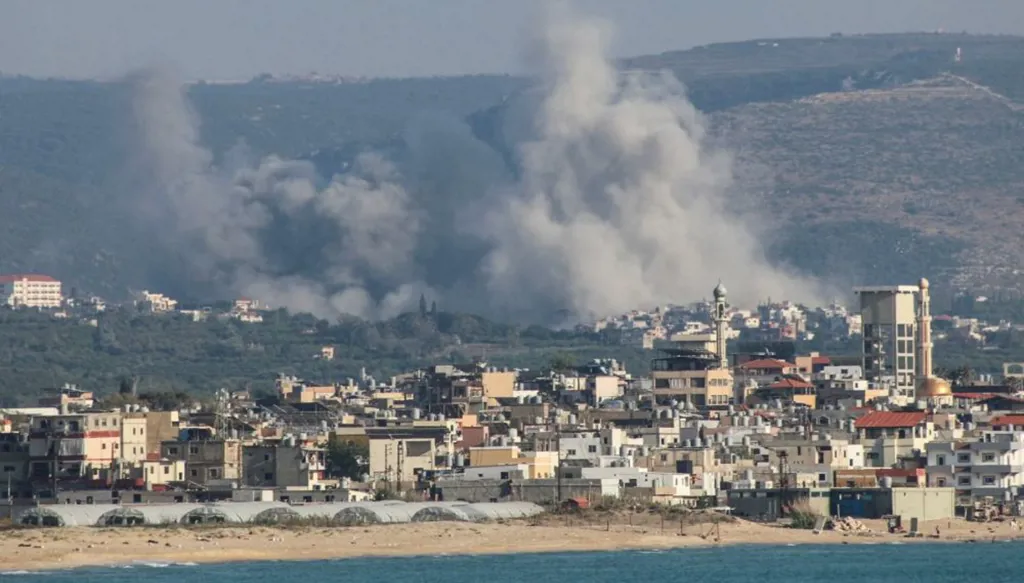


Amid the prolonged field exhaustion engulfing all of Lebanon, even as the south and parts of the western Bekaa remain the direct theater of destruction, the ongoing war between Israel and Hezbollah since March 2 has entered its 100th day, with no tangible prospect of an end in the near future.
As the escalating battlefield realities point to further exhaustion, official Lebanese preparations are intensifying for the fifth round of negotiations between Lebanon and Israel, sponsored by the United States and scheduled to take place in Washington on June 22.
This round carries added significance in light of the increasingly complex security procedures under discussion, as outlined in the statement issued after the fourth round, particularly those related to the ceasefire and the proposed experimental areas.
The developments that follow this round, together with the repercussions of the evolving situation between Iran and Israel, are expected to make the upcoming talks especially consequential in shaping potential outcomes.
Preparations for the negotiations are also accompanied by close monitoring of the movements of U.S. Ambassador Michel Issa in Beirut. Issa has sought to persuade the Shiite duo, particularly Parliament Speaker Nabih Berri, to endorse the proposal for experimental zones and commit to a comprehensive ceasefire, paving the way for the implementation of the first phase of the agreement announced after the previous round of negotiations.
United Nations Intervention
Against this backdrop, it was notable that the United Nations, for the first time since the outbreak of the current war on March 2, entered efforts to contain the conflict by monitoring human rights violations.
The United Nations announced yesterday that it had reached an agreement with Lebanese authorities to dispatch an investigation team to collect evidence of alleged "war violations" committed by all parties.
UN High Commissioner for Human Rights Volker Turk said he would send a mission to Lebanon to verify possible violations of human rights committed since the outbreak of the war between Hezbollah and Israel in March.
Turk told journalists: "I have agreed with the Lebanese government to conduct an independent and neutral assessment mission in the country." He added: "I will soon deploy a team to gather information and evidence regarding alleged violations and abuses of international human rights law, international humanitarian law, and related legal frameworks committed by parties to the armed conflict in the country since March 2."
On the political front, President Joseph Aoun's near-daily affirmations of Lebanon's commitment to negotiations stood out, reflecting the growing challenges facing the state as it seeks to demonstrate credibility and consistency abroad amid Hezbollah's fierce campaign against the government and the escalating military posture adopted by both Hezbollah and Israel.
In additional remarks yesterday, President Aoun said: "I have decided on negotiations and will continue until the end because Lebanon is a founding member of the United Nations and possesses its own entity and sovereignty. This stems from my conviction that wars bring nothing but losses shared by all."
He added: "A return to the era of mandates is unacceptable, regardless of their nature. We welcome assistance from any country, but there is a vast difference between support and interference in Lebanon's internal affairs to serve the interests of any state at the expense of Lebanese interests, which we reject. Assistance from Gulf countries, European countries, and others is welcome, provided there is no meddling in our internal affairs to advance their own agendas."
The president also stressed that he is in complete agreement with both the Speaker of Parliament and the Prime Minister, contrary to what he described as media propaganda. He said that any difference in opinion is natural and enriching, that communication remains ongoing, and that their common objective is the public interest. "The relationship that binds us is more than excellent, and whatever is being said to the contrary is false," he said.
Meanwhile, Israeli media published a video message by Israeli President Isaac Herzog addressed to Lebanese President Joseph Aoun and the Lebanese people. In it, Herzog said: "I extend the hand of peace to the President of Lebanon and to the Lebanese people, but you must keep Lebanon free from the Iranian regime and Hezbollah, and ensure that Lebanon remains an independent and sovereign state." He added: "I dream of traveling to Beirut, provided that Lebanon's future remains in Beirut, not Tehran."
Diplomatic Movements
As part of ongoing diplomatic efforts, Parliament Speaker Nabih Berri met Egyptian Ambassador Alaa Moussa in Ain el-Tineh. Following the meeting, Moussa said: "What I heard from President Berri does not differ from the positions of Presidents Aoun and Salam."
On the external front, Qatar's Emir Sheikh Tamim bin Hamad Al Thani received former leader of the Progressive Socialist Party Walid Jumblatt in Doha, accompanied by a delegation that included party leader and head of the Democratic Gathering bloc MP Taymour Jumblatt and MP Hadi Abul-Hassan.
According to available information, the meeting focused on developments in Lebanon and the wider region, ways to confront ongoing challenges, reduce tensions, and end the state of war in Lebanon and across the region.
Jumblatt praised the diplomatic and political efforts led by the Emir of Qatar to promote regional security and stability and commended Qatar's active role and continued support for Lebanon throughout various stages, underscoring the brotherly ties between the two countries.
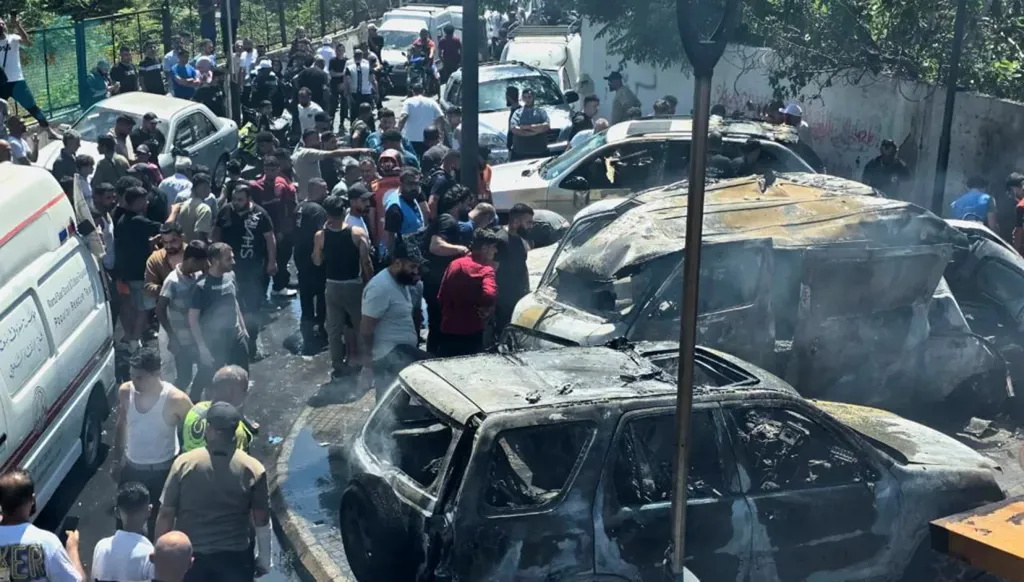
The field situation in southern Lebanon remained highly volatile. Israeli army spokesperson Avichay Adraee issued additional evacuation warnings, including urgent notices yesterday to residents of the towns of Ghassaniyeh and Humin Fawqa, as well as the village of Ansariya.
As airstrikes, shelling, and targeting operations shifted from one village to another, an Israeli airstrike targeted a car in the city of Sidon for the first time, killing two people. The strike carried dangerous implications, signaling an expansion and deepening of Israeli air raids into new areas.
Earlier in the day, an Israeli patrol detained Kfarchouba municipality member Muhammad Hassan Al-Haj and worker Ahmed Salah Diab, taking them to an unknown location.
Reports indicated that Al-Haj and Diab had been working on water operations and pumping systems to meet residents' needs when the patrol apprehended them and removed them from the site.
Later in the evening, it was reported that both men had been released. Israeli forces also detonated several houses in the town of Al-Ghandourieh in the Bent Jbeil district.
For its part, Hezbollah announced that it had targeted a gathering of Israeli military vehicles and soldiers on the southeastern outskirts of Yohmor Al-Shaqif with rocket fire.