

Why Israel's warnings to Beirut could redraw the rules of conflict with Hezbollah
As tensions deepen, Israel signals that even Lebanon's capital may no longer be off-limits.



 Messenger
 Whatsapp
 Threads
 Email
Email
 Print
Print
 X
X
 Facebook
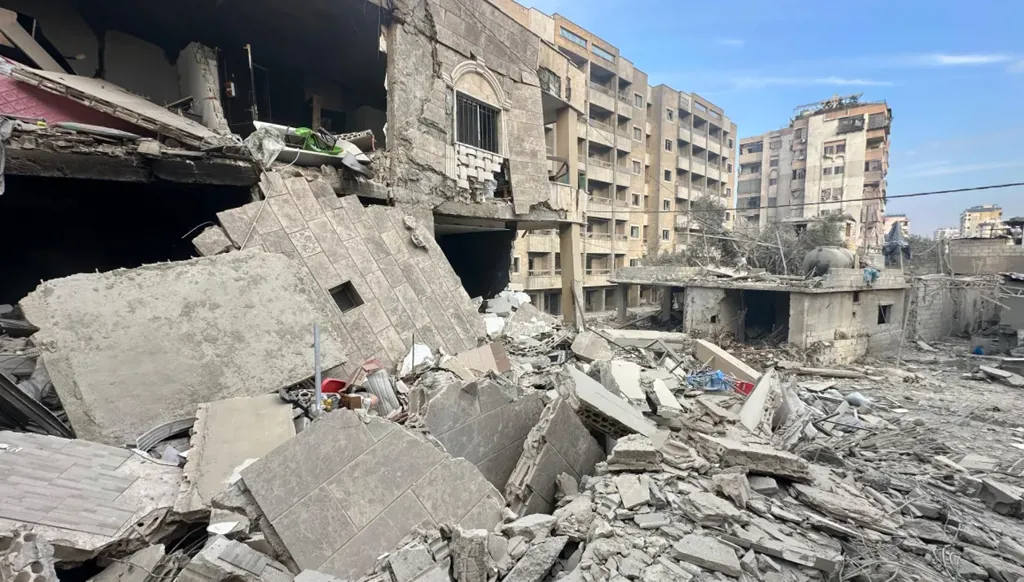


It was noteworthy that the Israeli army recommended "intensive strikes on Beirut in response to gunfire from Lebanese territory toward Israeli territory."
This recommendation raised a number of questions. Is Tel Aviv seeking to impose a new equation by making Beirut part of the previous formula that dictated bombing Beirut's southern suburb in response to any fire by "Hezbollah" targeting northern Israel?
In this context, are we facing a new deterrence equation that Israel wants to establish amid the ongoing conflict since March 2 between it and Hezbollah, with all the calculations that such a move entails? Or is this merely Israeli intimidation and escalation, reflecting the army's readiness to expand the scope of its strikes and attacks to include the capital itself if Hezbollah and Iran continue down the path they appear to be pursuing?
According to strategic expert retired Brigadier General Elias Farhat, "This cannot be dismissed as an incidental mistake by Israel. Rather, it reflects a direction rooted in its military mindset, signaling a willingness to cross all red lines and previous commitments made to Washington regarding Lebanon, foremost among them avoiding targeting the capital and certain facilities."
He adds, "It is not the first time Israel has threatened to strike the capital in response to the party. Months ago, it had already inflicted painful and deadly blows, dismantling the theory of neutrality that Washington had supposedly extended to the Lebanese government."
"However, the facts and dynamics changed in recent days, particularly after Israel dismantled the southern suburb–northern Israel equation by striking the Tahouita area deep inside the suburb. According to the Israeli justification, the strike came in response to two rockets fired from southern Lebanon toward northern Israel, marking the first response of its kind in more than two months."
Accordingly, Farhat says, "Through its response, Israel sought to establish a standing equation while threatening another. However, Tehran quickly declared that it would not stand idly by in the face of what it considers a breach of the ceasefire in Lebanon, seeking to make Lebanon part of its negotiations with the American administration in order to strengthen its bargaining position. It is no secret that tensions between the two countries escalated, resulting in a round of violence and mutual raids."
Naturally, according to Farhat, this military confrontation and round of conflict raised questions about whether Israel's actions had prevented Tehran from achieving its objectives in the Lebanese arena, or whether the opposite was true.
The answers, however, remained unsettled. Supporters of Iran argued that the Iranian military initiative had yielded results, while its opponents maintained that Tehran had failed in its latest attempt to "link the arenas" and strengthen its negotiating leverage.
But the most intriguing aspect, Farhat continues, "lies in turning Beirut itself into a potential target for Israeli strikes. This can only be understood within the context of escalating tensions, widening the battlefield, and exerting additional pressure on Lebanon's already strained reality by removing any protective umbrella previously afforded to the capital or specific areas. This, in turn, reinforces the theory of Israel having an absolute hand and complete freedom of movement."
He concludes that "through striking the southern suburb, bombing the Iranian depth, or threatening to target the capital, Israel has moved swiftly to provide practical evidence that it still prevents Iran from imposing any new equation in the Lebanese arena."