

Lebanon’s underground military infrastructure and the gap between knowledge and action
New disclosures about tunnels, command rooms, and fortified sites have revived scrutiny over the Lebanese state’s ability to monitor its territory, revealing a persistent gap between intelligence, political constraints, and the capacity to act.



 Messenger
 Whatsapp
 Threads
 Email
Email
 Print
Print
 X
X
 Facebook
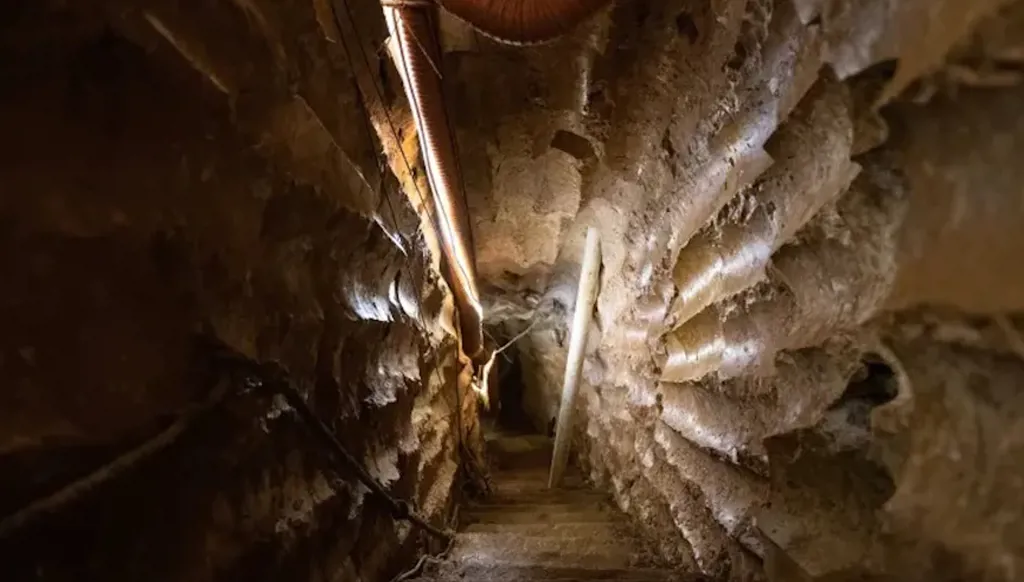
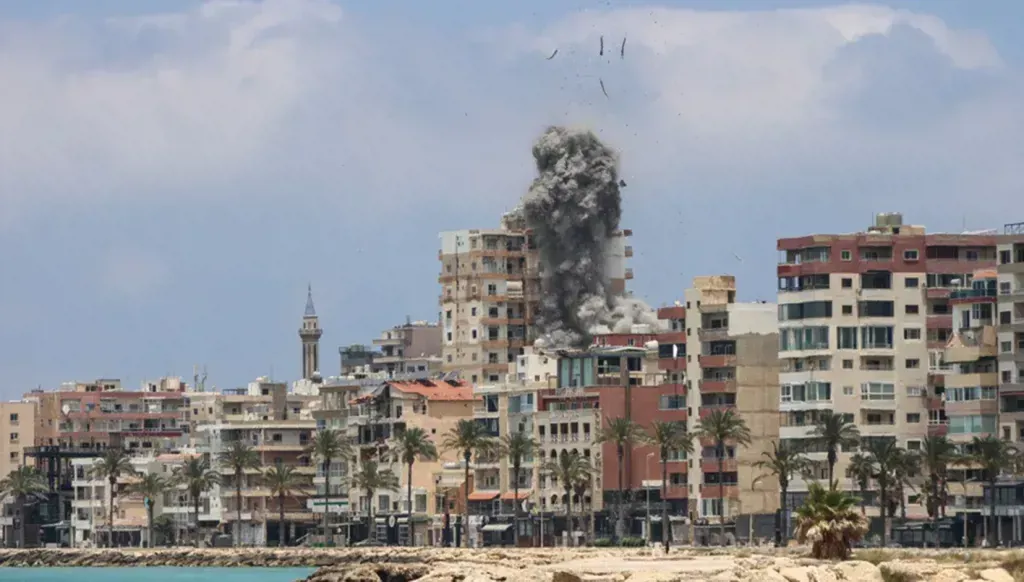
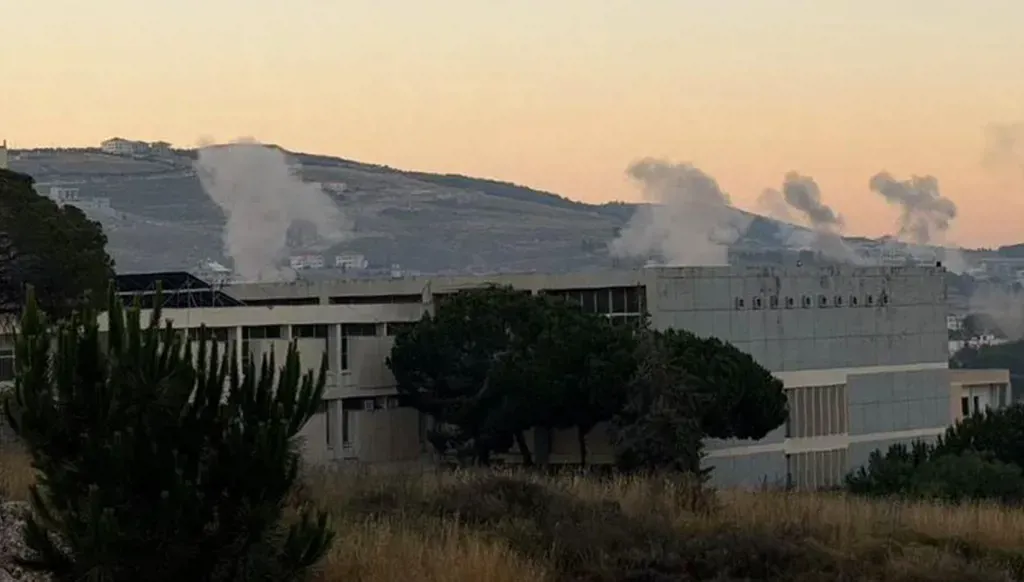


Talk about the tunnels and military installations that were uncovered in southern Lebanon and the western Bekaa after the recent war is no longer just a military detail linked to the confrontation between Israel and Hezbollah.
With the steady emergence of information and images showing command rooms, weapons depots, and underground facilities, a more sensitive and embarrassing question for the Lebanese state has come to the surface: how was it possible to build such a large infrastructure over many years? And what did the security agencies know about it?
The issue is not about a hidden warehouse or a limited military site, but rather a wide network of fortifications and installations that required extensive excavation work, preparation, and significant funding, along with cumulative efforts that stretched over years.
This naturally raises questions about the state’s ability to monitor what is happening within its territory and the extent of knowledge that its security agencies actually had.
Border tunnels and underground military cities
In 2018 and 2019, the tunnel file shifted from being merely Israeli accusations to an internationally documented issue, after the United Nations Interim Force in Lebanon confirmed the existence of several tunnels near the Blue Line, some of which crossed the border and constituted a violation of Resolution 1701.
However, what has been revealed after the recent war goes far beyond the issue of cross border tunnels. The circulating images and information point to the existence of a complex military infrastructure that includes operations rooms, ammunition depots, logistical facilities, and fortified underground sites, reflecting long term investment in building a sophisticated defensive and offensive network.
This raises the key question: was the state completely absent from what was happening?
A major political decision
The claim that Lebanese security agencies knew nothing at all appears exaggerated, just as it would be inaccurate to say they had a complete picture of everything that was happening.
What is closer to reality is that the agencies possessed varying degrees of information about the existence of sites, fortifications, and military activities in several areas, but the problem was not always about gathering intelligence as much as it was about the ability to act on it.
For many years, successive ministerial statements formed a political umbrella for what became known as the equation of the army, the people, and the resistance, where the weapons of Hezbollah were considered part of a resistance framework against the Israeli occupation.
Within this context, any security move targeting the group’s military infrastructure was not viewed as a routine security measure, but rather as a major political decision tied to internal balances and to the relationship with one of the country’s most prominent political and military forces.
In other words, even if reports or data existed within some agencies, turning them into operational action was not as straightforward as it would be in other security cases.
Beyond the political cover, another factor also played a role that cannot be ignored, namely the existence of areas that were in practice beyond the ability of the security forces to operate freely.
In several areas under the influence of Hezbollah, especially in the south and the Bekaa, the movement of official security agencies was subject to known political and security sensitivities, while some sites were effectively closed off to any direct state oversight. This reality persisted for many years, regardless of whether one supported or opposed it.
The question is not limited to whether the agencies knew or did not know, but goes further to the extent of their actual ability to reach these sites and verify what was happening inside them.
Between knowledge and political incapacity
The main issue revealed by the file of tunnels and fortifications is not necessarily the absence of information, but rather the gap between knowledge and the ability to make decisions.
Over past decades, the Lebanese state has lived within delicate balances that have caused many major security files to be subject to political calculations that go beyond the security institutions themselves. As a result, having information does not necessarily mean having the ability to act on it.
For this reason, the hypothesis of “political incapacity” appears more realistic than the hypothesis of “complete ignorance.” The agencies may have known parts of what was happening, but they were operating within a clear political ceiling imposed by the nature of the period and the balances that governed the country from the Israeli withdrawal from the south in 2000 until the outbreak of the recent war.
Today, with the collapse of many of the taboos that once governed the debate over the weapons of Hezbollah and its military structure, old questions are returning more strongly to the surface.
What was the cost of this network of tunnels and fortifications? Deep excavation, concrete reinforcement, ventilation systems, electrical and communication wiring, and the distribution of depots and firing positions all point to major investments accumulated over more than a decade and a half.
There are no published verified figures for the actual level of spending, and if Western and Israeli estimates regarding the scale of Iranian funding to the group over the years are accurate, then the total cost could be enormous, although the real figure remains unknown.