Iran’s influence increasingly rejected in Lebanon amid regional escalation

Opinion 09-06-2026 | 12:52

Iran’s influence increasingly rejected in Lebanon amid regional escalation

As Tehran escalates its regional posture under the pretext of supporting Lebanon, its leverage on the ground continues to erode while Lebanese rejection of its influence deepens.


Iran’s influence increasingly rejected in Lebanon amid regional escalation
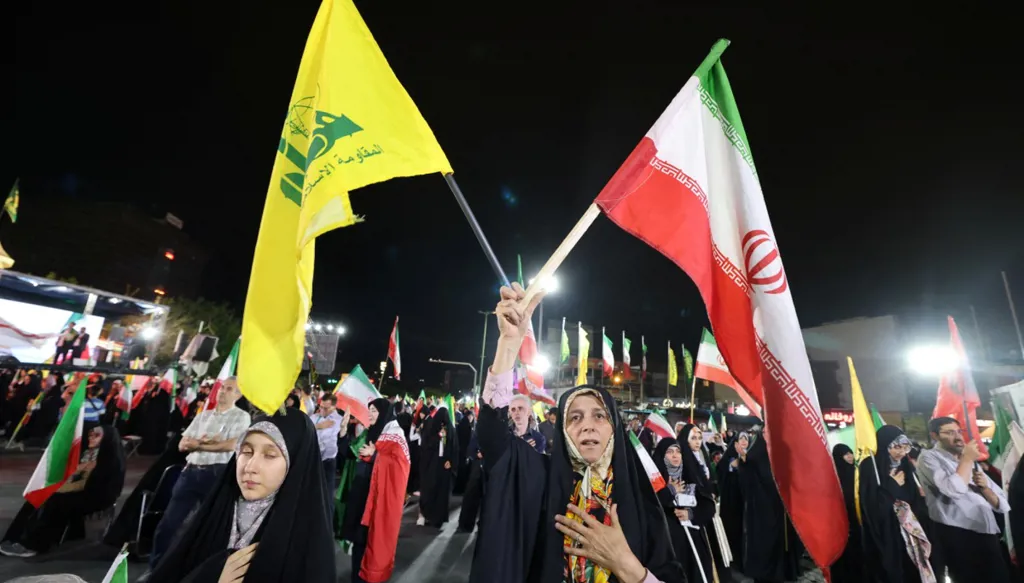
An Iranian woman raises her country’s flag and the flag of Hezbollah in Tehran (AFP).
Smaller Bigger


If the Iranian regime is relying on the recent escalation with Israel as a means to salvage whatever influence it can in Lebanon, it is gravely mistaken, given that the leverage once represented by Hezbollah in the Lebanese arena is in continuous decline.


The high-level positions expressed by both President Joseph Aoun and Prime Minister Nawaf Salam against Iranian interference will reinforce the convictions of the overwhelming majority in Lebanon who reject Iran, after having grown weary of it, its system, its revolution, its slogans, and its local proxy.


This reckless proxy refuses and has refused to learn from the lessons of the changing phase in Lebanon and the region. Launching rockets toward northern Israel to make a political statement does not protect the southern suburbs of Beirut; rather, it worsens their situation and exposes them to harsher targeting.


Likewise, a limited number of Iranian rockets fired at Israel will not stop the Israeli ground operation, which has extended beyond the area south of the Litani River and reached the outskirts of the city of Nabatieh, considered one of the most important Shiite urban centers in Lebanon.


Moreover, it can be said that Hezbollah, through its blind allegiance to the Iranian regime, is drawing Lebanon into further external wars, increasing the misery of the Lebanese people, especially its own supportive base, which is now displaced and scattered outside its land for an indefinite period.


Whenever Iran intensifies its interference in Lebanon, the Lebanese people distance themselves further from it, and the level of suffering rises even within the ranks of its supporters through Hezbollah. More than one thousand square kilometers are under occupation, and the worst is yet to come.


The scale of human losses is nearing 4,000 victims, and the systematic destruction of towns and villages in southern Lebanon is at its peak, which will prolong displacement for several years, even if all facilitating conditions and financial resources become available.


In the end, Iran, which once exerted control through Hezbollah’s dominance and weapons within Lebanon, will not be able to restore its influence by igniting wars on Lebanese soil and through Lebanese blood.


Hezbollah will not return to ruling Lebanon as it did over the past two decades. The forces and figures that previously colluded with the organization have already shifted, and will continue to shift, to the other side and will not look back.

Anyone following the Iranian Israeli escalation, which Iran justifies under the pretext of “supporting” Lebanon, quickly realizes that the Iranian regime is desperately pursuing three objectives: reviving its influence in Lebanon, saving its party from a new military defeat on the ground and from disarmament, and, last but not least, derailing the direct Lebanese Israeli negotiation track under American sponsorship.


For this reason, the current confrontation is expected to remain controlled in intensity, and Tehran is unlikely to escalate further, out of fear of drawing the United States into a new war on its own territory.

Ultimately, what Iran seeks is to achieve gains in Lebanon and to advance its understanding framework on the Islamabad negotiating platform, most importantly those related to the financial dimension: securing the release of part of its frozen assets as quickly as possible, lifting restrictions on Iranian ports, and launching a process toward easing US sanctions.


Disclaimer: The opinions expressed by the writers are their own and do not necessarily represent the views of Annahar