

Iran's Gamble on Trump, Israel, and the Resistance Axis
Far from a simple military response, Tehran’s actions can be interpreted as a calculated political maneuver, one designed to corner Israel, shape U.S. decision-making, and signal to allies across the Middle East that Iran remains a central force in the region.



 Messenger
 Whatsapp
 Threads
 Email
Email
 Print
Print
 X
X
 Facebook
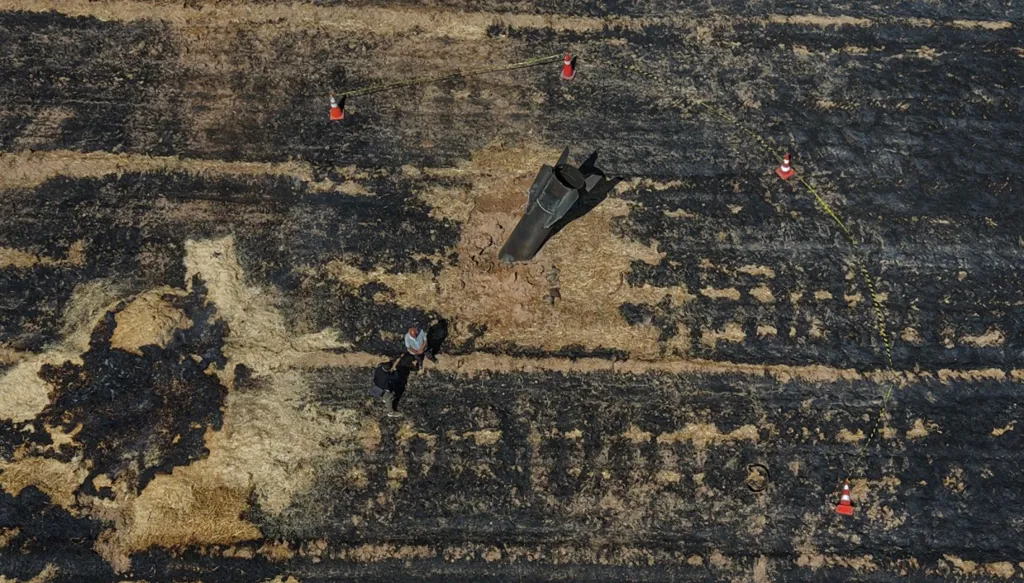


According to this interpretation, the launch of the two missiles from South Lebanon was not merely a security incident or a limited field initiative, but a calculated move designed to place Israel in an exceptionally difficult political position.
In the days leading up to the incident, Trump had delivered a clear message to Netanyahu: no escalation in Lebanon and no strikes on Beirut’s southern suburbs.
In Lebanon, an official stance became increasingly clear in rejecting the linking of the Lebanese state to regional wars. In Iraq, political and security efforts advanced to restrict weapons and unify military decision making.
Across more than one arena, a question began to emerge within the same base of supporters: is Tehran still capable and willing to defend its allies?
From here, the Iranian missiles take on a different meaning. They were not directed at Israel alone. They were also directed at the proxies' audience. At Hezbollah. At Iraqi factions. At the Houthis. And at everyone who had begun to doubt that Tehran still stands behind its regional project.
The goal was to boost morale more than to achieve a military success. The goal was to say that the use of the arenas has not ended, and that Iran is still ready to act when it feels that one of the pillars of the axis is being shaken. But perhaps the most important objective was elsewhere.
Iran today is not in its best economic condition. The blockade is exerting strong pressure. Financial bottlenecks are increasing. And the cost of continuous confrontation is rising. At the same time, negotiations with Washington were approaching a decisive stage.
Here timing becomes meaningful. Tehran needed to raise the cost of American delay. It needed to remind Trump that the alternative to an agreement is not calm, but regional tension. Not stability, but missiles.
Therefore, the escalation was not directed against the negotiations as much as it was an attempt to influence them. As if Iran were saying: if you want calm in the region before the major global event, you must pay the required political price.
Did Iran not fear an Israeli response?