

“Let My People Live”: Ghassan Tueni and Lebanon's collective memory
From “Let my people live” to “the wars of others,” Ghassan Tueni’s words continue to frame Lebanon’s tragedy, as his legacy endures amid cycles of war, foreign encroachment, and fading national sovereignty.




 Messenger
 Whatsapp
 Threads
 Email
Email
 Print
Print
 X
X
 Facebook
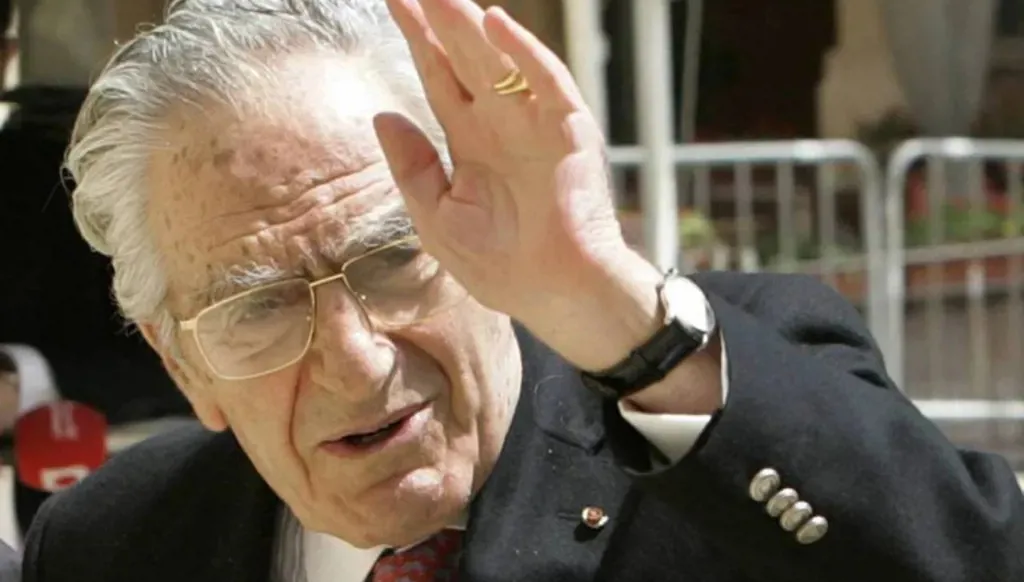



If the generation born fourteen years ago, the year of Ghassan Tueni’s passing, were to come to know a towering figure who marked the history of journalism, thought, diplomacy, and politics in Lebanon, a Lebanon that “once was” distinguished in every field and now has nothing left but nostalgia for its past, it would be enough to offer this generation a simple comparison that would leave it astonished at how Ghassan Tueni, though absent, remains more present in Lebanon’s daily life today than all of us who are alive.
For exactly six decades, and continuing into the future, Lebanese people, and many Arabs as well, have repeated slogans, metaphors, descriptions, expressions, and phrases that transcend time and generations, in the same way they have repeated those of Ghassan Tueni.
He authored thousands of the most famous articles in the history of “Annahar” and of Lebanese and Arab journalism more broadly. Monday mornings were for decades the clearest signal of the start of the week, shaped by his legendary editorial in “Annahar,” which stood as one of the most powerful points of attraction for the public, for elites, and for political and diplomatic circles across the Arab world without dispute.
A legend of Lebanese journalism
To return today to the life story of this legend of Lebanese journalism amid Lebanon’s current reality feels almost like a form of torment, not because the weight of a family history so frequently touched by death.
It overwhelms us with grief because such acts of heroism, carrying the full weight of genuine heroism, equivalent to a kind of ascetic surrender to fate and a confrontation of it through a philosophy deeper than attachment to hope, life, and resurrection in both its Christian and philosophical sense, form an essential definition of Ghassan Tueni if we are to present him to a new Lebanese and Arab generation.
Yet in the present moment we draw from our great late mentor, who passed away fourteen years ago yet continues to live within us, within all who knew him, encountered him, and read him over decades and still do, and within all who had the honor of working under his supervision, care, and guidance.
We draw from him the foundations of the profession closest to his heart, mind, and pen, in the era of the dazzling brilliance of the traditional printed press, when paper and ink were still shaping history. We draw from him the imperative of speaking about Ghassan Tueni in our present before speaking of history and the past, and as a foundation for both.
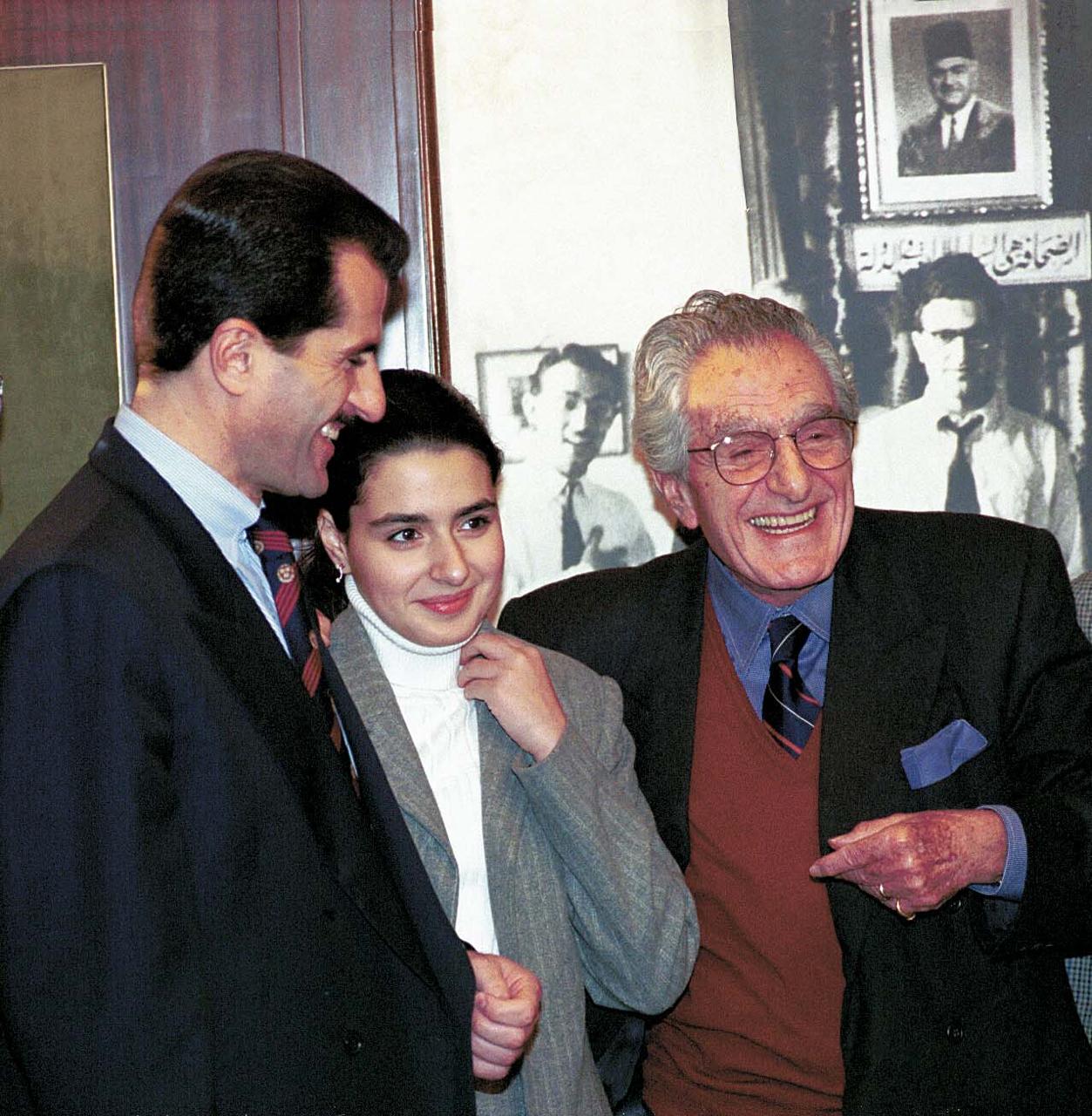
"Let my people live"
Only in recent years, when the specter of war returned to destroy our country, dragging us back into regional and international power struggles, occupations, and into internal tribal and sectarian pre-Islamic times of ignorance, has no expression emerged that so succinctly captures Lebanon’s tragic, absurd, and devastating reality.
The situation, which had been brought about by madness and recklessness, is once again summoning external coercive forces into it, as the iconic historic slogan of Ghassan Tueni, which he launched in his historic speech before the United Nations Security Council: “Let my people live,” later immortalized as the title of one of his works.
In that era, there was a captivating, charismatic man who combined towering journalism with love for Lebanon, immense courage, vast knowledge, and diplomatic skill and wisdom. He was serving as Lebanon’s Permanent Representative to the United Nations when the first Israeli invasion of the south took place in 1978.
It is no exaggeration to say that this ascetic devotee of Lebanon, through journalism, philosophy, and diplomacy, Ghassan Tueni, was a key figure behind Security Council Resolution 425, which eventually led to the liberation of the south from Israeli occupation, an occupation he opposed throughout his journalistic, diplomatic, and national career alike.
He cried out at the end of his speech before the Security Council: “Let my people live.” And as the unfortunate cycle of fate would have it, Lebanon was repeatedly dragged back into inviting Israeli occupation through the hands of those who sacrificed Lebanese youth as victims in the service of Iranian influence, and before that, the now-defunct Syrian tutelage.
Occupation experiences followed one after another, and no expression captured the painful truth of the wars that shook Lebanon more sharply than another famous slogan coined by Ghassan Tueni from the very dawn of the first war that destroyed the Arab and Middle Eastern icon that Lebanon once was in 1975, and through all subsequent derivative wars, tutelages, and successive occupations, reaching the present day, fourteen years after Ghassan Tueni’s passing: “The wars of others on Lebanon’s land.”
“Wars of Others”
There are arrogant and domineering figures in Lebanon who have set themselves the goal of waging an “ideological war” against the thought of Ghassan Tueni, starting with their attempt to trivialize his description “the wars of others,” because they feel a suffocating sense of isolation in the face of how Tueni’s thinking has become a way of life and a lived truth for Lebanese people.
In contrast, they remain fatally addicted to invoking the wars of others, war after war, under different names: supporting Gaza, supporting Iran, and before that supporting the Syrian Baathist regime, until their very last breath.
These “wars of others” are now openly and shamelessly tearing Lebanon apart through the voices of others. Is this not also part of the “nature of authoritarian regimes”? So how can Ghassan Tueni be absent?