

The Iranian response and the collapse of the Washington framework
How Tehran’s reaction deepened the stalemate, reinforced escalation dynamics, and left Lebanon trapped in an unresolved cycle of conflict and counter-moves.



 Messenger
 Whatsapp
 Threads
 Email
Email
 Print
Print
 X
X
 Facebook
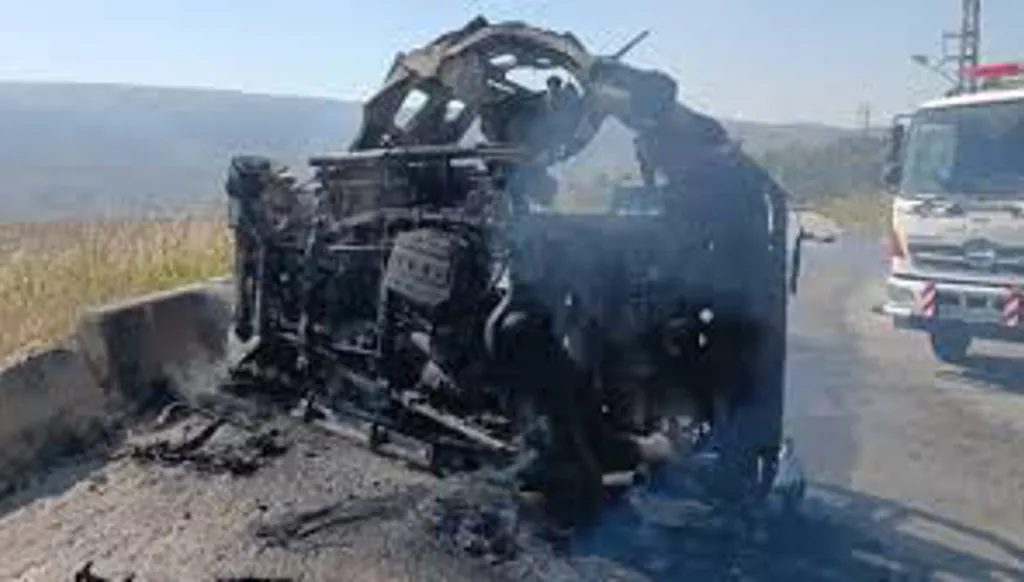


The United States and Israel are pushing Lebanon, through direct negotiations and especially through statements issued by the U.S. State Department that are presented as “agreements” or “understandings,” toward further internal tension and division that do not help achieve the desired outcomes.
It has long been said that Washington “understands” the position of the Lebanese state and that it supports the Lebanese Armed Forces in order to enable them to exercise sovereignty, but this understanding and support remain empty words without action. Why is that?
Could it be because Washington does not have, or does not want to have, a clear vision regarding Lebanon in the present and the future? Or because it consistently aligns itself with Israel’s objectives even when Israel commits crimes or even spies on the United States itself? Or because it prefers, in the current negotiating context, to signal to Iran that it relies on some form of interest-based relationship with it and does not intend to cut off its regional arms, especially Hezbollah?
An imbalanced agreement
It is difficult to take seriously what has been called the “Washington agreement” regarding the Lebanese situation, not only because it is unbalanced, but especially because its wording focuses on shared American–Israeli objectives and does not take into account the demands of the Lebanese delegation or address them.
Chief among these demands is the withdrawal of the occupation, as a legal principle, parallel to the withdrawal of fighters of the Hezbollah and the Revolutionary Guard.
President Joseph Aoun picked up on the phrase “complete ceasefire” and considered it the “last opportunity” to reach a permanent halt to fighting. Prime Minister Nawaf Salam focused on the point related to the Lebanese army “beginning deployment in experimental areas in the south as a first practical step toward restoring state authority,” noting that this deployment “does not affect Lebanon’s right to demand a full Israeli withdrawal from its territory.”
This is what the Lebanese state has been able to secure at this stage; it does not operate on illusions and does not deal with balances of power according to ideological standards. However, what happened afterward is that Israel, as usual, treated the “agreement” as nothing more than ink on paper.
The deliberate lack of balance in the “agreement” seemed like an official invitation for Iran to intervene, and it quickly did so, abandoning any restraint or “diplomacy.” Before its Hezbollah or its secretary-general announced their positions, the commander of the “Quds Force” was already demanding Israel’s withdrawal from southern Lebanon and its “return to the positions it occupied before the outbreak of the war (on Iran).”
Tehran not only reaffirmed its insistence on holding the “Lebanon card” in negotiations, but also bluntly expressed complete disregard for the existence of “Lebanon as a state,” calling on its followers to bet on the illusions of the “Islamabad track,” since the commitments of the “Washington track” are impossible to implement.
Esmail Qaani responded to the text of the “agreement” by saying that any cessation of hostilities “must be reached directly between the two governments (Lebanese and Israeli) with American mediation, and not through any separate track.” There is no doubt that separating the Lebanese and Iranian tracks is necessary, but the American–Israeli approach further insists on linking them.
The Iranian response
The Iranian response effectively disrupted the impact of the “Washington agreement” and provided the Hezbollah and the Revolutionary Guard with justifications to continue the war and draw further Israeli massacres and occupations. However, it was expected, to the point that neither the American nor the Israeli side commented on it, perhaps because it served to justify the coming escalation.
Lebanon finds itself, with or without negotiations, in the line of crossfire. Had the text of the “agreement” been more focused and more intelligent, indeed more sensitive to the suffering of the Lebanese people and more respectful of the state, it would not have been so easily rejected.
But Iran received the “agreement,” or the “declaration of principles” as Israel calls it, as a challenge that left it no room for maneuver. The Israeli defense minister quickly concluded that the text “allows Israel to strike Beirut,” meaning that the equation of “the southern suburbs in exchange for northern Israel” had collapsed.
The ceasefire “conditioned on first removing Hezbollah elements from the entire area south of the Litani River and establishing a demilitarized zone” was sufficient reason for Iran to reject it.
But what can Iran actually achieve for Hezbollah through the “Islamabad track”? It is not authorized to negotiate on behalf of the Lebanese state, and it also refuses to negotiate with Israel.
Yet a ceasefire in Lebanon depends on Israeli approval, and also on American approval, as Washington is now involved in separating Iran from Lebanon and grants Israel the “right of self-defense,” which obstructs any agreement, while it refuses to pressure Israel as long as the Hezbollah remains committed to its weapons and fighting in response to Iranian orders.
This closed loop can only be broken through a bargain between Washington and Tehran that would include some form of settlement on the weapons issue in exchange for political gains for Hezbollah.
But discussions of such a settlement will not be imminent, and the file will not be opened until the two sides resolve their intractable disputes (the nuclear program, the Strait of Hormuz issue, frozen assets, and sanctions).
In the meantime, they continue the game: direct American strikes on Iranian sites, Iranian strikes on Gulf states, and Israeli strikes in Lebanon.
Disclaimer: The opinions expressed by the writers are their own and do not necessarily represent the views of Annahar.