

Can Washington separate Lebanon from Iran? The battle over the Lebanese front
As Washington seeks to separate Lebanon from its talks with Iran, Tehran and Hezbollah insist the Lebanese front remains tied to broader regional dynamics.



 Messenger
 Whatsapp
 Threads
 Email
Email
 Print
Print
 X
X
 Facebook
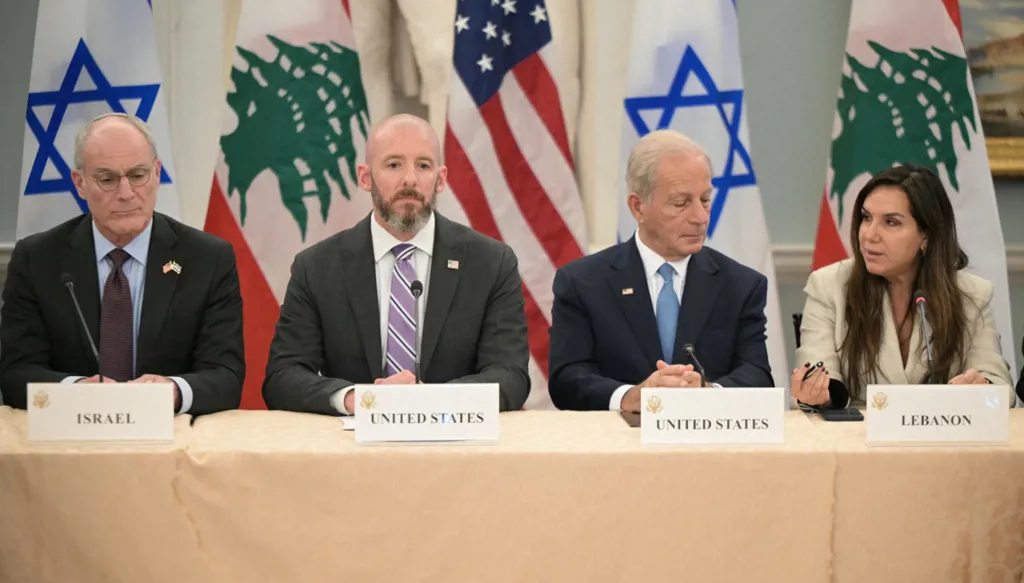


Amid US efforts to stabilize a ceasefire on the Lebanese front, a dispute has emerged that goes beyond the details of any field agreement or temporary security arrangements.
The United States seeks to treat Lebanon as an independent file separate from its negotiations with Iran, while Tehran, along with Hezbollah, insists on linking arenas and considers the Lebanese front part of broader regional balances.
Between the two positions, the Lebanese state refuses to allow the country to become a bargaining chip in any regional or international deal.
With clashes continuing on the southern front despite Washington announcing an understanding for a ceasefire, a key question arises about the United States’ ability to separate Lebanon from Iran and remove it from the calculations of the wider regional conflict.
Washington works on securing an arrangement
The US approach became clear in statements by US Secretary of State Marco Rubio, who confirmed during a congressional hearing that the United States treats the Lebanese-Israeli talks as a separate track from the ongoing negotiations with Iran.
Rubio said Washington is trying to separate the two files, accusing Tehran of seeking to mix different tracks and link them together. He also accused Iran of attempting to obstruct any effort that could lead to stable understandings between Lebanon and Israel or open the door to long term security arrangements.
This position comes in parallel with an understanding announced by the United States, Israel, and Lebanon, which stipulates working toward a complete ceasefire, accompanied by a halt to attacks by Hezbollah and the deployment of the Lebanese army south of the Litani River.
The Axios website reported that the understanding includes the creation of pilot zones in southern Lebanon where the Lebanese army would have exclusive control, with guarantees that no Hezbollah elements are present, in exchange for the withdrawal of Israeli forces from those areas.
Iran and Hezbollah attempt to 'link the tracks'
In contrast, Iranian positions reflect a different approach based on the interconnectedness of regional arenas.
The commander of the Quds Force, Esmail Qaani, confirmed that the main demand in Lebanon is for Israel to withdraw to the positions it controlled before the outbreak of the US Israeli war on Iran.
Tehran has previously hinted at reconsidering its negotiations with the United States if Israel expands its military operations against Hezbollah strongholds in the southern suburbs of Beirut, indicating, from its perspective, the linkage between the Lebanese and Iranian tracks.
As for the Secretary General of Hezbollah, Naim Qassem, he rejected the outcomes of the negotiations, describing them as “futile and humiliating for Lebanon,” and affirmed that the group “has not committed to anyone not to resist Israel,” adding that “the security of the settlements is linked to the security of Lebanese villages.”
These positions reinforce Iran and Hezbollah insistence on linking the Lebanese front to broader regional developments.
Lebanese officials voice their positions
In contrast, the Lebanese state has been keen to present a different position.
President Joseph Aoun, in an interview with CNN, confirmed his categorical rejection of any interference in Lebanese affairs, stressing his refusal to use Lebanon as a bargaining chip in negotiations with the United States, and affirming that diplomacy remains the only path to address the crisis.
For his part, Prime Minister Nawaf Salam called on Iran to stop dealing with southern Lebanon and its people as a “card to improve negotiation terms,” stressing that Lebanon has “chosen the path of negotiation to protect its sovereignty and stop the Israeli war.”
The positions of Aoun and Salam reflect a clear Lebanese attempt to keep the country away from tensions linked to US Iranian negotiations and to confine Lebanese decision making to state institutions.
Israeli escalation jeopardizing the ceasefire
So far, Israel does not appear ready to treat the US understanding as a final agreement.
Israeli Prime Minister Benjamin Netanyahu has confirmed that the ceasefire agreement has not yet been fully drafted, while Israel’s public broadcaster Kan reported him as saying that “from Israel’s perspective, there is currently no agreement.”
Similarly, Chief of Staff Eyal Zamir informed members of the security cabinet that the army is prepared to expand the fighting if the political leadership decides to do so, at a time when the Israeli security establishment has not received new instructions regarding the implementation of the proposed understanding.
These positions reflect a continuing gap between US efforts to impose a ceasefire and Israeli calculations linked to the future trajectory of confrontation with Hezbollah.
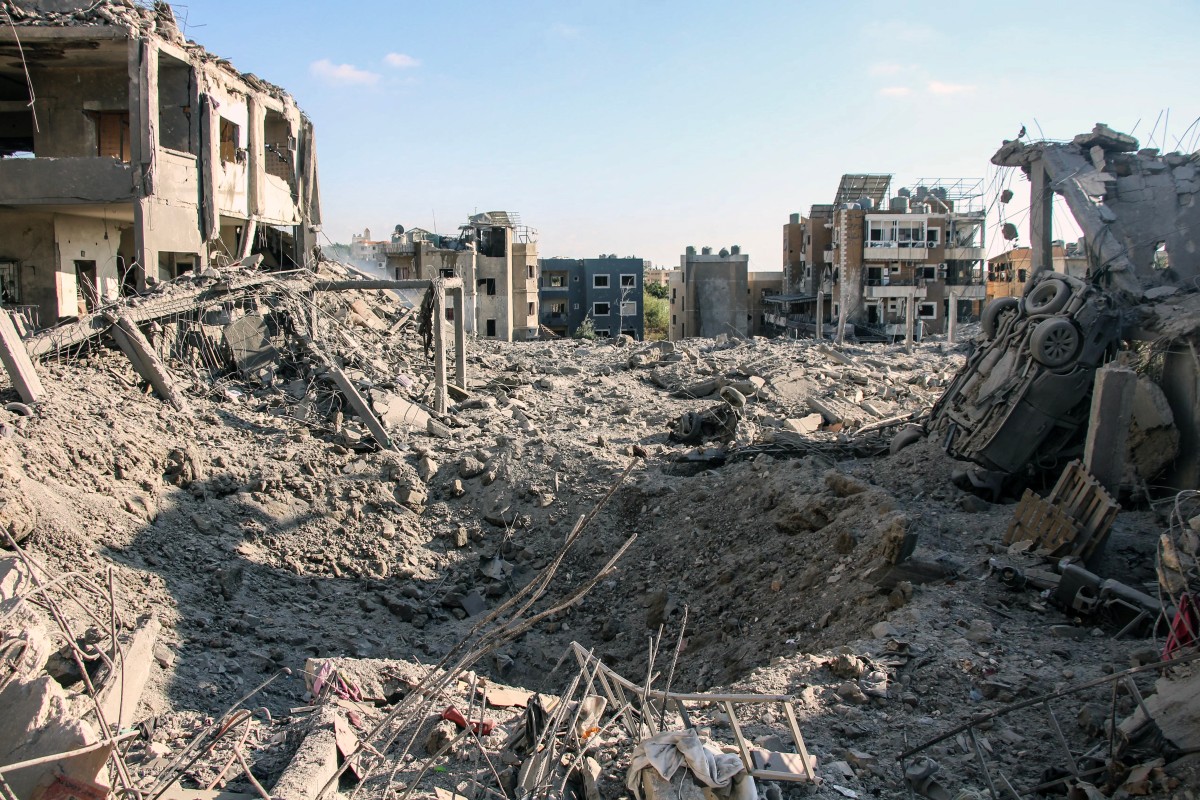
A Possible Mission or a Political Illusion?
Dr. Imad Salamey, head of the Department of International and Political Studies at the Lebanese American University, told Annahar that Washington’s insistence on separating the Lebanese Israeli track from the Iranian file primarily reflects a strategic objective aimed at reducing Tehran’s regional influence and ending its ability to affect the internal affairs of Arab states, given that strengthening national sovereignty has become a cornerstone of the new regional order the United States and its allies are seeking to build.
He adds that translating this objective into practical reality faces major challenges, because the Lebanese arena has historically, politically, and security wise been tied to regional balances. Sectarian and political linkages, along with cross border networks of influence, make a complete separation between the two tracks extremely difficult.
Salamey notes that the US position represents more of a negotiating and strategic objective than an existing reality on the ground.
For his part, American researcher Kenneth Katzman says, in remarks to Annahar, that Israel sought escalation in Lebanon “ahead of the conclusion of the agreement between the United States and Iran in order to strengthen its leverage against Hezbollah before US President Donald Trump asked Netanyahu to halt the attack on Lebanon.”
He adds that the Israeli army would move to disarm Hezbollah by force, even if an agreement with Iran stipulates a ceasefire in Lebanon.
Between Washington’s desire to separate files and Iran’s insistence on linking them, Lebanon stands before a complex political and security test.
While the United States possesses significant leverage and broad diplomatic influence, turning Lebanon into an independent file separate from the US Iranian confrontation remains dependent on the broader regional conflict trajectory and on the ability of the relevant actors to deal with the Lebanese arena outside the logic of ongoing regional confrontation.