Oil prices rise sharply as Hormuz disruption tightens global supply outlook

Business Tech 08-06-2026 | 08:30

Oil prices rise sharply as Hormuz disruption tightens global supply outlook

Brent and WTI advance despite OPEC Plus output increase, as traders focus on supply constraints and shrinking safety margins


Oil prices rise sharply as Hormuz disruption tightens global supply outlook
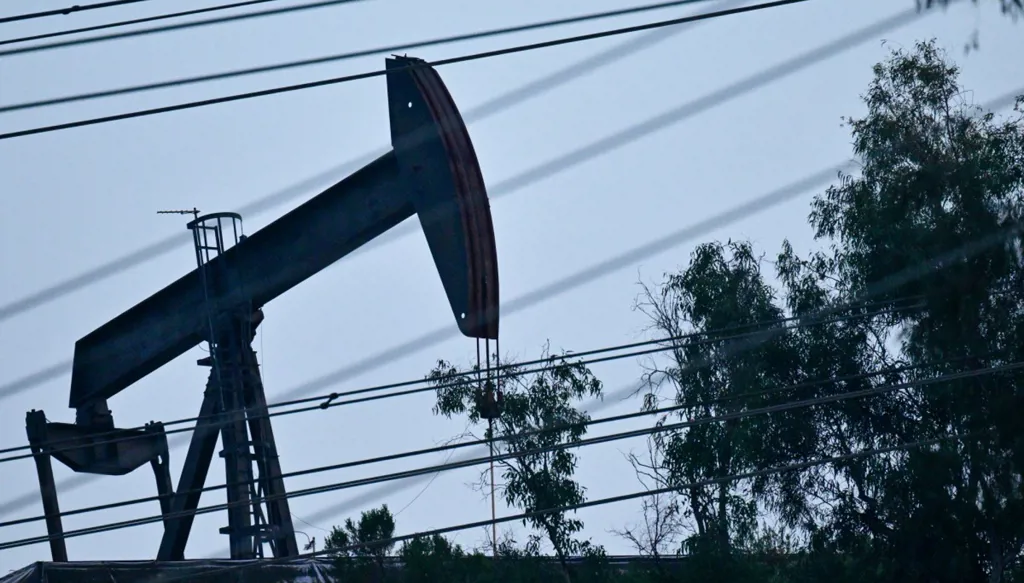
Oil pump (AFP)
Smaller Bigger

West Texas Intermediate crude oil rose by 4.06 dollars, an increase of 4.48 percent, reaching 94.60 dollars per barrel in trading on Monday, 8 June 2026, while Brent crude benchmark increased by 4.48 dollars, or 4.81 percent, to 97.57 dollars, according to market data.


These gains came despite a decision by seven countries in OPEC Plus issued yesterday to raise July production by 188 thousand barrels per day. Traders believe the planned increase on paper does not reflect the actual supply situation, amid the continued closure of the Strait of Hormuz, through which around 20 percent of global oil supplies pass.


Symbolic increase in the face of an actual crisis


Specialized reports indicated that some Gulf countries are unable to export their output through the closed strait, making the OPEC increase of 188 thousand barrels per day of limited real impact on markets at the present time.


JPMorgan Chase had warned in May that commercial inventories in developed countries could be approaching operational stress levels at the beginning of June. Analysts at UBS Group also confirmed that reserves have been largely depleted, noting that the market is now lacking sufficient safety margins.


Analysts at the International Energy Agency believe that the dispute over the strait forced Gulf countries to reduce production by more than 14 million barrels per day, equivalent to about 14 percent of global supplies before the crisis began, a loss that cannot be offset by the OPEC increase of 188 thousand barrels per day under any circumstances.


In this context, JPMorgan Chase raised its Brent price forecast to an average of 96 dollars per barrel over the course of 2026, a notable shift compared to its previous estimate of 60 dollars before the outbreak of the crisis.


Pressure on consumers


Reflecting the spillover effect into derivative markets, heating fuel increased by 5.11 percent to 3.771 dollars, while gasoline increased by 3.62 percent to 3.156 dollars. These figures indicate direct pressure on energy bills for consumers and companies in importing markets, including countries in the Arab region.


Outlook and next path


The U.S. Energy Information Administration raised its forecast for the average Brent price to 96 dollars per barrel in 2026, with expectations of a decline to 89 dollars in the fourth quarter of the year if normal supply flows are restored. Traders continue to focus closely on developments related to negotiations over the Strait of Hormuz, as any breakthrough would have a stronger impact on prices than any production decision by OPEC Plus. The next meeting of the seven countries is scheduled for 5 July 2026.