

Between Iran and Israel: How Lebanon is entering a new political phase
As tensions escalate between Tehran, Washington, and Tel Aviv, Lebanon attempts to reassert its sovereignty amid growing fears of becoming a bargaining chip in a wider regional confrontation.



 Messenger
 Whatsapp
 Threads
 Email
Email
 Print
Print
 X
X
 Facebook
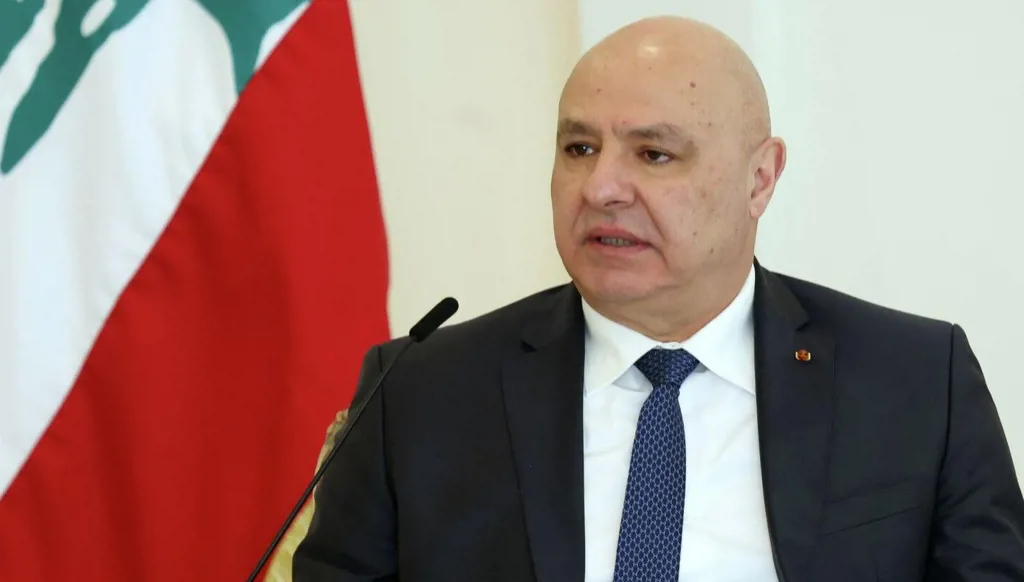


It was not inevitable for President General Joseph Aoun to publicly and officially confront the well-known negative and harmful role of Iran in Lebanon, if not for the Iranian Revolutionary Guard’s rush to reveal its direct management of Hezbollah’s war file in Lebanon.
This hasty rejection of the ceasefire agreement reached by Lebanon in Washington preceded a likely reaction from the Shiite duo, heavily battered by disasters that Tehran disregards.
Iran removed the transparent cover it believed it was hiding behind, eliminating all diplomatic and internal obstacles for the Lebanese state to emerge from its hesitation and wooden rhetoric to defend its sovereignty and rights.
It became pressing, necessary, and important for the President to send a message to internal and external parties that there is a Lebanese state that decides and defends an agreement in which Lebanon was involved, in order to prevent Lebanon—not just the agreement—from falling victim to the struggle between Israel and Iran. Israel, like Iran, exploits Lebanon for its immediate interests and to secure influence, not merely to be a passive party.
Lebanon is now practically, especially in light of Iran’s support for the war, in direct confrontation with the Iranian Revolutionary Guard taking over Hezbollah's policy and decisions. This has eliminated any margin for the Shiite duo to decide what it deems appropriate for the Shiite sect’s role and direct interests, potentially complicating matters further.
This Iranian role has always been present, and it can be read in Washington’s perception of Lebanon as a “victim” since the beginning of talks about direct negotiations between Lebanon and Israel. As frequently reiterated by the U.S. Secretary of State Marco Rubio and others, Lebanon is seen as a hostage to the Iranian-commanded group.
However, Lebanon was also faulted for not standing firmly and publicly to defend its rights, and for hesitating to openly state the facts out of fear of deepening domestic divisions. Hezbollah officials and Iran directly contributed to breaking the culture of courtesy and appeasement.
Officialy, Lebanon, which Iran seeks to undermine through Hezbollah, needs to demonstrate that it has the power to exert necessary influence and play its role, as any ambiguity in Beirut’s stance after Hezbollah’s rejection will make matters more costly for Lebanon.
Removing the fig leaf from Iran’s role and its use of Lebanon as a front for its interests—carried out by President Joseph Aoun and Prime Minister Nawaf Salam—could attract greater support for Lebanon and help end the war between Lebanon and Israel.
Lebanon needs all possible support, especially with the necessity of activating extensive Western and regional diplomacy to accompany it. The European Union particularly emphasized that the ceasefire agreement constitutes a “renewed opportunity to end the conflict and achieve lasting peace and security,” urging all parties to fully commit to its terms and reject any additional conditions imposed by Hezbollah, according to the statement of the EU High Representative.
The regional context can understand and support Lebanon, with the latest Iranian actions targeting Kuwait and Bahrain again, prompting the Gulf Cooperation Council to consider “the continued Iranian regime’s terrorist actions targeting infrastructure and civilian facilities a demonstration of its desire to undermine security and stability in the region and thwart peace efforts.”
This, importantly, is not just a message to Iran but also a crucial message to the United States. It does not negate the fact that Iran presented Israel and its Prime Minister Benjamin Netanyahu with a valuable gift through the ceasefire agreement, providing arguments that benefit U.S. President Donald Trump, who opposes continuing the war in Lebanon and pushes for a truce there.
While Iran exploits the American president’s eagerness and push for an agreement with it to continue using the war in Lebanon as pressure regarding the Strait of Hormuz issue and to lift the siege on it, it focuses on Lebanon as a card that could be sacrificed by forcing Israel not only into a ceasefire but, as Iran pressures, to neutralize the Lebanese capital, specifically the southern suburbs, and withdraw from Lebanon altogether. Iran acts from a position of strength, imposing its conditions on the U.S. based on the cards it holds.
Lebanon needs not only to ensure it is not sacrificed in American-Iranian bargaining, especially given Washington’s current interest in pursuing peace between Lebanon and Israel and the great allure that this represents, but also to avoid being prey to shared influence or long-term ambiguous truces without real solutions.