

Iran's Provocation and Israeli Aggression in Lebanon
Iran’s sharp confrontation with President Michel Aoun, mounting calls to curb foreign influence, and a deadly Israeli strike on Lebanese Army officers underscore the growing pressures facing Lebanon amid high-stakes negotiations and escalating regional tensions.



 Messenger
 Whatsapp
 Threads
 Email
Email
 Print
Print
 X
X
 Facebook


Amid an unprecedented Iranian provocation in its dealings with the pillars of the Lebanese state, and amid unjustifiable Israeli aggression targeting the Lebanese Army, recent developments have added another layer to the difficult reality Lebanon faces between the Israeli hammer and the Iranian anvil.
It has become increasingly evident that Iran has yet to absorb the shock of the Lebanese-Israeli negotiation track slipping from its grasp under American auspices, a process in which Tehran had heavily invested.
This shock was reflected in Iran's hasty and negative reaction to the agreement announced following the fourth round of Lebanese-Israeli-American negotiations in Washington, prompting an unprecedentedly strong response from President Joseph Aoun.
However, rather than attempting to contain the fallout or mitigate the diplomatic damage caused by the President's response, Iran opted for further escalation. Its reaction only broadened the controversy, raising questions about whether the diplomatic confrontation could ultimately lead to the expulsion of the Iranian ambassador, whose role in Lebanon has reportedly been suspended for some time.
Iran FM Araghchi criticizes Aoun in highly provocative statement
Iranian Foreign Minister Abbas Araghchi crossed diplomatic boundaries with a sharply worded response to President Aoun, writing on X: "Based on Mr. Aoun's statements, one might think Iran occupied a fifth of Lebanon, displaced a quarter of its people, and bombards their country daily. If Lebanon were a bargaining chip in Iran's hands, an agreement would have been reached long ago. Save Lebanon from your true enemy, Mr. President."
The response from Iranian Foreign Ministry spokesperson Esmail Baghaei was no less provocative. In a post on X, using Lebanese colloquial language, he wrote: "He sells those beside him, buys those against him, abandons his supporters, and follows those who strangle him."
The first Lebanese political responses came from Kataeb Party leader MP Sami Gemayel, who wrote on X: "To the Iranian officials: Get off Lebanon's back! Lebanon is not an Iranian province, and our President does not seek permission to defend our sovereignty. The era of tutelage is over, and our decision is made in Beirut, not Tehran. Lebanon first and foremost."
Meanwhile, Strong Republic bloc MP Ghayath Yazbeck responded to Araghchi, saying: "Thank you, Mr. Araghchi, for freeing us from your jealousy over Lebanon. Go sign an agreement with Washington and leave us be."
He added: "We know the story of the firefighter obsessed with lighting fires, and your country has made it the title of its foreign policy based on bad neighborhood, sabotage, and exporting chaos and services, whose deadly effects we have experienced repeatedly in our country. Spare us your evil and let our people live."
LF's Geagea backs President Aoun's positions
As the Lebanese-Iranian confrontation intensified, Lebanese Forces leader Samir Geagea called on the Lebanese state to take concrete executive measures. He stated: "The President's words reaffirm once again that the presence of weapons outside the state's framework constitutes a blatant violation of the Constitution and the law."
Geagea noted that President Aoun had already emphasized in his inaugural address the need for the state to monopolize weapons, a principle also enshrined in the ministerial statement and reaffirmed by Cabinet decisions issued on August 5 and 7, 2025, and March 2, 2026. According to Geagea, these positions reflect a clear presidential determination to move forward on this path.
He added that Lebanon can no longer afford the current deadlock and called first for Iran to cease all interference in Lebanese affairs and respect Lebanon's sovereignty and independence.
His second demand was for Hezbollah to immediately comply with the Lebanese state's wishes, surrender its weapons, end its armed project, and dissolve its military and security structures.
Geagea further argued that if Iran persists in its current policy, the government should begin implementing its decisions effectively, starting with the expulsion of the dismissed Iranian ambassador from Lebanese territory and enforcing state authority and the monopoly of arms. He stressed that Lebanon cannot escape the cycle of wars and instability except through the implementation of President Aoun's vision and government decisions.
LAF claim three losses as Israeli strikes intensify
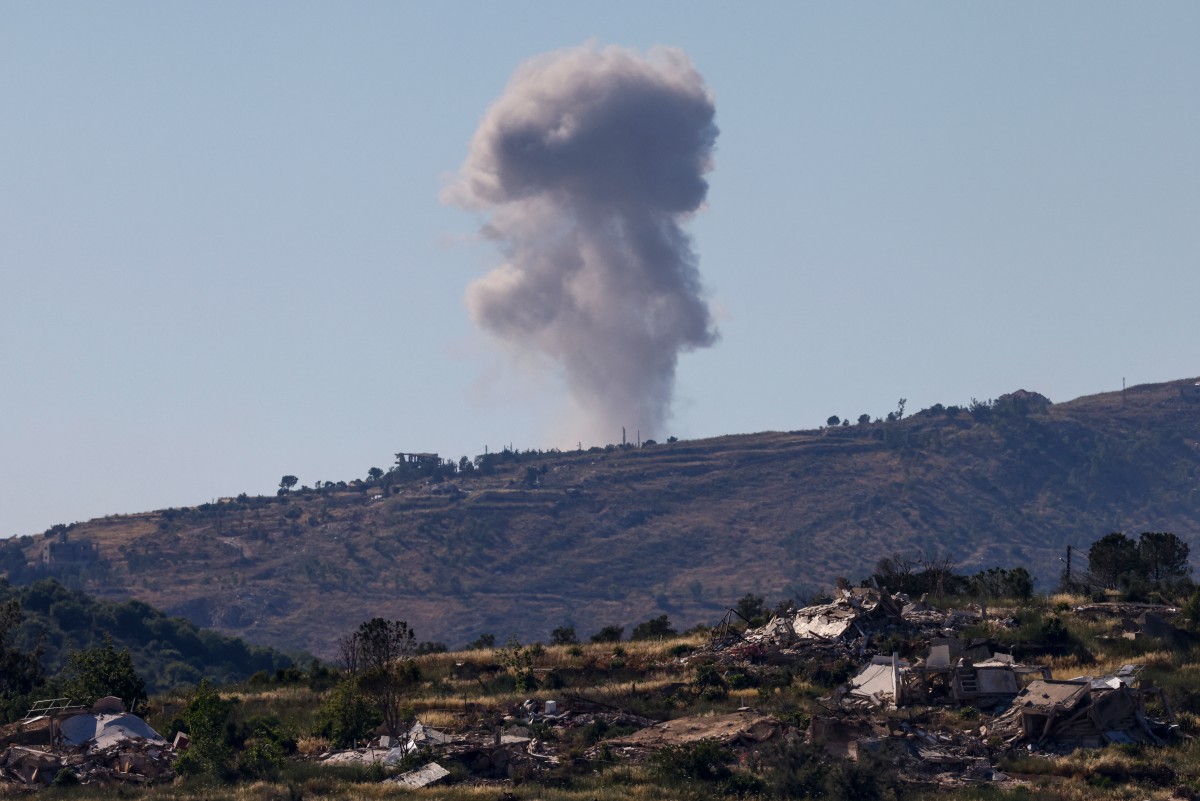
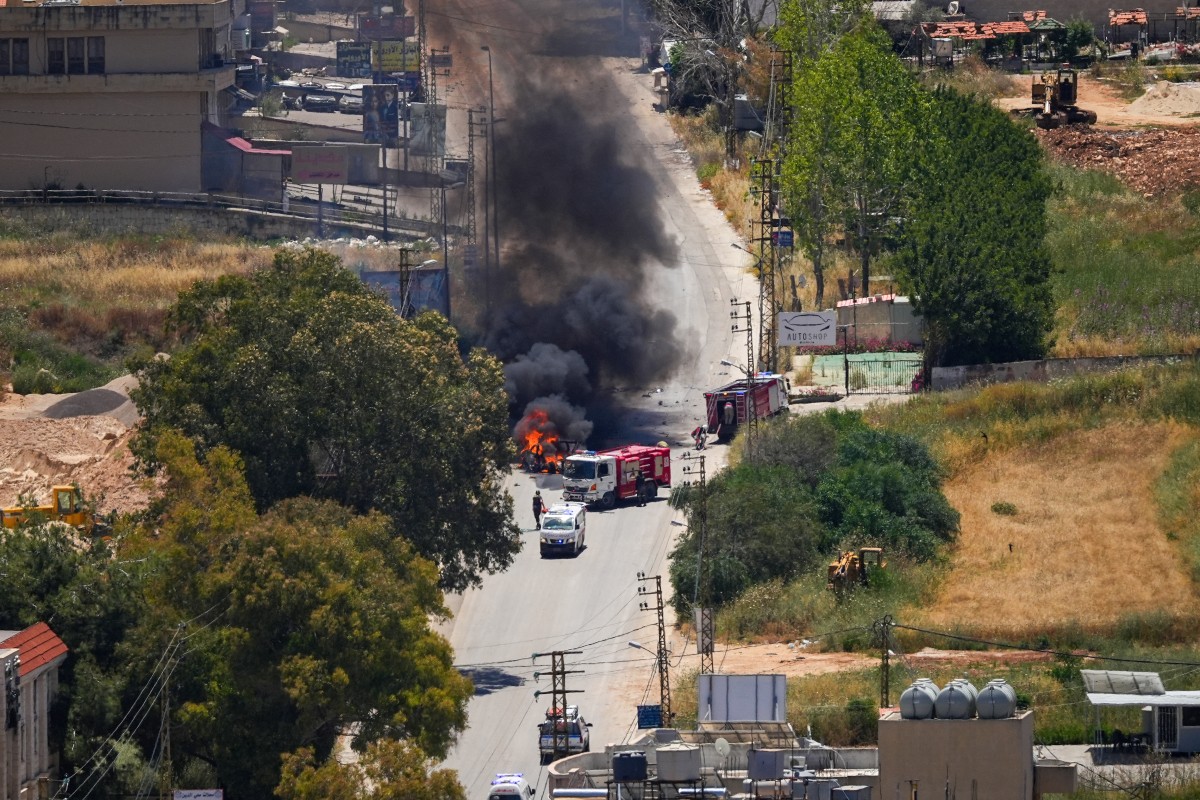
Meanwhile, escalation on the ground continued, resulting in the deaths of Lebanese Army Brigadier General Wissam Sabra, Captain Elie El-Khoury, and soldier Hussein Abdel Ali Ghazal.
In a statement, the Army Command's Directorate of Guidance announced: "On June 6, 2026, an Israeli savage and aggressive strike targeted a military vehicle on the Kfartabnit-Khardali road in Nabatieh, resulting in the martyrdom of two officers holding the ranks of Brigadier General and Captain, as well as a soldier.
The continuation of deliberate and repeated Israeli aggression against Lebanon, its people, and its army only strengthens our resolve, faith, and determination to confront these attacks, which seek to undermine efforts aimed at restoring stability, achieving a comprehensive ceasefire, and securing Israel's withdrawal from occupied Lebanese territories."
Later, the Israeli army stated that the incident was under investigation, emphasizing that its operations target Hezbollah rather than the Lebanese Army. It added that it had received indications that Hezbollah intended to fire on Israeli soldiers from the same area where the Lebanese military vehicle was located.
Lebanese leaders condemn the attack: "a blatant crime"
President Aoun strongly condemned the Israeli strike, describing it as "a flagrant violation of Lebanese sovereignty and international laws and conventions," and warning that it comes amid ongoing escalation threatening stability and security in southern Lebanon despite Lebanon's efforts in Washington negotiations to halt Israeli attacks.
Speaker of Parliament Nabih Berri contacted Army Commander Rodolphe Haykal to offer condolences, stressing that "today's crime is neither a mistake nor a misunderstanding, regardless of Israel's attempts to justify it." Prime Minister Nawaf Salam likewise described the attack as "a blatant crime" and "an assault on Lebanon and all Lebanese."
For its part, Hezbollah seized on the incident to criticize the state, describing it as "an expected criminal assault resulting from the government's disregard for the country's sovereignty and the blood of its people, as well as its free concessions, the latest being its complete surrender to enemy conditions in Washington, which encouraged the enemy to violate the blood of our people and our army."
PM Salam from Qleiaat: "Reviving this airport is also a revival of the state"
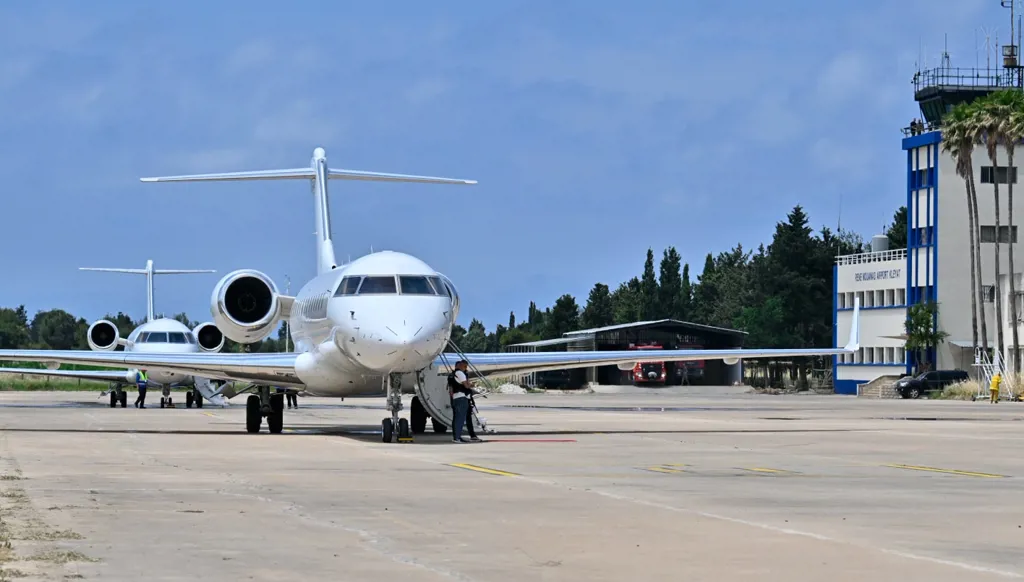
Despite these developments, attention also turned to the launch of the redevelopment and operation project for Martyr President Rene Moawad Airport in Qleiaat.
Politics were not absent from the occasion. Speaking from the airport after arriving by plane, Prime Minister Salam declared: "We gather in the north of the country, but our eyes remain on the south. This is not merely a runway; it is a political and developmental decision affirming that Akkar remains a national priority."
He continued: "Despite everything Akkar has contributed to the nation, it has endured decades of deprivation and marginalization. This is not a rhetorical description but a reality confirmed by figures. This project lies at the heart of balanced development. The airport is no longer a postponed idea but a project taking shape. We are betting on its operation to create new opportunities in employment, transportation, and trade. It is not an alternative to Beirut Airport, and flights will begin operating from it soon."
Salam added: "The Taif Agreement was reached here, and Rene Moawad was elected President here. Reviving this airport is also a revival of the state and a reaffirmation of the Taif Agreement. We are transforming balanced development into a practical reality.
"Yet, completing Taif requires more than development and reforms; it also requires the state to extend its authority across all its territory using its own capabilities and to ensure that arms remain exclusively in the hands of the state." He concluded: "There will be no forgotten regions from now on."
For his part, US Ambassador to Lebanon Michael Issa, who attended the ceremony, stated: "A new airport means new hope for Lebanon and a stronger economy."
He added: "This is the first time Lebanon has decided its fate independently, without interference from anyone. The negotiations in Washington were very important. Naim Qassem decides as he wishes, and we decide as well."