

Fiber-optic drones raise new battlefield challenge for Israel
Hezbollah’s use of drones resistant to electronic jamming exposes tactical gaps in Israeli defenses and prompts urgent countermeasure efforts amid escalating cross-border attacks.



 Messenger
 Whatsapp
 Threads
 Email
Email
 Print
Print
 X
X
 Facebook

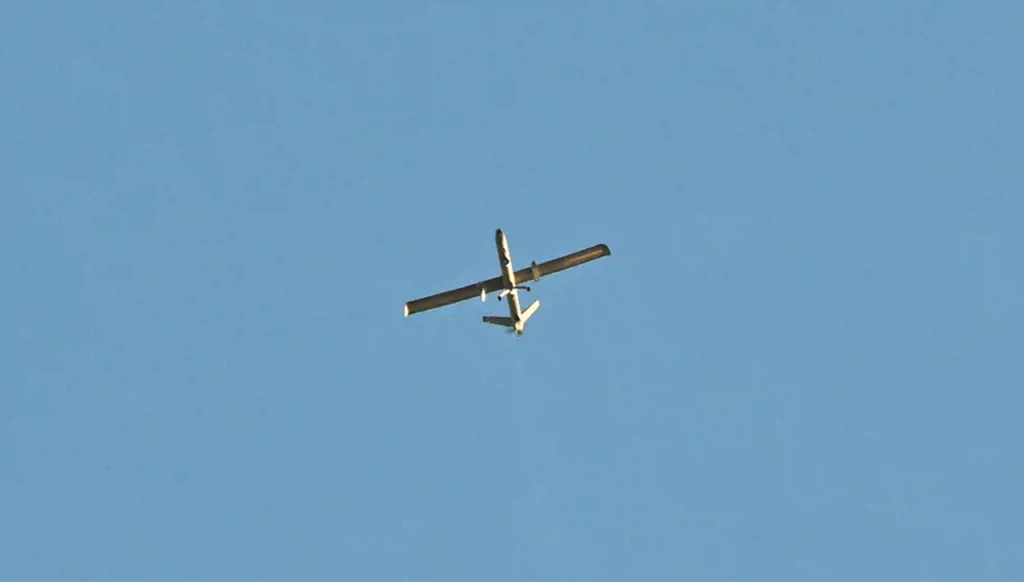



Fiber-optic guided drones used by Hezbollah are posing a new challenge for Israel after managing to bypass some traditional jamming systems and strike sensitive military targets. With the repetition of attacks, debate is intensifying inside Israel over how prepared its defensive systems are to deal with this new type of threat.
Hezbollah drone attacks have forced Israeli political and military leaders to search for urgent solutions. The Israeli army said that multiple drones attack Israeli forces daily and cause severe damage. Just last week, three drones killed three soldiers.
Gaps in Israeli defenses?
These attacks have exposed gaps in Israel’s defensive systems, disrupted Israeli ground forces in Lebanon, and challenged Israeli air superiority in Lebanese airspace.
This development comes despite Israeli officers warning in 2024 that Hezbollah would likely begin using drones controlled via thin fiber-optic cables to avoid electronic jamming, according to three Israeli officials cited by The New York Times. Fiber-optic drones have become common on the battlefield in Ukraine.

Officials said that despite earlier warnings, senior Israeli military commanders appeared to have done little to prepare for this threat. When Israeli soldiers began facing daily drone attacks in April, the army had not yet adopted simple countermeasures that are considered routine in Ukraine, such as hanging protective nets over soldiers and stationary equipment.