

"A Man of His Time": France’s wartime gray zones uncovered
Emmanuel Marre revisits 1940 France through his great-grandfather’s story, blurring memory, morality, and obedience in a Cannes-winning screenplay that questions how nations remember their darkest chapters.




 Messenger
 Whatsapp
 Threads
 Email
Email
 Print
Print
 X
X
 Facebook
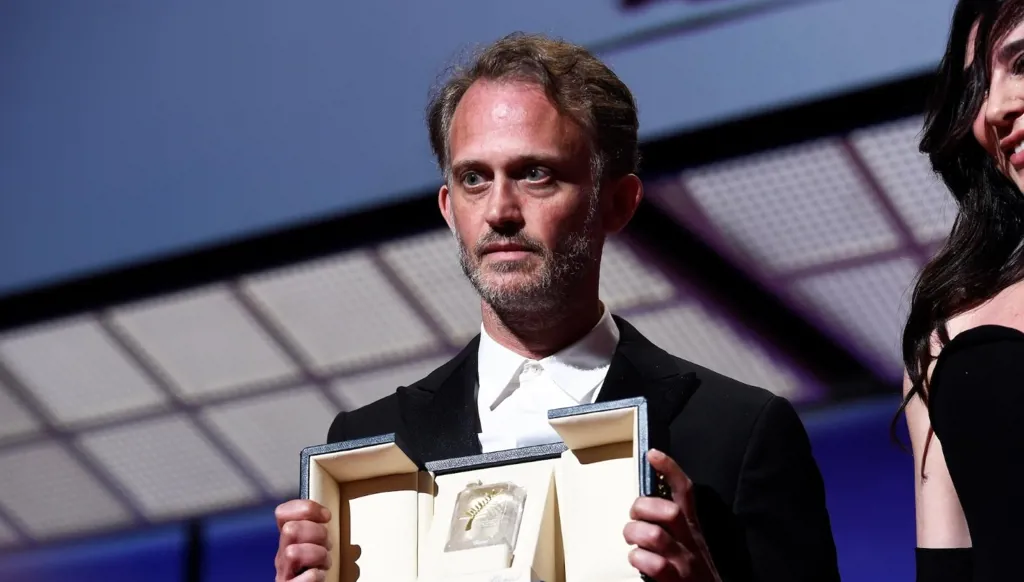


The French director Emmanuel Marre, in his film “A Man of His Time,” returns to the year 1940, at the height of the Nazi occupation of France, to evoke the story of his great-grandfather Henry (Swann Arlaud), a bureaucrat who undertook a project to “save France” during one of its darkest historical moments.
The film offers a different reading of a period still present in France’s collective memory, proposing an approach that goes beyond familiar narratives, combining visual brilliance with precise writing.
It was awarded the screenplay prize at the last Cannes Film Festival, where Annahar conducted the following interview with Marre.
How was “A Man of His Time,” inspired by your great-grandfather’s story, born?
For a long time, this family story was not a taboo. In our house, there was always a copy of his book "A Man of His Time" on one of the shelves. Then, about ten years ago, one of my aunts showed me a box containing all his correspondence: nearly three hundred letters. When I examined these documents, I felt like I was diving into the details of daily life during World War II, through a perspective that breaks from grand historical narratives.
This closeness to the mundane and ordinary immediately struck me as cinematic material. These letters became a fundamental inspiration for the film, although it remains a free adaptation of them. I maintained the character’s general trajectory, but some elements are fictional, as I wanted to build a purely cinematic narrative movement.
Can it be said that the film questions how France established its memory of that era?
That memory was not shaped solely by major historical events but also by daily life details, family stories, and how each individual imagines what happened. France has long worked on that memory through different national narratives, sometimes fundamentally contradictory. What interests me specifically is how these narratives continue to influence consciousness and the angle from which we view that era today.
Crucially, the film does not reduce itself to the issue of collaboration with the occupation. This is not a film about “collaborators,” but about the unique initiatives of the Vichy regime, without always being compelled by the occupation.
Also, the memory of that period cannot be reduced to a simple dichotomy between heroes on one side and traitors on the other. Gray is often used to express the middle ground, but I see this metaphor as insufficient. History is more complex: there is black, red, blue, and an endless array of shades. There were resistors, of course, and there were collaborators by conviction. But between these poles, there exists an infinity of conditions.
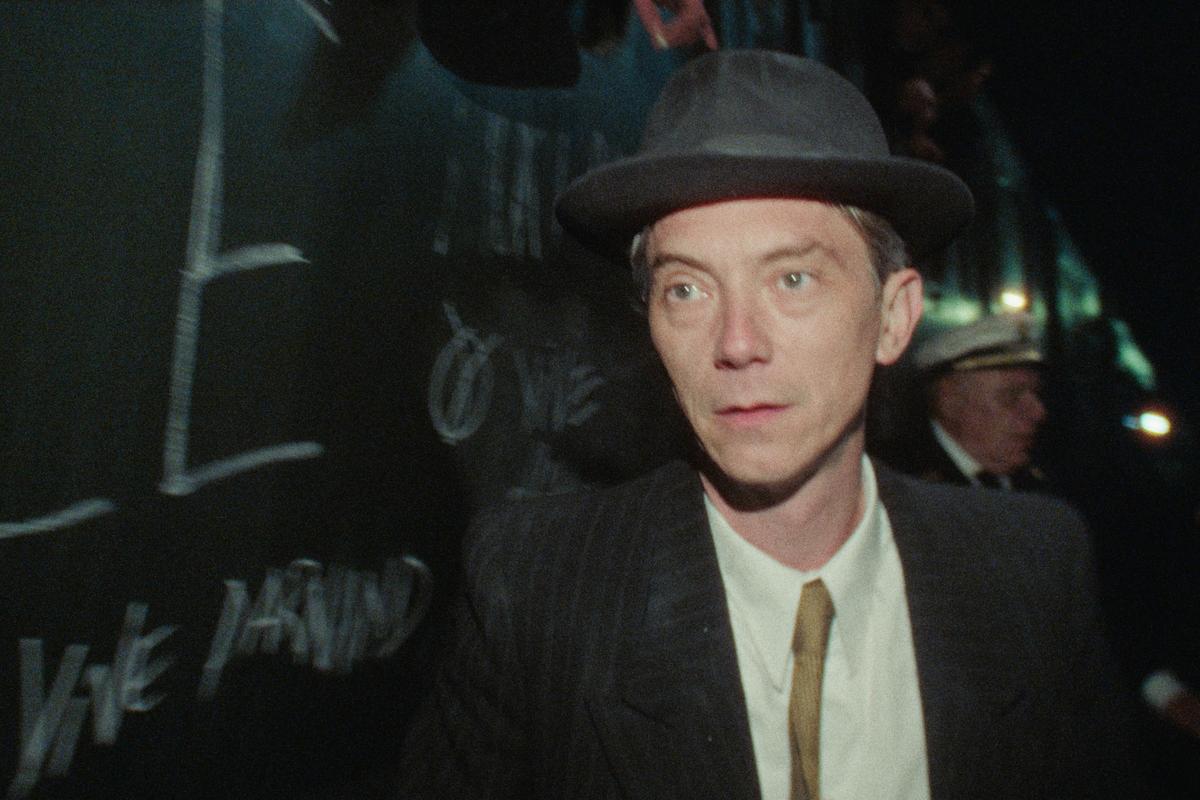
The film also raises the issue of obedience to a system, which is fundamental in the script. The film’s title, “A Man of His Time,” first refers to a book my great-grandfather wrote shortly after the defeat. This book can be seen as an attempt to find his personal salvation. He came from the private sector, where he worked as a consultant for companies, applying what would later be known as modern management methods. He was convinced that the nation failed because it did not have enough efficiency and competence. This obsession with efficiency is a key element in understanding his vision.
Since then, his project centered on transferring methods derived from corporate mentality to the state apparatus. Interestingly, this regime valued individual initiatives. On some levels, it appeared very modern, as it encouraged people to propose ideas and suggestions. This is precisely what intrigued me: how an authoritarian regime succeeds in extracting obedience, not only through coercion but by giving individuals the impression that their actions stemmed from their own will.
Do you understand this character?
Not entirely. The film was never intended to fully and finally understand Mr. Henry. The utmost I hope for is that the viewer leaves the screening with the feeling I had when I discovered that archive. My brother and I invested a long time working on documents from that era. One day, we learned there was a file dedicated to our great-grandfather within the Unemployment Commission’s archive. When I examined it, I did not feel like I was finding a definitive truth about this man.
My feeling was closer to entering a thought-provoking space: incomplete and fragmented material that forces you to reflect and question. If the film can offer viewers the same experience, that of opening a file and facing elements that provoke questions, it would be wonderful.
Is this why you adopted a documentary-like style?
We started with a very simple idea: to present characters who do not know the end of the story. We, as 21st-century viewers, know what will happen later. But they do not. They progress amid uncertainty, just as we move through our lives without knowing where events will lead us. Thus, it was necessary to find a filming method that preserved this ignorance of destiny.
The film goes beyond the destiny of a single individual to narrate a broader collective issue. Was that central to the project?
Yes. But the film also engages with a degree of ambiguity. Is Henry seeking his personal salvation? Is he seeking it through Pétainism? (referring to Marshal Pétain). And is he truly convinced he is working to preserve France? All these questions remain open.