

2026 World Cup: Soccer's Cultural Impact in the USA
As the United States prepares to host the 2026 World Cup, the tournament reignites a global debate: is soccer becoming a true cultural identity in America, or will it remain a global spectacle experienced differently than in football-crazed nations like Brazil?




 Messenger
 Whatsapp
 Threads
 Email
Email
 Print
Print
 X
X
 Facebook
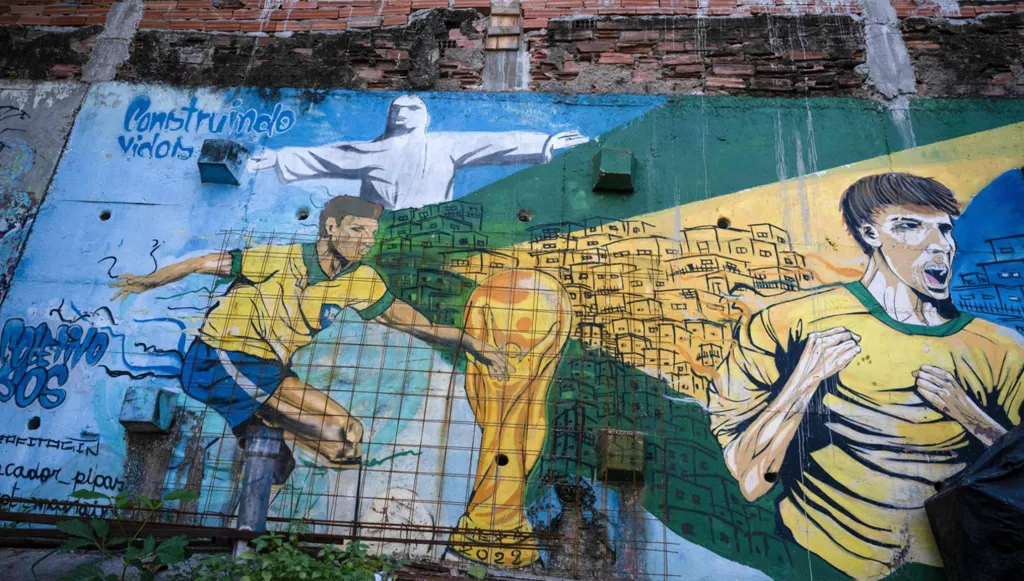


When the United States hosts the 2026 World Cup, the event will not only mark the return of the tournament to North America, but also reopen an old cultural question: can soccer claim in the United States the same place it holds in Brazil and its neighbors?
It has long been said that South America treats soccer with a kind of religious fervor, while Americans remain less attached to it. However, this image is becoming less accurate today. The United States now boasts crowded stadiums, growing audiences, expanding professional leagues, and younger generations increasingly following the game. Meanwhile, Brazil continues to represent one of the most emotionally intense soccer cultures in the world.
The real contrast, then, lies not in passion versus indifference, but in two different meanings of soccer.
Part of National Identity
In Brazil, soccer has transcended sport to become part of national identity. Brazilian sociologist Gilberto Freyre helped shape the idea that the Brazilian style of play reflects the country’s mixed cultural history, with its creativity, improvisation, and fluidity—qualities later associated with soccer as an art form.
Thus, soccer is no longer just a game but one of the ways Brazil imagines itself. Club loyalties are passed down through families, victories become national occasions, and defeats turn into collective wounds. Brazil’s loss to Uruguay in the 1950 World Cup final, known as the “Maracanazo” tragedy, remains deeply embedded in the country’s cultural memory.
Why Was 'Soccer' Delayed?
Meanwhile, the United States followed a different path. The issue was never a lack of sports culture, but rather the presence of strong, established sports that already defined national identity. Baseball, American football, basketball, and collegiate sports occupied central places in collective memory and cultural life. When soccer arrived, it entered an already crowded landscape.
It did not need to create a new sports culture, but rather to compete with existing ones. The use of the word “soccer” instead of “football” reflects this history, as Americans retained the term because “football” was already strongly associated with another dominant sport.
The difference is also evident in how the game developed. Brazilian soccer mythology, in a sense, emerged from streets, beaches, and working-class neighborhoods, where images of barefoot children playing became part of the national imagination. In the United States, soccer grew through schools, universities, sports academies, and organized programs. Brazil reflects a culture of improvisation, while America reflects a culture of structure. Neither model is inherently superior, as both reflect the societies that produced them.
From 1994 World Cup to Messi
The 2026 tournament cannot be understood without recalling the 1994 World Cup. At the time, the decision to award hosting rights to the United States was met with widespread skepticism, yet the tournament drew record attendance of over 3.4 million spectators. It helped establish Major League Soccer and opened the door to a long-term transformation in Americans’ relationship with the game.
Three decades later, soccer is no longer marginal. The league has expanded, viewership has increased, and Lionel Messi’s arrival at Inter Miami has accelerated this shift, giving the sport a stronger presence in American popular culture. Digital streaming platforms have also made European championships part of the daily experience for a new generation of fans.
The Cultural Gamble of World Cup 2026
However, perhaps the most fascinating dimension of the 2026 World Cup lies beyond the pitch. The tournament is being hosted by a country that has mastered the transformation of sports into a vast economic industry. The 2026 edition is expected to set records in sponsorships, broadcasting rights, and hospitality programs, while criticism grows over rising prices and the limited accessibility of major events for ordinary fans.
Here emerges a central cultural tension: between soccer as memory and inherited identity passed through generations, and soccer as a global product within the modern entertainment economy.