

Lebanon Negotiations: Escalation Amid US Ceasefire Framework
Diplomatic efforts led by Washington and supported by Beirut encounter sharp pushback from Iran and Hezbollah, Israeli warnings of escalation, and continued military activity on the ground.



 Messenger
 Whatsapp
 Threads
 Email
Email
 Print
Print
 X
X
 Facebook
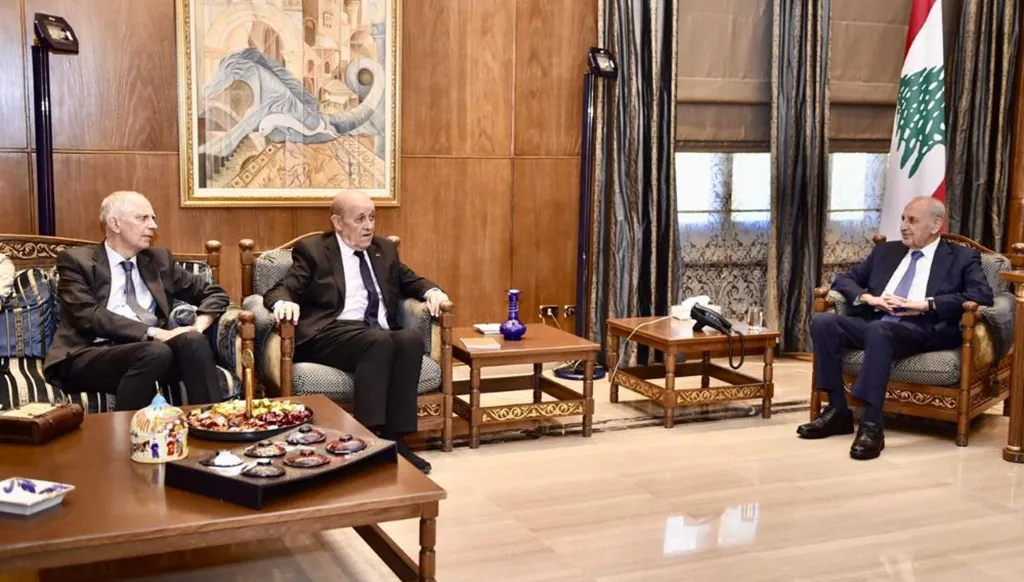


The anticipation and waiting to gauge the position of Iran and its proxy Hezbollah regarding the advanced announcement issued early yesterday morning in Washington, following the fourth round of Lebanese–Israeli negotiations under U.S. sponsorship, lasted only a few hours.
Iran did not allow Hezbollah to take the lead, even in form, in undermining the ceasefire. Instead, it hastened to openly declare its own preemptive move to derail it, and this position was later echoed in the remarks of Hezbollah Secretary-General Naim Qassem.
Although this derailment was widely expected, it nevertheless appeared unable to obscure the prominent and significant implications of the “framework agreement,” the first of its kind, outlined in the U.S. announcement summarizing the outcome of the fourth round of talks in Washington.
This framework addressed a comprehensive ceasefire, tied to Hezbollah’s commitment to key practical measures, most notably the withdrawal of the group from south of the Litani River, the adoption of “pilot areas” to establish exclusive Lebanese state authority, the disarmament of all armed groups, and a move toward a non-aggression agreement.
It is a framework agreement that implicitly aligns with Lebanese cabinet decisions regarding the exclusivity of arms, and the subsequent classification of Hezbollah’s armed activity as a violation of the law. The broader political framework of this statement also gained significance by emphasizing that any agreement to halt hostilities must be reached directly between the two governments under U.S. sponsorship, rather than through any separate track, in addition to condemning Iranian aggression in the region in light of Iran’s attacks on Arab Gulf states.
However, the level of Iranian momentum to respond in Lebanon and to try to derail the separation of Lebanon’s negotiation track from the Iranian track rose at an unprecedented rate, which is likely to further escalate the confrontation between the Lebanese state and Tehran, while leaving Hezbollah to bear the consequences of renewed field escalation and what may result from the failure of the new ceasefire initiative.
In an effort to urge the party to cooperate, President Joseph Aoun announced that the results of the fourth round of negotiations and the statement issued thereafter, “with its very important points in Lebanon’s favor,” constitute the last opportunity to enter into a final and comprehensive ceasefire, with each side bearing responsibility in the event of non-compliance.
In remarks to journalists at the Baabda Palace, Aoun said: “As soon as we receive responses from the relevant domestic parties, especially Hezbollah, the Lebanese position will be communicated to the American side so that the appropriate course of action can be taken.”
He noted that the United States will determine the timing and mechanism for implementing the ceasefire, “which could begin 24 hours after it is informed of approval and the provision of necessary guarantees,” adding that U.S. President Donald Trump would be the direct guarantor of implementation.
He revealed that “the Lebanese negotiating delegation, headed by Ambassador Simon Karam, demonstrated firmness, and yesterday’s negotiations were extremely difficult, to the extent that Ambassador Karam had to suspend the negotiating session and insisted on not moving on to any other topic before a comprehensive ceasefire was addressed. This prompted the intervention of U.S. Secretary of State Marco Rubio to resume the talks, which ultimately concluded with the acceptance of the Lebanese demand for a comprehensive ceasefire.”
Iranian escalation and Hezbollah threats
Within only a few hours, Iranian Quds Force commander Esmail Qaani announced that “the minimum demands of the resistance in Lebanon are the withdrawal of the occupying entity to the situation that existed before the start of the war,” in what appeared to be an Iranian attempt to undermine Lebanese state efforts and impose Tehran’s conditions for a ceasefire.
Following this, Agence France-Presse quoted a Hezbollah official as saying: “We have informed the Lebanese authorities of our rejection of a ceasefire agreement with Israel.” Hezbollah Secretary-General Naim Qassem also declared that “the outcome of the direct, futile and humiliating negotiations for Lebanon is rejected in full and in detail,” stressing that “the resistance has not given any commitment to anyone not to resist the aggression, and as long as our villages are unsafe, the settlements will not be safe.”
He added: “As long as the aggression continues, we will confront it with all the strength we have, and we will strike it wherever we decide and are able.”
PM Salam responds
In what appeared to be an implicit response to Hezbollah, Prime Minister Nawaf Salam affirmed at the beginning of the Cabinet session that “the negotiation process we have chosen is the fastest and least costly path for Lebanon, the Lebanese people, the south, and the people of the south.”
He praised what the President had announced, noting that “the negotiations were not easy, and our delegation faced Israeli intransigence. What we are demanding in these negotiations is not new.” He continued: “With regard to clearing south of the Litani of armed men and weapons, this is not a condition imposed on us by anyone."
"This is what Lebanon committed to before the world when it approved Resolution 1701. As for the exclusivity of weapons in the hands of the state across all Lebanese territory, we have been delayed for too long in implementing what was stipulated in the Taif Agreement signed by the Lebanese, which is also included in our ministerial statement.”
He pointed out that “the next step is practical and tangible: the deployment of the Lebanese army in pilot areas as a first phase, which does not cancel our right to full withdrawal, but rather brings us closer to it. Every hour that passes without implementation is an hour paid for by the south and its people."
"All parties are required to prioritize Lebanon’s interest and its people over any other external or factional interest, and to assume their responsibilities. Whoever refuses or delays bears alone the consequences of what may follow, before history, and more importantly before the Lebanese people, who have suffered greatly and made the greatest sacrifices.”
Israeli comments on the negotiations
On its side, the Israeli government indicated that “the negotiations with Lebanon in Washington agreed on distancing Hezbollah from the equation, and this is an unprecedented achievement.”
Axios reported that “if Hezbollah rejects the agreement between Lebanon and Israel and continues to launch rockets toward northern Israel, this may prompt President Trump to give Netanyahu the ‘green light’ to escalate the military campaign in Lebanon.”
Meanwhile, the Israeli army called on Lebanese civilians to “refrain from heading south of the Zahrani River until further notice, as anyone who goes south is putting their life at risk.”
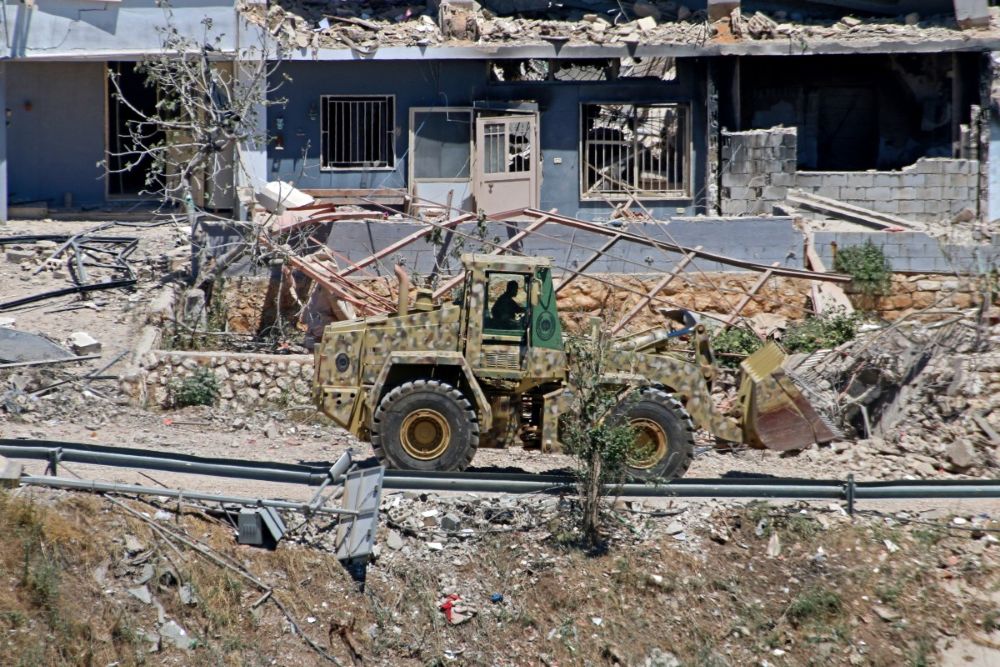
On the ground, Israeli airstrikes continued on southern Lebanon and the western Bekaa, while Hezbollah launched rockets later in the afternoon toward northern Israel. It was also reported that the Lebanese army deployed in Dibbin after Israeli forces withdrew from it, as well as at the Al Khiam junction in the south.
Le Drian visits Lebanese officials
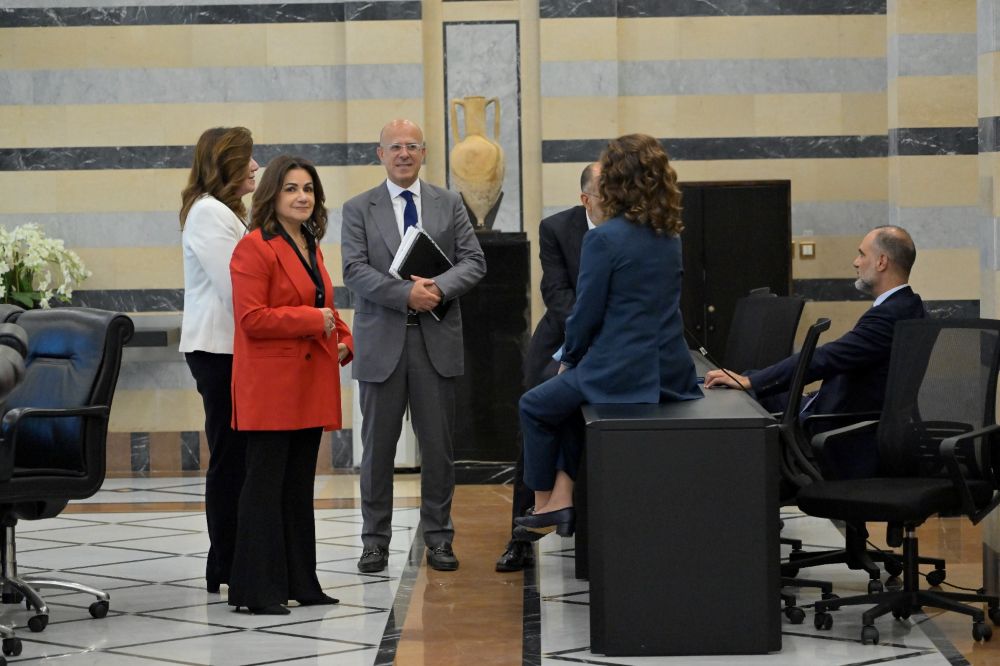
Meanwhile, as the European Union announced “support of €100 million for the Lebanese army to help it establish the state’s monopoly over weapons and protect civilians,” the French presidential envoy Jean-Yves Le Drian visited President Joseph Aoun, Parliament Speaker Nabih Berri, and Prime Minister Nawaf Salam.
He discussed military and negotiating developments, as well as the issue of what comes after the end of UNIFIL’s mandate in the south. He also began a round of meetings with party leaders and parliamentary blocs, which he is expected to complete today.
Le Drian affirmed that his visit to Beirut “aims to express French support and solidarity and attention to Lebanon’s affairs.”