

Iran's Threats and Bab al-Mandeb's Global Impact
Threats to disrupt shipping through Bab al-Mandeb are raising fears of a global economic shock, putting the Suez Canal, energy supplies, and Iran’s own alliances at risk.



 Messenger
 Whatsapp
 Threads
 Email
Email
 Print
Print
 X
X
 Facebook
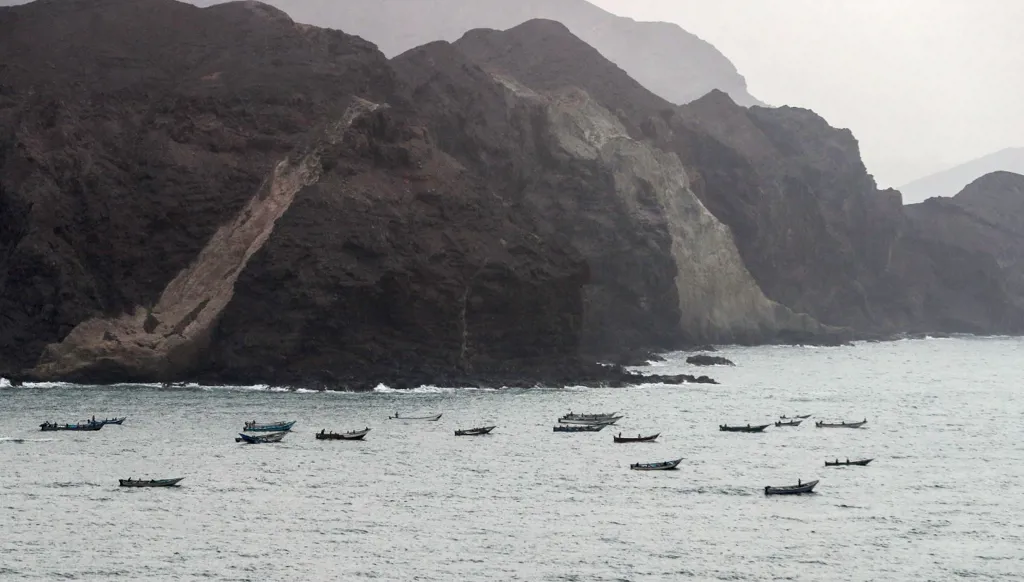


Whenever tensions between the United States and Iran escalate, Tehran tends to revive threats of opening new fronts beyond the regional arenas that have witnessed recent conflicts. Historically, attention has often turned to the Bab al-Mandeb Strait whenever such warnings emerge.
This time, the threat came directly from the commander of the Quds Force, Ismail Qaani, who warned that continued attacks on Gaza and Lebanon would make navigation through Bab al-Mandeb resemble the situation in the Strait of Hormuz.
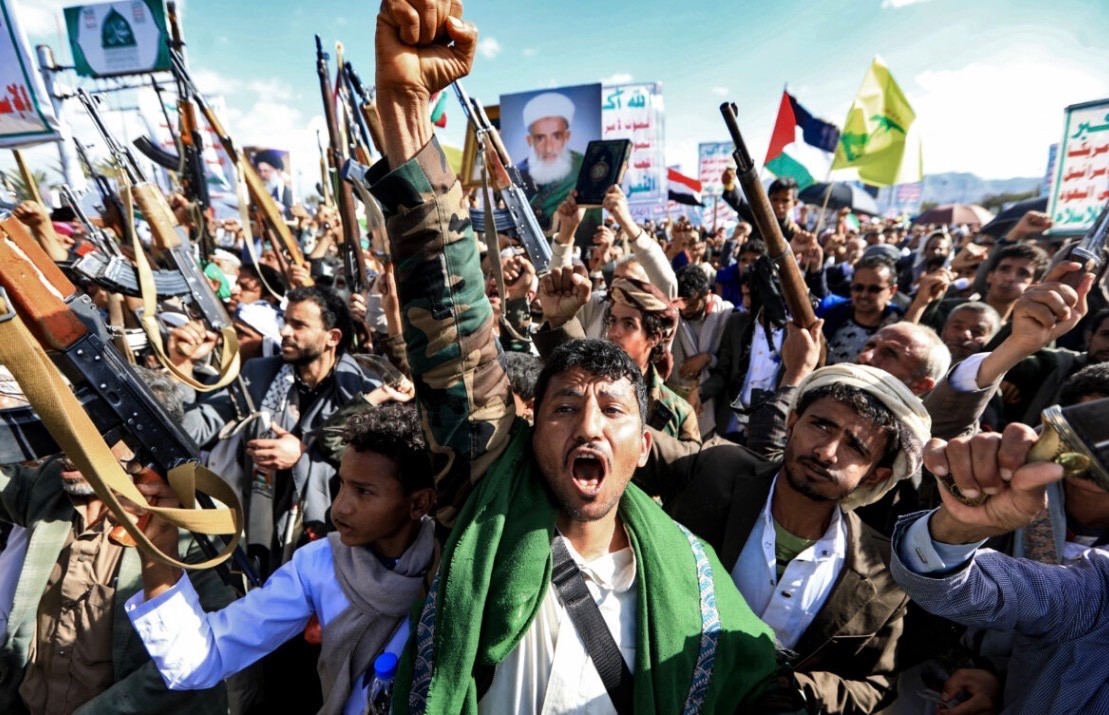
Should this threat move from rhetoric to military action, it would likely be carried out through the Houthis and the use of ballistic missiles. However, opening such a front would, in practical terms, amount to opening a confrontation with the global economy.
Bab al-Mandeb is a critical geo-economic corridor that serves as the main maritime gateway linking the Indian Ocean to the Mediterranean Sea through the Red Sea and the Suez Canal. A significant share of Euro-Asian trade and global energy supplies passes through this route. More specifically, the Red Sea carries approximately 12 to 15 percent of global trade, while between 6 and 8 million barrels of oil, in addition to liquefied natural gas, transit the waterway daily.
Researcher at the Institute for Global Security Affairs and retired Egyptian army general Yasser Hashem says that Bab al-Mandeb still carries fresh memories of the period when the Houthis used it as a pressure tool in support of the war in Gaza. However, he notes that, so far, the Houthis have not played a direct role in the conflict between Iran and its adversaries.
According to Hashem, this points to two possibilities:
The first is that the Houthis do not want to appear as mere proxies of Tehran and believe that future support from Iran remains uncertain.
The second is that they are deliberately delaying their involvement in the current confrontation in order to preserve their value as a decisive card for a more critical moment.
As for Iran’s ability to independently threaten navigation in Bab al-Mandeb, Hashem believes the capability still exists, though the available options have narrowed considerably following the extensive damage sustained by the Iranian navy.
Speaking to Annahar, he added that the United States and several other countries are fully aware of these possibilities and have conveyed warnings to Tehran, Sana'a, and other actors that such a move would significantly broaden the conflict and could trigger the involvement of additional parties as well as forceful military responses.
He also pointed out that the activities of the multinational naval task forces operating in Bab al-Mandeb, the Gulf of Aden, and the Arabian Sea may expand in scope and capability in the near future. More than 40 countries currently participate in these missions, which focus on monitoring threats, combating smuggling, and countering piracy.
Bab al-Mandeb and the Threat to the Suez Canal
Any closure of Bab al-Mandeb, or even a serious threat to navigation through this vital artery, would inflict substantial damage on the Egyptian economy through its direct impact on the Suez Canal. During the period when the Houthis targeted shipping in the Red Sea, Egypt's financial losses exceeded $10 billion.
In this context, former Deputy Director of Egyptian Military Intelligence Major General Ahmed Ibrahim Kamel told Annahar that Iran could resort to the Bab al-Mandeb card if negotiations collapse or if military confrontation resumes, as a means of further complicating the global economic landscape.
However, Kamel, who also previously headed reconnaissance operations in the Egyptian army, stressed that Cairo's position in confronting such threats remains clear, a stance that was demonstrated during the Israeli war on Gaza.
He explained that Egypt participates in both Task Forces 152 and 153 alongside 19 Arab and foreign countries to secure navigation in the Arabian Sea, Gulf of Aden, Bab al-Mandeb, and the Red Sea. These missions operate under the leadership of the United States Fifth Fleet, headquartered in Bahrain.
Kamel emphasized that the primary objective of these forces is to ensure the safety of maritime navigation and the secure passage of commercial vessels. He described the mission as purely defensive and carried out in cooperation with the naval forces of the United States, Britain, and the European Union.
Risks of Losing Allies
For Iran, threatening to use Bab al-Mandeb alongside Hormuz is a double-edged sword. Issuing threats is one thing, but transforming them into military action is entirely different, given the severe consequences such a move would have on the global economy.
The issue affects Tehran's allies as much as it does its opponents and could trigger political and military repercussions capable of reshaping existing dynamics while weakening Iran's negotiating position with the United States.
Addressing these risks, Iran and Middle East affairs specialist Dr. Wejdan Abdulrahman argues that such a move would directly harm European Union countries, many of which continue to approach the crisis from a relatively neutral position, as well as regional states. Consequently, any attempt to close Bab al-Mandeb could prompt the formation of a broad international coalition against Iran.
In comments to Annahar, Abdulrahman highlighted what he considers a critical point: if the United States remains focused on changing Iranian behavior rather than changing the regime itself, a move of this magnitude could lead Washington to reconsider its political and strategic doctrine.
In that scenario, the United States could shift from a policy aimed at modifying Iranian behavior to one centered on regime change. Abdulrahman believes such an approach would likely receive substantial European backing, resulting in a more explicit European alignment with Washington in confronting Iran.
A Suicidal Path
During the recent U.S.-Israeli-Iranian confrontation, the Houthis carried out a limited number of military operations involving drones and missiles, but they stopped short of attempting to close the strait.
For this reason, Abdulrahman doubts that the Houthis would seek to shut down Bab al-Mandeb, given their awareness of the potentially severe consequences.
He argues that while the closure of either Hormuz or Bab al-Mandeb may be theoretically possible, closing both simultaneously remains highly unlikely unless Iran and the Houthis choose a course that could reasonably be described as political and strategic suicide.
He also points out that although the Houthis maintain a close alliance with Iran, they are not a direct organizational extension of Tehran in the same way that Hezbollah in Lebanon or certain Iraqi groups are.
Instead, they retain a degree of autonomy that allows them to make decisions based on their own calculations and local interests.