

Baghdad’s PMF disarmament push could echo across Lebanon and beyond
As Baghdad moves to place all weapons under state control, the parallel with Lebanon is becoming harder to ignore. Regional shifts, growing pressure on Iran-backed factions, and changing power dynamics are reshaping a debate that could determine the future of armed groups in both countries.



 Messenger
 Whatsapp
 Threads
 Email
Email
 Print
Print
 X
X
 Facebook
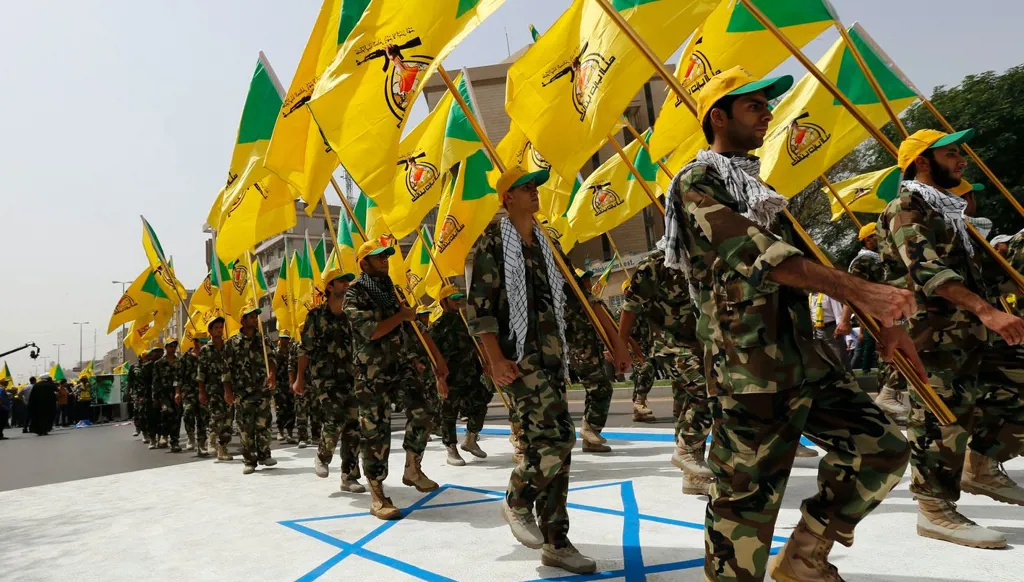


With the formation of the new government in Baghdad, headed by Faleh Al-Zaidi, the sensitive issue of monopolizing weapons in the hands of the Iraqi state has returned to the forefront.
This has revived efforts to find safe mechanisms for implementing a long-standing project that continues to face objections amid internal divisions.
Naturally, some observers see links and mutual reflections between what is currently being discussed in Iraq as an urgent task for the new government and the similar situation in Lebanon, particularly as the similarities between the two cases outweigh the differences.
It is well known that Baghdad moved before Beirut to collect weapons that had once been dispersed among Iraqi factions and components, which later came together under the umbrella of the Popular Mobilization Forces (PMF). These forces relied on a fatwa issued by the supreme religious authority in Najaf to confront attacks carried out by extremist groups against certain Iraqi regions after 2014.
Following the defeat of those groups and the restoration of state control, a debate emerged within Iraq over the future of these weapons. One camp called for restricting arms exclusively to the state, while another advocated patience, arguing that the threat had not completely disappeared.
Sectarian Dimension
It is evident that the disagreement gradually widened and assumed a sectarian dimension, particularly since many of its proponents belong to a specific sect that became closely aligned with Iranian influence. This was especially apparent given that the Iranian Revolutionary Guard Corps played a key role in overseeing the formation of the Popular Mobilization Forces and in providing them with support and backing.
The PMF factions were quick to provide practical evidence of this connection. Some participated in attacks targeting American bases across Iraq, while Gulf capitals accused certain factions of carrying out attacks against their territories and facilities during the recent war between Iran and the United States.
Main Challenge for Governments
As a result, the weapons of the Popular Mobilization Forces have remained a pressing internal issue in Iraq's political landscape and a challenge for successive Iraqi governments, which have repeatedly faced demands from Washington to end the role of these weapons.
Accordingly, some circles in Beirut are closely monitoring the ability of the new Iraqi government to accomplish this difficult task. They believe that success in Iraq could create additional pressure in favor of advocates of weapons consolidation under state authority in Lebanon, and vice versa.
According to some assessments, the weapons of the Popular Mobilization Forces in Iraq and those of Hezbollah are essentially part of the same equation, operating under Tehran's direction.
Both have come under mounting pressure since the Gaza support war of 2023, with growing calls to neutralize these weapons on the grounds that they have lost the legitimacy once granted by internal arrangements and regional balances that have since undergone significant transformation.
Given the dramatic developments in both countries and across the region, these weapons have come under intense scrutiny. The prevailing belief is based on the assumption that any progress toward consolidating weapons under state control in one country will inevitably affect their fate in the other.
Opponents of both arsenals are expected to exploit political and regional transformations to the fullest, arguing that these weapons have lost their original purpose in Iraq and their legitimacy in Lebanon following government decisions.
Ultimately, some believe that regional and domestic developments have facilitated challenges to these weapons, particularly after the Iranian project—which once sought influence across several Arab capitals, including Baghdad and Beirut—lost much of its strength and many of its supporting pillars following the fall of the allied regime in Syria and the major blow suffered by Hamas in Gaza.
It is also evident that some observers view armed groups in Iraq as more open and receptive to the idea of surrendering their weapons, especially after certain PMF factions began showing flexibility on the issue. This is reinforced by the fact that the Najaf religious authority has not recently renewed the fatwa that originally provided legitimacy for the PMF experience.
By contrast, the situation in Lebanon differs in several respects. Those holding the weapons there continue to defend them under the banner of a "national defense" formula that preserves a role for these arms.
However, this is a formula that has become increasingly difficult to sustain in light of recent ground developments.