

US-Iran tensions rise as nuclear talks stall and Gulf region sees renewed violence
Disputes over Iran’s uranium stockpile, exchanges of strikes across the Gulf, and escalating pressure in Lebanon signal a widening crisis despite ongoing claims of progress in negotiations.



 Messenger
 Whatsapp
 Threads
 Email
Email
 Print
Print
 X
X
 Facebook


The decision remains symbolic, as the president holds veto power over it. However, its passage with the support of four Republican lawmakers joining the Democrats reflects American discontent over the war, which has led to rising energy prices.
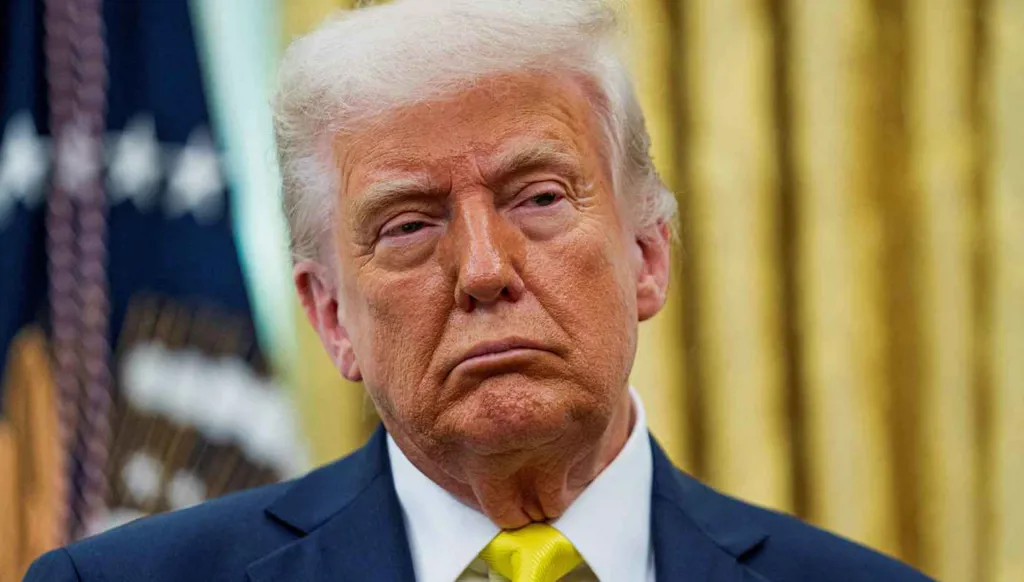
Trump has repeatedly suggested in recent days that a deal is close, but without any concrete steps actually happening, while new clashes and attacks have taken place in the Gulf, threatening the ceasefire announced on April 8, which has been marked by numerous violations.
Lebanon and Iran interconnected
Regarding Lebanon, Iran warned that any attack on the capital Beirut would lead to the resurgence of a large-scale war in the Middle East, at a time when Israel is intensifying its military operations against Hezbollah.
In this context, Araghchi said in an interview with Lebanon’s Al Mayadeen TV, reported by Tasnim news agency: “Messages have been exchanged regarding the need to stop the aggression against Beirut, but no tangible progress has been made in the negotiation process,” stressing that “we consider the fate of Iran’s war with the United States and Israel to be inseparable from the fate of the war in Lebanon.”
Trump, however, affirmed that he wants to separate the Lebanon discussions from the negotiations with Iran.
These remarks came as Israel and Lebanon announced an agreement to implement a ceasefire, according to a joint statement issued after two days of talks between the two sides in Washington.
However, the agreement requires a total ceasefire by Hezbollah, the evacuation of all its members from the area south of the Litani River, and the establishment of “buffer zones” under the control of the Lebanese army.
Hours after the conditional ceasefire was announced, Israeli drones launched attacks on areas in southern Lebanon on Thursday morning, while the Israeli army announced that sirens were activated in the north after detecting an “enemy aircraft infiltration.”
Israeli far-right National Security Minister Itamar Ben Gvir described the agreement as a “major mistake.”
The fate of Iranian uranium
The issue of Iran’s highly enriched uranium remains a major sticking point in US Iranian negotiations.
US Secretary of State Marco Rubio told the House Foreign Affairs Committee: “I believe this issue is now clearly on the table in the messages we are exchanging,” but he admitted that “we have not yet received final approval from their side.”
The United States insists that Iran hand over its stockpile of uranium enriched to 60 percent, close to the 90 percent level needed to produce a nuclear bomb, and that it agree to restrict its nuclear activities, along with reopening the Strait of Hormuz, as a condition for any possible agreement between the two sides.
Trump and Khamenei
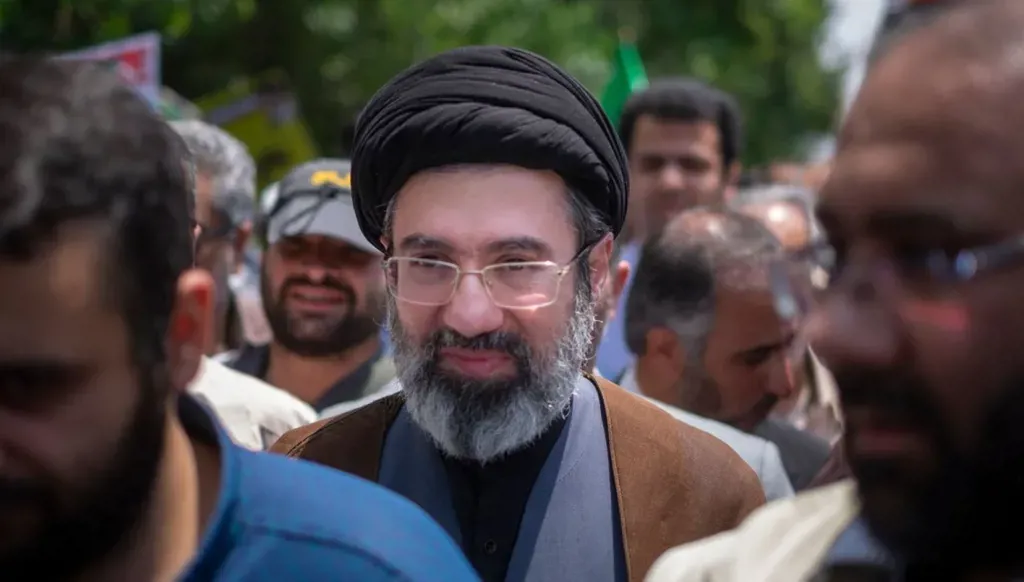
On another note, Trump said in a published interview that he would like to meet Iranian Supreme Leader Mojtaba Khamenei.
In an interview with the US newspaper The New York Post, he said of the Supreme Leader, who has not appeared publicly since succeeding his father, who was killed on the first day of the US Israeli attack on Iran on February 28: “I would like to meet everyone, and perhaps we will meet at some point depending on how things develop,” adding that Khamenei is “involved” in the negotiations.
Iran’s Supreme Leader warns of “compound war”
For his part, Iran’s Supreme Leader Mojtaba Khamenei warned against what he described as enemy attempts to stir internal divisions within Iran, stressing that pessimism and frustration within society “serve the interests of the adversary.”
Khamenei said: “There are external attempts to create internal divisions in the country.”
In the same context, he warned of a “compound war” aimed at weakening the people’s resilience and disrupting the judgment of officials.
Attack on Kuwait International Airport
These developments come at a time when the region has witnessed an escalation in recent days, particularly around the Strait of Hormuz, the strategic corridor for oil and gas supplies, which Tehran has effectively closed since the start of the war, while Washington responded by imposing a blockade on Iranian ports.
Kuwait accused Iran of carrying out an attack on Kuwait International Airport, which resulted in one death, dozens of injuries, and significant damage to the main passenger terminal at Kuwait International Airport.
However, Iran’s Islamic Revolutionary Guard Corps denied having targeted the airport, and announced that it had struck “Ali Al Salem Air Base in Kuwait, which hosts US helicopters,” as well as the headquarters of the US Fifth Fleet in Bahrain, in response to US attacks on an Iranian oil tanker and a communications station on Qeshm Island in the Strait of Hormuz.
The Kuwaiti army reported that “Iran launched 30 ballistic missiles and a drone at Kuwait on Wednesday.”