

Fairuz and Édith Piaf reimagined in a dreamlike AI tribute bridging Lebanon and France
A Lebanese makeup artist blends art, memory, and artificial intelligence to create a visual homage that celebrates cultural icons, peace, and the resilience of southern Lebanon’s border villages.



 Messenger
 Whatsapp
 Threads
 Email
Email
 Print
Print
 X
X
 Facebook
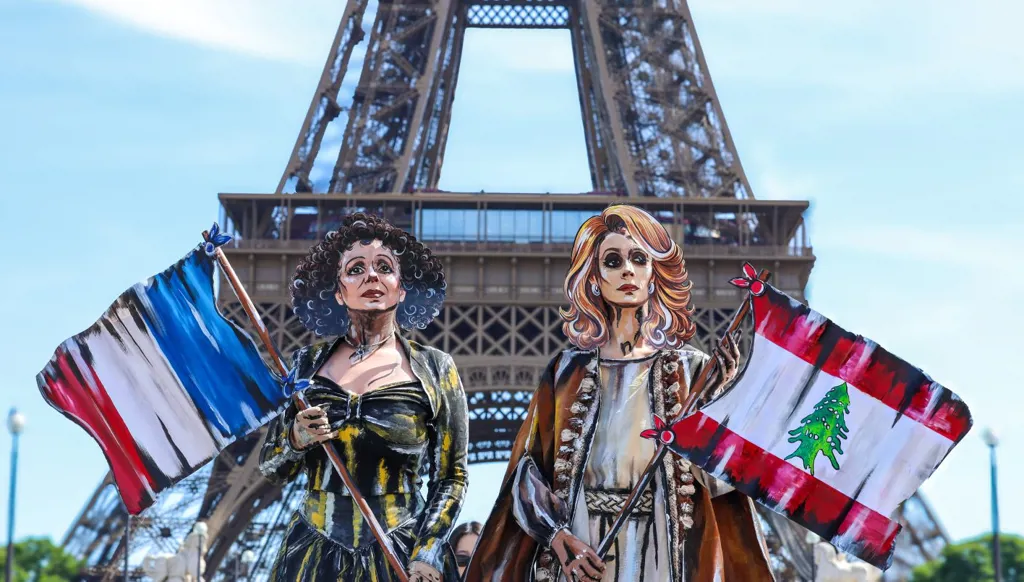


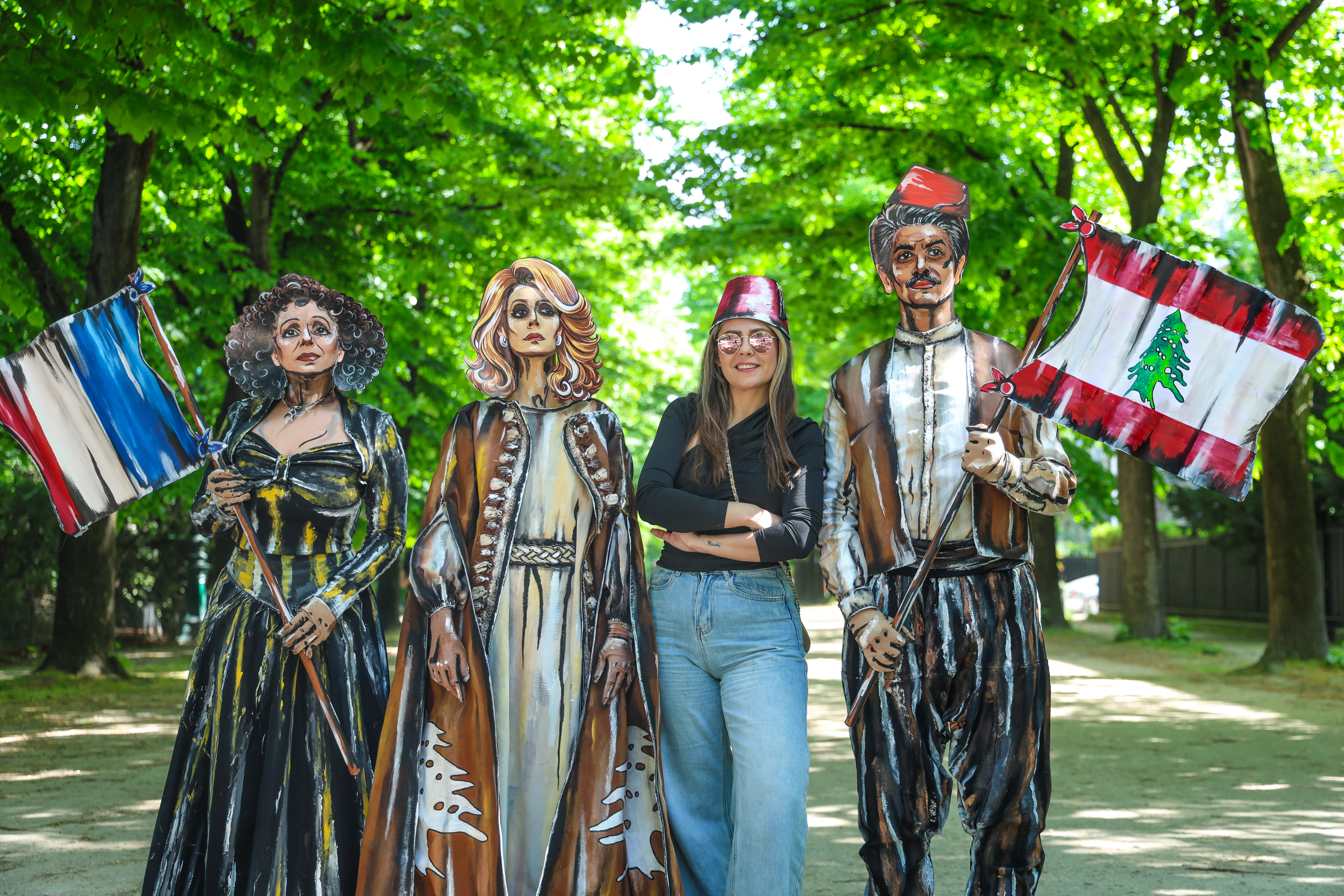
In an exclusive interview with Annahar, Rouba Al Ghoul revealed the behind-the-scenes details of this project, which was filmed by Michel Al Ghoul and received wide engagement on social media. She said: “Fairuz sang for peace, for Beirut and Jerusalem, for Mecca, Damascus, Tunis, and Baghdad.
As for Édith Piaf, she is a legend in a country of revolution. And when we bring them together, we get a revolution of peace. Lebanon is the white cedar on Fairuz’s dress, and we want our youth to return to dreaming about Lebanon and believing in it.”
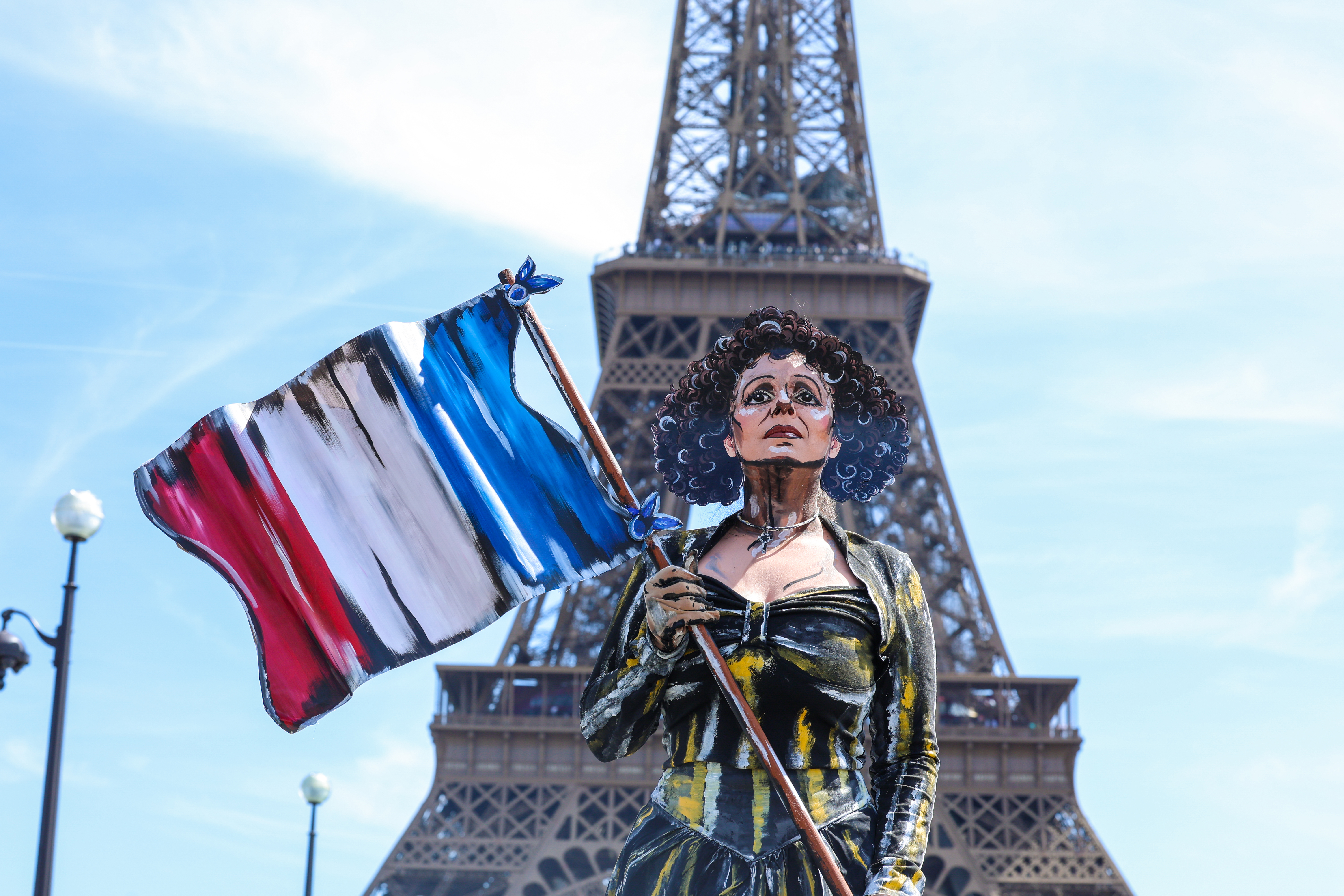
Al Ghoul explains that the idea came to her while she was at the airport gate, when she asked herself: “Why not portray Fairuz and Édith Piaf in front of the Eiffel Tower, but in a cartoon style?” From there, the journey of executing the project began with the use of artificial intelligence technologies.
She says: “Since we are living in the era of artificial intelligence and visual effects, I asked AI to transform the image into a cartoon drawing, then I added my own personal touches.”
From sewing to visual effects
After the planning stage and the process of searching for and editing images, Al Ghoul designed and sewed the outfits herself, making sure to draw inspiration from Fairuz’s well-known style of loose flowing clothing that reflects a regal presence. She therefore chose a cape featuring Fairuz’s name with the Lebanese cedar placed in the center.
She explains that the execution phase continued with coloring the outfits, where she used white to write Fairuz’s name and color the cedar tree, as a reference to hope and peace. She also used a three-dimensional technique by employing black and white tones, before adding final touches through makeup based visual effects.
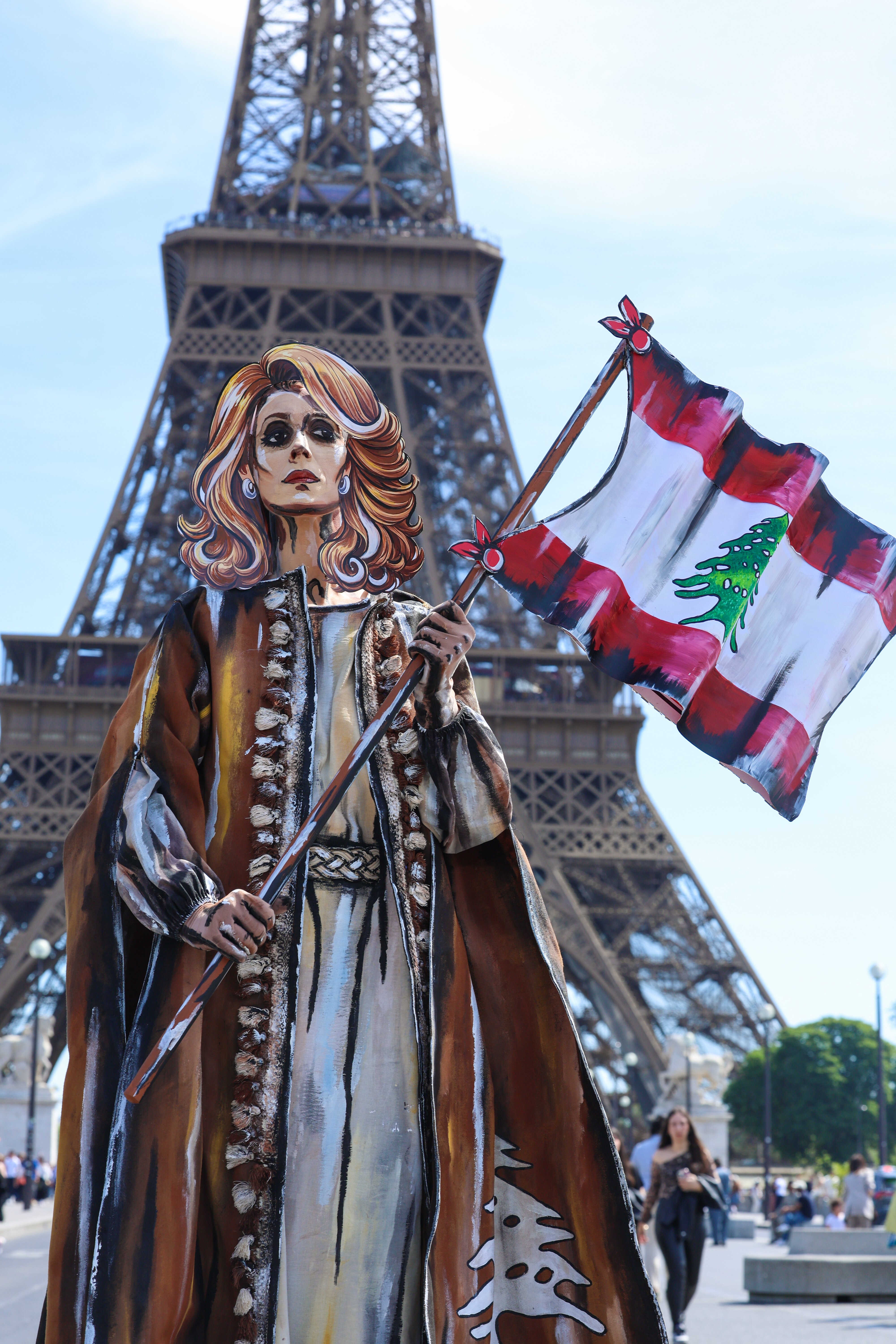
The preparation for the work took about a full month. According to Rouba Al Ghoul, the biggest challenge was finding two girls whose facial features and body structure closely resembled those of Fairuz and Édith Piaf.
She says: “I used artificial intelligence as many people do today. Who among us has not asked ChatGPT or others to turn their photo into a cartoon character? I did the same thing, but in a different way.”
She continues: “I took characters we all love and dream of meeting and turned them into a visual illusion. When you watch the work, you won’t know whether it is an advertising poster, a piece created using artificial intelligence, imagination, or reality.”
Beyond the artistic dimension: a tribute to the villages of the South
The details of the work were not limited to embodying the features of the two characters but also carried symbols and messages that Rouba Al Ghoul intended to include in the scene. On the back of one of the young men, the phrase was written: “Either we all die and the homeland is lost, or we stand as men and the homeland remains.”
This line is inspired by the song “Rah Yiba El Watan” (The homeland will remain) by the late artist Melhem Barakat, and it had been chanted during the funeral of Father Pierre Al Rai in the town of Qlayaa, after he was killed in an Israeli attack that targeted the town.
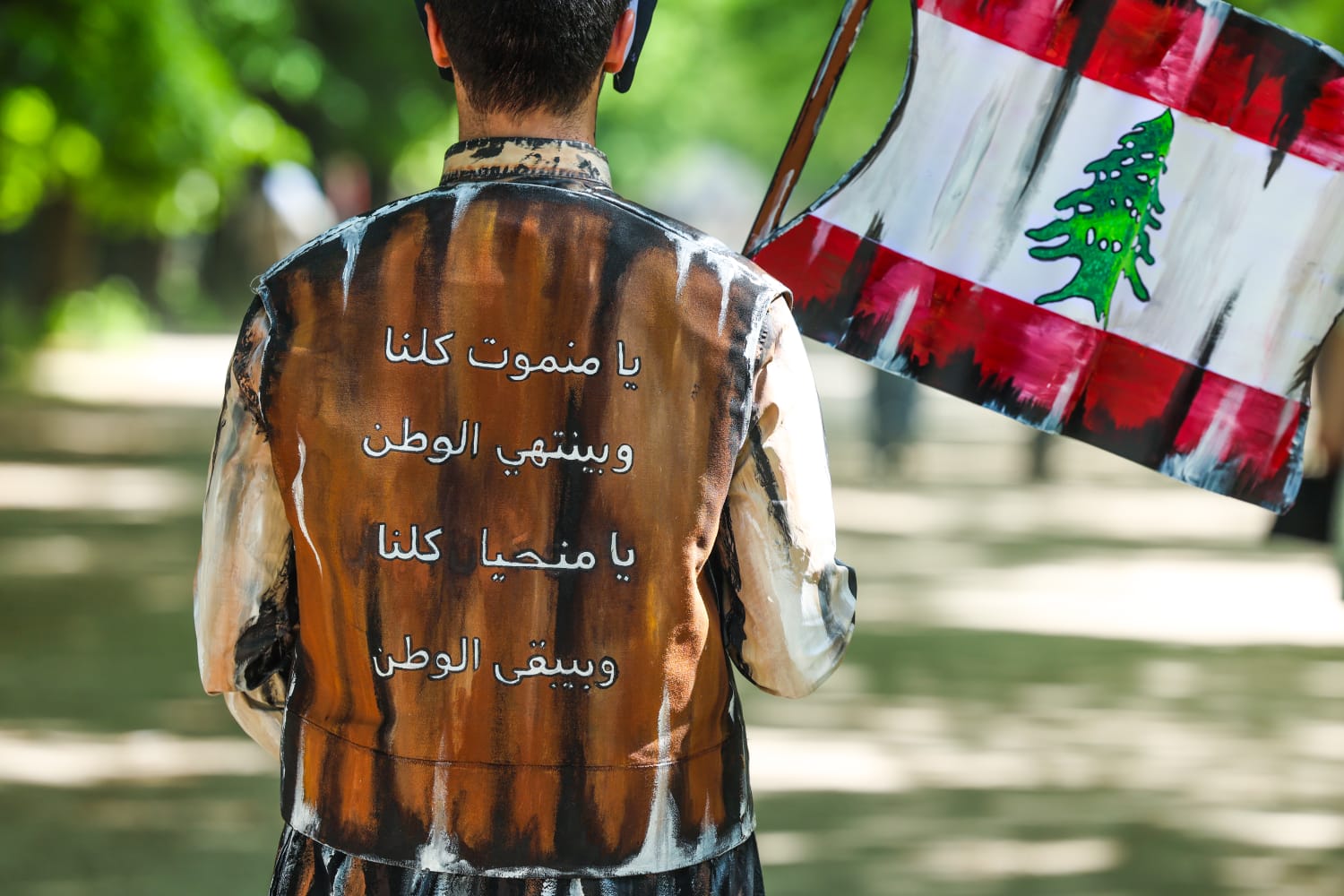
Al Ghoul also paid tribute to the residents of the border towns in southern Lebanon who held on to their land despite the difficult conditions, including Qlayaa, Rmeish, Debel, Ain Ebel, Deir Mimas, Abbou Qamhah, Rashaya al-Foukhar, Kfar, Hasbaya, Jdeidet Marjeyoun, Al-Buwayda, and Burj Al-Moulouk, among other southern villages that paid a heavy price during the war.