

Israel-Lebanon Post-Ceasefire Agreement Explained
Defense Minister Katz says Israel retains strike freedom up to Beirut, limits southern return, and enforces a demilitarized zone under a U.S.-backed deal.



 Messenger
 Whatsapp
 Threads
 Email
Email
 Print
Print
 X
X
 Facebook



Israeli Defense Minister Yisrael Katz, on Thursday, unveiled details of the post-ceasefire agreement with Lebanon, describing the “new reality” imposed by Israel as one that establishes ongoing security equations on the northern front.
Freedom of Action Up to Beirut
Katz stated that Israel, “with American support,” retains the freedom to carry out strikes even in Beirut in response to any attack, signaling the continuation of open rules of engagement despite the agreement.
He added that the Israeli army will continue its field operations at this stage inside Lebanon, confirming its presence in the Shqif area, along with the continued dismantling of Hezbollah’s infrastructure.
He also emphasized that Israeli forces will remain in the “security zone” up to the “yellow line.”
Restrictions on Residents' Return and a Demilitarized Zone
Katz indicated that residents of South Lebanon “will not return at this stage,” noting that the agreement includes the creation of a demilitarized zone, and linking the ceasefire to the prior removal of Hezbollah south of the Litani River.
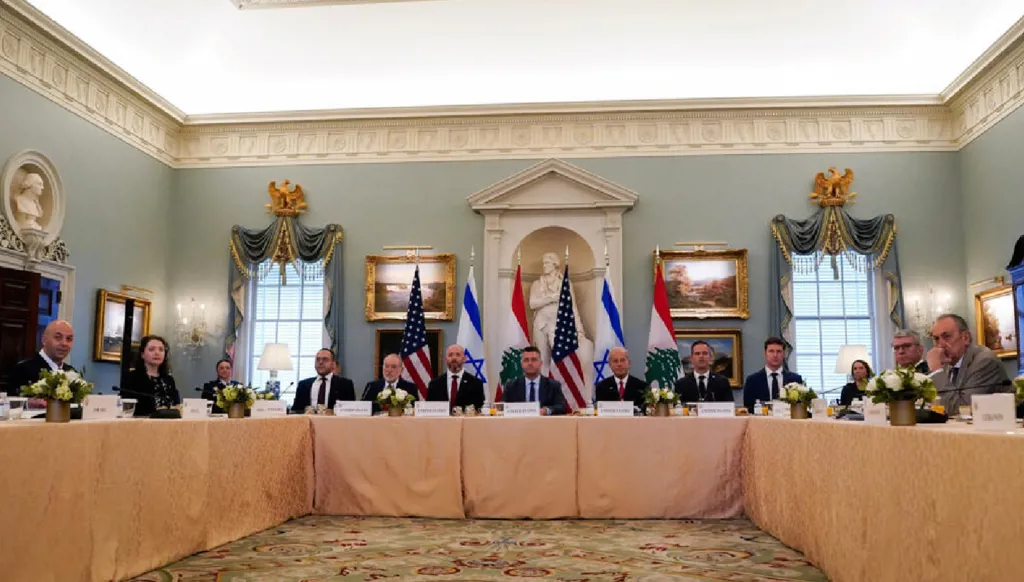
These statements follow the announcement that Lebanese and Israeli delegations reached an agreement in the fourth round of negotiations hosted in Washington, on a comprehensive ceasefire.
According to a joint statement by the United States, Lebanon, and Israel, the agreement was reached through U.S.-sponsored negotiations, stipulating a complete ceasefire, along with the evacuation of Hezbollah elements from south of the Litani as part of executive arrangements for de-escalation.