

Iran and the U.S. edge closer to a nuclear and regional deal
Talks reportedly focus on limiting Iran’s nuclear program, easing sanctions, and linking regional conflicts, including Lebanon, to a broader agreement.



 Messenger
 Whatsapp
 Threads
 Email
Email
 Print
Print
 X
X
 Facebook
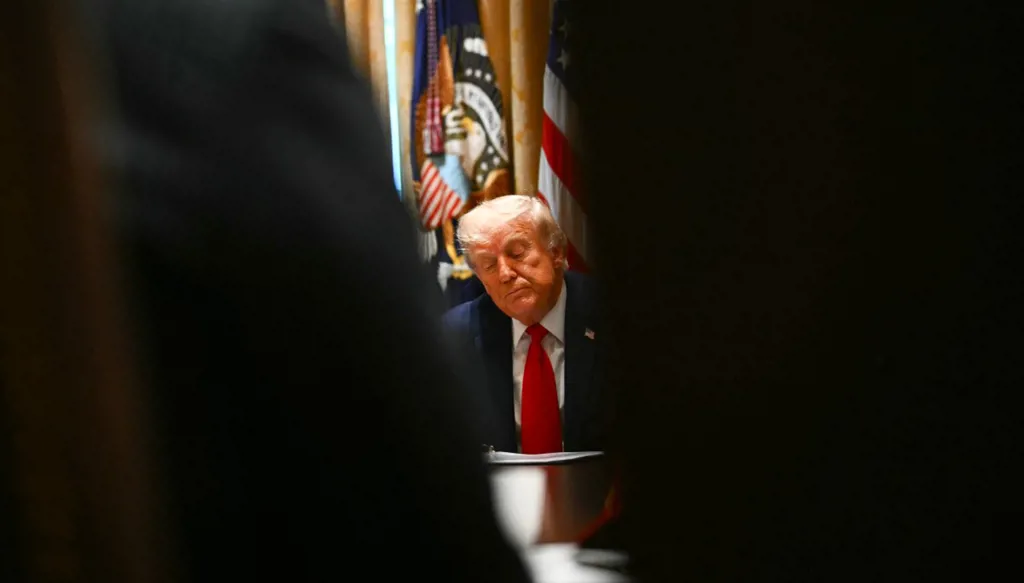


Donald Trump said he contacted “Hezbollah” and agreed with it on a ceasefire.
The “resistance axis” was pleased and said: “Extend, Iran, extend.” Before that, President Joseph Aoun informed Speaker Nabih Berri that there was an agreement being finalized to restrain Israel’s attack in exchange for the party’s commitment to halt its own strikes. Berri promised good results…
The resistance said: “What do the state, the government, and the president have to do with this?” All eyes were turned elsewhere, beyond the borders, until the news arrived. Tehran issued a ruling that they should “commit,” and a Hezbollah MP came out saying “we are committed.”
Trump being Trump
What Trump said resembles Trump. There was communication between an associate of Berri and the US ambassador in Beirut. The Speaker of Parliament sent further messages through his envoy to Doha. Those messages included a confirmation he had previously stated, guaranteeing the party’s commitment if Israel also commits.
Washington knows that Berri does not guarantee the party’s decision, and even the party’s secretary-general does not have that authority. The key to that decision is in Tehran, meaning that Iran imposed it on its ally, and the party asked the “big brother” to promote the matter.
Trump appropriated the entire network of communications that intersected in Beirut with Riyadh, Cairo, Ankara, Tehran, and its ally in Lebanon. He was informed that the party was ready and that its messages were continuously being delivered through intermediaries to American platforms. In Washington, there is no platform for Trump except Trump himself.
So his tweet came: “I contacted Hezbollah through high-level intermediaries.” Diplomatic sources, surprised by the uproar of the resistance axis in Lebanon, said that the party is listed as a terrorist organization in the United States, so how could one slide into believing that an American president would call a terrorist organization?
Last Saturday, Trump and the National Security Council entered the “operations room” in the White House “to take an important decision,” as he himself told us. Pakistan’s Foreign Minister Muhammad Ishaq Dar had met the day before in Washington with Secretary of State Marco Rubio and conveyed to him Iran’s response to the draft of the expected agreement.
Trump’s meeting inside that “room” lasted two hours. Trump did not reject the Iranian paper. He did not describe it as bad, nor did he throw it away as he had done before. He simply remained silent.
A cooperative Iran?
Reports suggest that Trump concluded that Iranian concessions were significant enough to warrant two hours of deliberations. Other reports say that the spirit of Iran’s response was cooperative in light of concessions that Washington had already agreed to. Tehran offered what could satisfy Trump on the only remaining point of contention: “no Iranian nuclear bomb.”
In return, Washington extended notable flexibility on issues vital to Tehran, prompting the movement of key Iranian figures, the Speaker of Parliament, the Foreign Minister, and the Central Bank Governor to Doha, where money and sanctions were central.
Trump says the agreement is now close. After Saturday’s meeting, he required cosmetic amendments to the draft deal. He wants to hear clear, decisive, unambiguous wording that Iran agrees to accept, signaling its commitment to abandoning the “bomb.” Language on uranium enrichment must be “tamed,” and the stockpile of highly enriched uranium must be “destroyed.” If the substance is agreed upon, form will not be an obstacle.
On the formal side, Trump is also expected to insert a clause into the proposed agreement linking the cessation of war in Lebanon to the end of the war in Iran. This appeared increasingly urgent after Benjamin Netanyahu “outsmarted himself” by threatening a campaign against the southern suburbs of Beirut, which could extend to Beirut as a form of compensation for the “kidnapping” of the US president, the prey Netanyahu had hoped to secure in Iran.
If passing the draft requires a reprimand for Netanyahu and a curb on his excesses, Trump has reportedly told Iran and its allies, as well as Israel and its leader and the Republican “hawks” in Washington, that “the decision is mine” when it comes to redrawing maps and shifting equations, so long as it leads to a “great deal,” and produces the kind of satisfaction seen among those who were intrigued by the imagined presidential call with Hezbollah in Lebanon.
Trump also sought, while overseeing the Lebanese-Israeli direct negotiations, to salvage their sessions in Washington, hoping they would yield a decision to stop the war independently of the broader dynamics of the Iran war and the terms for ending it.
Disclaimer: The opinions expressed by the writers are their own and do not necessarily represent the views of Annahar.