

Al-Aqsa custodianship: Jordan draws red line over Israeli threats
Reports of a U.S.-Israeli effort to reshape oversight of Jerusalem’s holy sites spark concern in Amman and revive debate over the Hashemite role.



 Messenger
 Whatsapp
 Threads
 Email
Email
 Print
Print
 X
X
 Facebook
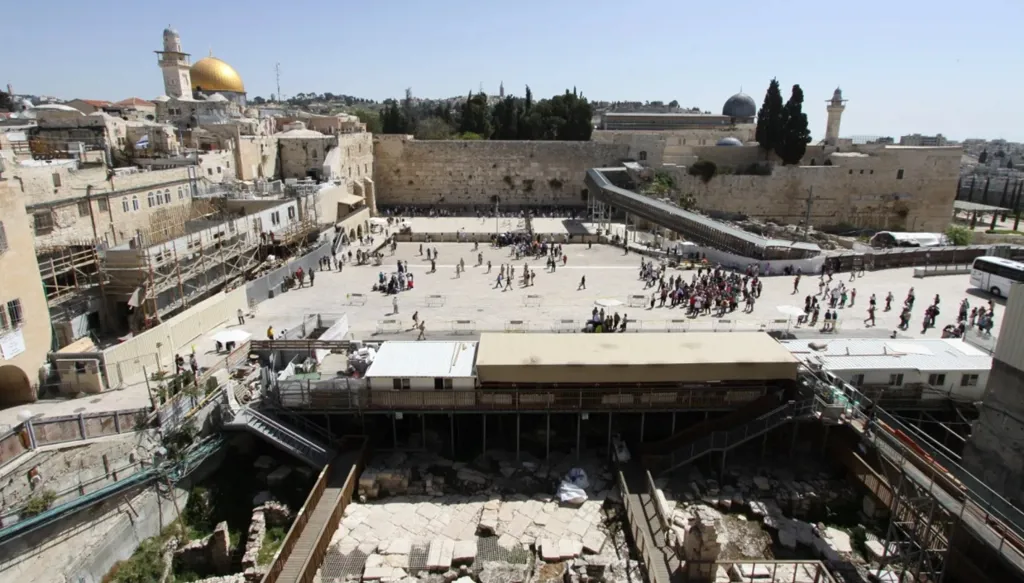


A report published by Middle East Eye, citing informed sources, claimed that the United States and Israel are actively working to end Jordan’s historical custodianship over Al-Aqsa Mosque in Jerusalem and are seeking a new arrangement that would align the site's administration more closely with Israeli interests. The report has once again brought Jordanian concerns regarding this issue to the forefront.
Among the latest developments, U.S. Secretary of State Marco Rubio stated that he had no knowledge of these reports and had never heard of the matter before. He stressed that this was the first time he had encountered any discussion on the subject and reaffirmed that relations between the United States and Jordan remain “excellent.”
Responding to inquiries from Annahar, a Jordanian official said that “the state does not comment on media reports,” while emphasizing that “the Hashemite custodianship is a red line for the Kingdom, and any measures affecting that custodianship will be met with firmness.”
The Hashemite custodianship of Islamic and Christian holy sites in Jerusalem, which dates back to the 1920s, has long faced Israeli violations and persistent threats, particularly those aimed at Judaizing Al-Aqsa Mosque and imposing temporal and spatial divisions upon it.
Over time, a conviction has taken root in Jordan that Israel will continue to target and challenge the custodianship rather than acknowledge it and respect its unique status and sensitivities.
Wadi Araba Agreement
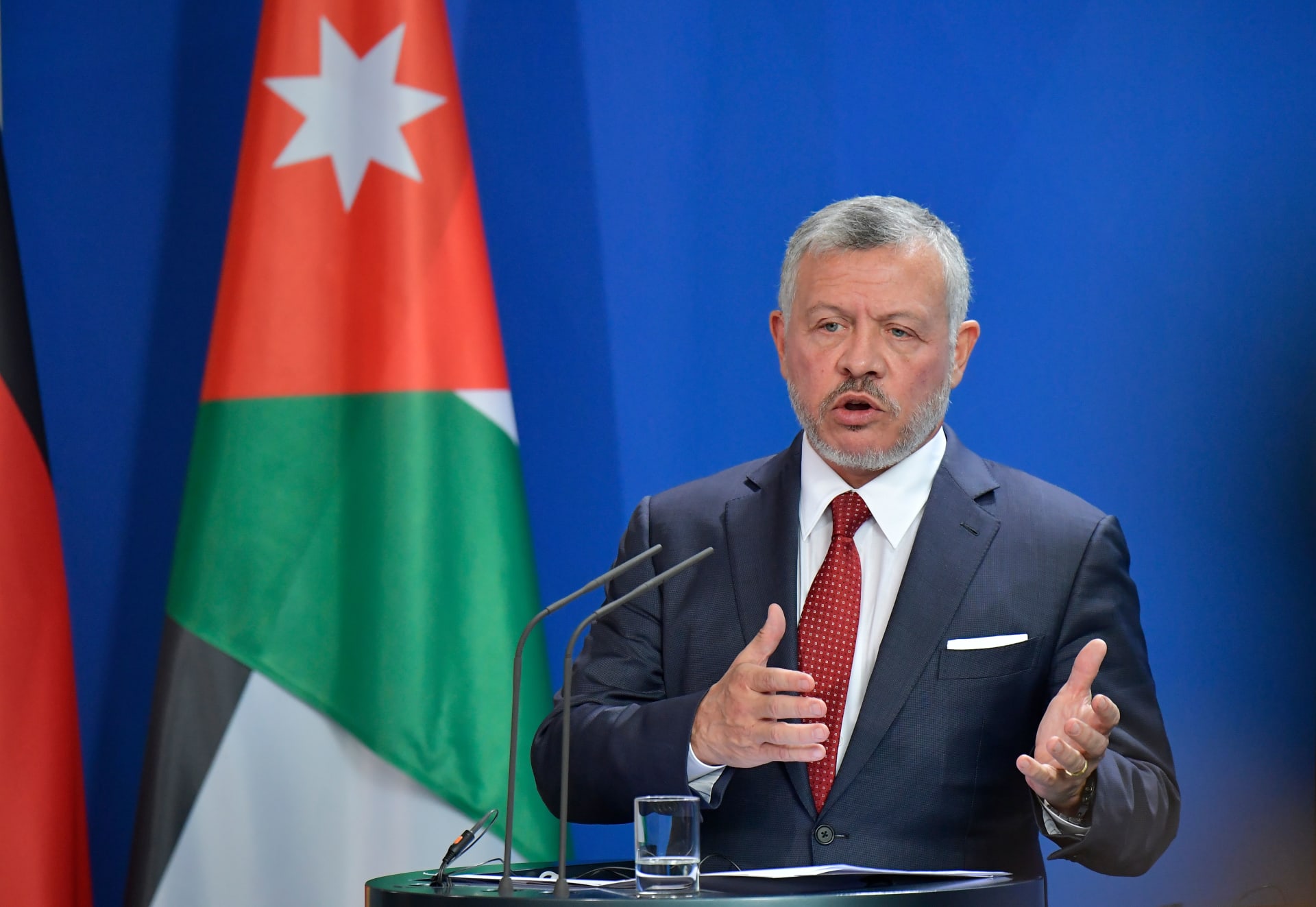
Under the Wadi Araba Agreement signed with Israel in 1994, Jordan retains its right to oversee religious affairs in occupied Jerusalem. Clause 2 of Article 9 stipulates that Israel will respect the current special role of the Hashemite Kingdom of Jordan in the Islamic holy sites in Jerusalem and, during final status negotiations, will give high priority to Jordan’s historical role in these sites. Consequently, King Abdullah II serves as the custodian of Jerusalem’s holy sites and has the right to pursue all legal means to preserve them.
In what was described as a “historic” move, King Abdullah II signed an agreement in Amman with Palestinian President Mahmoud Abbas in March 2013, reaffirming the Hashemite custodianship of the holy sites. The custodianship encompasses a broad range of measures undertaken by Jordan to protect the sanctities and trusts, strengthen the resilience of Jerusalemites on their land, and support them through direct assistance.
The Jordanian Ministry of Awqaf supervises the affairs of Al-Aqsa Mosque, with more than 800 employees overseeing the mosque and more than 102 mosques across Jerusalem. Their responsibilities include repairs, maintenance, preaching, guidance, and the management, restoration, and investment of charitable and hereditary endowment properties throughout the city, among many other duties.
While writer and political analyst Amer Al-Sabaileh downplayed the significance of the Middle East Eye report, at least for now, Dr. Nadia Saadeddine, editor-in-chief of Palestine Affairs at Jordan’s Al-Ghad newspaper, argued that what was published carries significant implications in terms of its objectives, content, and timing. According to her, it reveals the extent of ongoing Zionist efforts to alter the historical and legal status of Al-Haram Al-Sharif.
Speaking to Annahar, Al-Sabaileh said that “such reports often resemble rumors and have circulated for years, particularly during discussions surrounding the so-called Deal of the Century. However, I do not believe anyone is interested in pursuing such a matter at this stage, especially given the far greater upheavals currently affecting the region.”
Reinforcing the Hashemite role
Al-Sabaileh also highlighted the need to clarify whether the Hashemite custodianship is primarily practical or symbolic in nature, noting that “Israel ultimately makes the decisions and imposes its security control.” He argued that discussion of the issue remains premature and should not be exaggerated.
Nevertheless, he pointed to the possibility that “the American administration may be adopting a vision of transforming Jerusalem into a religious Vatican that brings together all faiths.”
According to Saadeddine, the timing of the report coincides with intensified Zionist activity that accelerated following October 7, 2023, and has recently gained momentum amid global preoccupation with regional escalation. She argued that this has created an opportunity to impose new realities on the ground in occupied Jerusalem.
Saadeddine told Annahar that “the explicit reference, for the first time, to an American role in this Zionist momentum—even if denied by Washington—contradicts repeated U.S. assurances that it would not allow Israel to annex the West Bank. At the same time, it is consistent with the silence maintained by the American administration regarding settlement expansion in the West Bank and repeated attacks on Al-Aqsa Mosque and occupied Jerusalem.”
She stressed that “the historical Hashemite custodianship over the Islamic and Christian holy sites in occupied Jerusalem is a fundamental pillar of regional stability. It enjoys international recognition and possesses legal and historical legitimacy protected by international law."
"The Palestinian cause remains a central priority for King Abdullah II in regional and international forums. Despite ongoing Zionist efforts, the custodianship remains protected historically, legally, internationally, and by popular support.”
Erasure of Arab Landmarks
Saadeddine nevertheless warned of the serious dangers facing Al-Aqsa Mosque and occupied Jerusalem as part of what she described as a longstanding Zionist plan aimed specifically at undermining Al-Aqsa and, more broadly, erasing the Arab, Islamic, and Christian character of Jerusalem while tightening Zionist control over the city and its religious and historical significance.
She argued that these challenges have become even more formidable under Israel’s current right-wing coalition government and the presence of extremist ministers such as Itamar Ben Gvir and Bezalel Smotrich.
According to her, this has provided official backing to extremist Jewish groups, including the Elad Association and its settlement affiliates, which are actively seeking to seize Palestinian homes and properties in Jerusalem while benefiting from substantial government support. At the same time, daily incursions into Al-Aqsa Mosque continue.
“These attacks are not isolated from the broader measures adopted by the occupation authorities to erase Jerusalem’s Arab identity,” she said. “This includes granting extremist religious groups free rein to violate Islamic holy sites and providing them with financial, political, and security support, particularly those advocating the construction of the alleged temple on the site of Al-Aqsa Mosque.”
She added that restrictions have also been imposed on the Islamic Waqf Department, preventing renovations of Islamic structures surrounding Al-Aqsa, alongside repressive measures targeting Palestinians who seek to defend the holy sites and resist what she described as Zionist aggressions.
Saadeddine concluded that although these arbitrary measures and repeated attacks on Islamic holy sites continue to face strong resistance from Palestinians defending their land, identity, and historical roots, thwarting efforts to undermine the Hashemite custodianship and "Judaize" Jerusalem requires broader Arab and Islamic support for Jordan’s role. She described that role as essential and vital, and as an important guarantee of regional stability that must be protected against any attempts to weaken it.