

Southern Lebanon on the edge: Buffer zone plans, displacement fears, and political deadlock
As tensions escalate, warnings grow of lasting demographic and territorial change in southern Lebanon while internal divisions and stalled decision-making deepen the crisis.



 Messenger
 Whatsapp
 Threads
 Email
Email
 Print
Print
 X
X
 Facebook


Lebanon’s Nakba in 2026 is worse than Palestine’s Nakba in 1948. This is because there is no one in Lebanon who fully understands what is at stake, and that Israel is not only content with occupying certain positions in the south but is also intent on leveling dozens of villages to establish a buffer zone along the border with Lebanon, while displacing the largest number of Shiites from the south.
In 1948, Israel limited itself to displacing Palestinians from their cities and villages and seizing their properties and lands, with demolition and leveling acts remaining relatively limited. In southern Lebanon, amid the ongoing war, there is a clear Israeli intention to prevent residents from even recognizing their own villages and towns.
This suggests that the ultimate objective is to create a depopulated buffer zone in southern Lebanon, effectively changing the nature of the south permanently. It is clear, from Israel’s perspective, that there is a desire for this buffer zone to be placed under its direct security supervision.
Lebanon, meanwhile, is preoccupied with whether the issue concerns direct or indirect negotiations, and whether there is a need to form joint military and civilian committees with Israel. In doing so, Lebanon is asking itself questions that time has already surpassed, and that are disconnected from the harsh reality faced by the people of the south.
There is a Speaker of Parliament named Nabih Berri, who is 88 years old, still pursuing a political future, when he should instead be taking a clear and direct stance to help save the south or what remains of it. This can only be achieved by overcoming the Iranian influence on one side, and aligning with the position adopted by President Joseph Aoun and Prime Minister Nawaf Salam on the other.
The Illusion of "Liberation"
Lebanon still lives under the illusion of “liberation.” The reality is that it is living in another world, disconnected from what is being imposed by Israel through its brutal practices. This is not the time to be distracted by the form of negotiations while the American facilitator is trying to assist the Lebanese side as much as possible.
American support cannot be effective without an attempt by the Lebanese themselves to help themselves and unite in backing the negotiating delegation in Washington, the political delegation, and the military delegation.
It is time to confront the truth, including the understanding that there is an American-Israeli agreement to reject any linkage between the Iranian and Lebanese files. What must first be addressed is that the “Islamic Republic” cannot do anything for Lebanon.
From the Iranian perspective, all that is required is for Lebanon and the Lebanese—Shiites and non-Shiites alike—to play a suicidal game. Lebanon is merely an Iranian card in the negotiations Tehran is conducting with the United States to reach a deal at the expense of the countries of the region.
It is more than necessary for Lebanon, at the highest levels, to understand the nature of this phase and the transformations the Middle East has undergone since the beginning of the Gaza war, and Iran’s decision to open the southern front. Since the “Al-Aqsa Flood” on October 7, 2023, Israel has changed. The Hebrew state is no longer prepared for any settlements or agreements, whether with “Hamas” or “Hezbollah,” which believed it could continue its old approach under the framework of “rules of engagement.”
Bypassing outdated formalities
Perhaps Lebanon, represented by the President of the Republic and the Prime Minister, needs to realize that this is not the time to adhere to formalities. It is essential to understand the price Israel demands for withdrawal from southern Lebanon, and the conditions it will impose to allow residents to return to their threatened villages and towns.
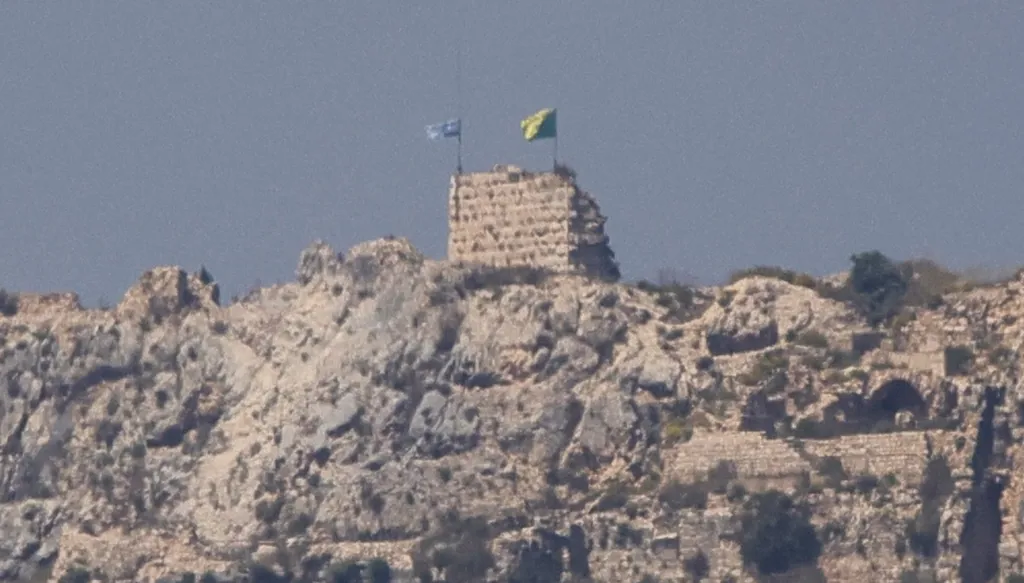
Had Anwar Sadat adhered to formalities, he would not have regained Sinai, which Israel occupied in the 1967 war. Ultimately, Israel’s presence in Beaufort Castle, given its strategic importance, is a highly significant card and the beginning of a new phase that must be addressed rather than engaging in futile debate over negotiation procedures.
Can Lebanon save what can still be saved of its south and preserve the hope of Southerners returning to their land one day, instead of seeing a Nakba like Palestine repeated on its soil? This is possible if formalities are bypassed and the core of the matter is addressed. The essence of the issue is ending the occupation regardless of the price that must inevitably be paid, and abandoning Hezbollah’s weapons, which have only brought ruin, destruction, and humiliation to Lebanon and its people, including the Shiite community.
The continuation of arms means the continuation of the occupation and the continuation of Israeli practices that Lebanon bears the cost of across all its components.
Disclaimer: The opinions expressed by the writers are their own and do not necessarily represent the views of Annahar.