

Lebanon war enters fourth month as ceasefire efforts intensify amid escalation and diplomatic pressure
As fighting between Israel and Hezbollah reaches a critical new phase, U.S.-led ceasefire efforts, Iran’s growing role, and mounting international pressure place Lebanon at the center of a rapidly evolving regional crisis.



 Messenger
 Whatsapp
 Threads
 Email
Email
 Print
Print
 X
X
 Facebook


Today, the escalating war between Israel and Hezbollah reaches its third month since it began on March 2 and enters its fourth month amid extremely dangerous realities that obscure any foreseeable end. In recent hours, Iran’s overt investment and direct involvement in combat operations, armament, and leadership alongside Hezbollah have emerged as a clear factor in the exploitation of the war for negotiations with the United States.
While Iran continued to leverage its role in igniting the Lebanese front, claiming that its negotiating team had suspended message exchanges with Washington through mediators because of the attacks on Lebanon, Israel expanded a strategic scenario of fire by extending the "yellow line" or "buffer zone" from southern Lebanon to Beirut’s southern suburbs.
Furthermore, linking the bombardment of the southern suburbs to Hezbollah’s shelling of northern Israel appeared to extend the yellow line to the suburb itself. This development carried significant risks, as it suggested that Israel had received an American green light after U.S. President Donald Trump had prohibited strikes on Beirut and its southern suburbs since the famed "one hundred raids day."
The danger also lies in the additional burdens imposed on the Lebanese delegation participating in the fourth round of diplomatic negotiations in Washington today and tomorrow, amid a highly complex atmosphere marked by mounting pressures, complications, and challenges.
However, an evening surprise emerged, seemingly as a result of the prolonged show of force triggered by threats to target the southern suburbs once again. U.S. President Donald Trump announced, following a lengthy phone call with Israeli Prime Minister Benjamin Netanyahu, that the conversation had been “extremely fruitful” and that he had reached “an agreement with Israel and Hezbollah to cease all hostilities,” adding that Israel would not bomb Beirut.
Trump notably stated, “I had a very good call with Hezbollah through high-level representatives,” emphasizing that productive contacts with the group had resulted in an agreement on a complete ceasefire.
This coincided with reports from an American source indicating that Lebanese President Joseph Aoun had informed Washington that he had received assurances from Hezbollah to halt escalation. Prior to that, Israel had issued directives to strike targets in Beirut’s southern suburbs, signaling what appeared to be the end of American protection.
A joint statement by Prime Minister Benjamin Netanyahu and Defense Minister Israel Katz declared: “Following repeated violations of the ceasefire in Lebanon by Hezbollah and attacks targeting our cities and citizens, Prime Minister Benjamin Netanyahu and Defense Minister Israel Katz ordered the Israeli army to strike terrorist targets in Beirut’s southern suburb.”
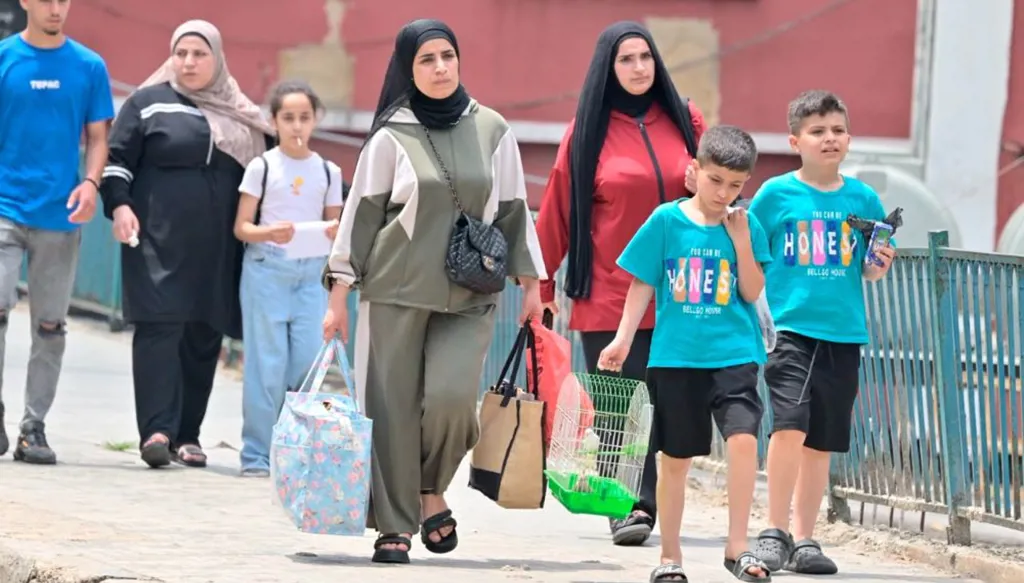
Israeli army spokesperson Avichay Adraee subsequently issued a warning to residents of the southern suburbs, urging them to evacuate for their safety and stating that if Hezbollah continued launching rockets at Israeli towns, the Israeli army would target areas in the southern suburb. The threat prompted a significant wave of displacement from the area, causing severe traffic congestion for several hours.
Meanwhile, as the escalation continued, casualties and injuries were reported, along with extensive damage resulting from heavy airstrikes targeting buildings opposite Jabal Amel Hospital in Tyre.
The renewed targeting of the southern suburbs was clearly linked to the failure of American diplomatic efforts to secure a ceasefire. The website Axios quoted a U.S. official as saying that Secretary of State Marco Rubio had held contacts over the past 48 hours with Lebanese President Joseph Aoun and Israeli Prime Minister Benjamin Netanyahu as part of U.S. efforts to support a new ceasefire initiative and contain escalation on the Lebanese front.
According to the official, the proposal was introduced within the framework of ongoing negotiations between Israel and Lebanon. In its initial phase, it called for Hezbollah to halt all attacks on Israel in exchange for Israel refraining from escalation or additional actions in Beirut.
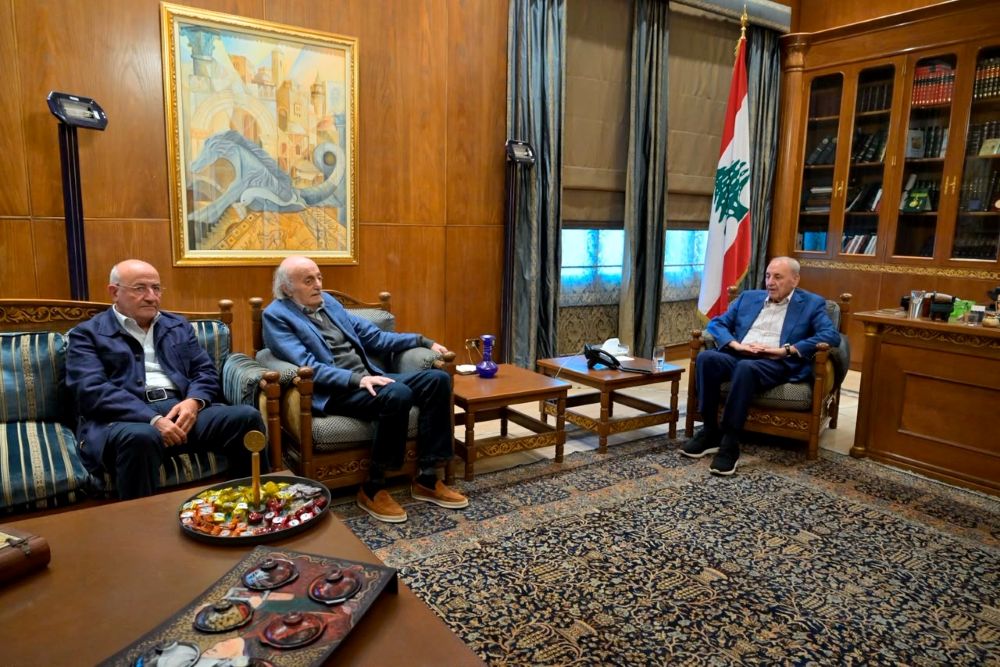
The official noted that President Aoun had advocated for the proposal but described Parliament Speaker Nabih Berri’s response as “evasive and disappointing.” The source also stressed that the United States does not expect Israel to continue tolerating attacks against it, adding that “the fastest way to de-escalate and protect civilians on all sides is for Hezbollah to immediately cease fire.”
On the eve of the fourth round of negotiations, President Joseph Aoun once again responded to opponents of direct negotiations, affirming that “choosing negotiation is the right option, as the only alternatives are war or negotiation. Lebanon chose this option because of the war.”
He stressed that “negotiation is safer than war, as we have seen and continue to witness the calamities and consequences of war. It will not solve the issue overnight; rather, it is a process that requires time, and we have no other option. Unfortunately, some perceive negotiation as surrender, but it is not. It is a means of ending wars with the least possible damage.”
Aoun added, “We will not retreat from our choice, and all Lebanese officials are doing everything possible. Negotiations may stall or take longer to achieve the desired outcome, but they remain ongoing. Ultimately, all issues are resolved through negotiations, regardless of how long they take. War will not produce solutions for any side.”
As Lebanon awaited the outcome of the United Nations Security Council’s emergency session, convened last night at France’s request to discuss developments in the war, signs of urgent European and Arab diplomatic engagement began to emerge. Reports from Paris indicated that French President Emmanuel Macron spoke with U.S. President Donald Trump about the situation in the Middle East and “praised President Trump’s commitment to Lebanon’s sovereignty and territorial integrity, emphasizing the importance of a strong ceasefire and France’s collective support for the Lebanese authorities.”
Meanwhile, Saudi Arabia’s Ministry of Foreign Affairs expressed “the Kingdom’s condemnation of Israeli aggression against the territory of the Lebanese Republic and its categorical rejection of Israeli incursions into Lebanese territory and violations of its sovereignty.”
The ministry called on the international community to “assume its responsibilities in halting the aggression and ending Israeli military maneuvers aimed at expansion into Lebanese territory,” stressing the importance of protecting Lebanon and its people in accordance with relevant international agreements. It also reaffirmed its commitment to the Taif Agreement as the framework for safeguarding state sovereignty over all Lebanese territory.