

Iraq’s new Prime Minister takes on corruption: Can Ali Al-Zaidi succeed where others failed?
With billions of dollars lost, powerful political interests at stake, and a deeply entrenched system under scrutiny, Ali Al-Zaidi’s anti-corruption campaign could become the defining test of his premiership, and of Iraq’s future.



 Messenger
 Whatsapp
 Threads
 Email
Email
 Print
Print
 X
X
 Facebook
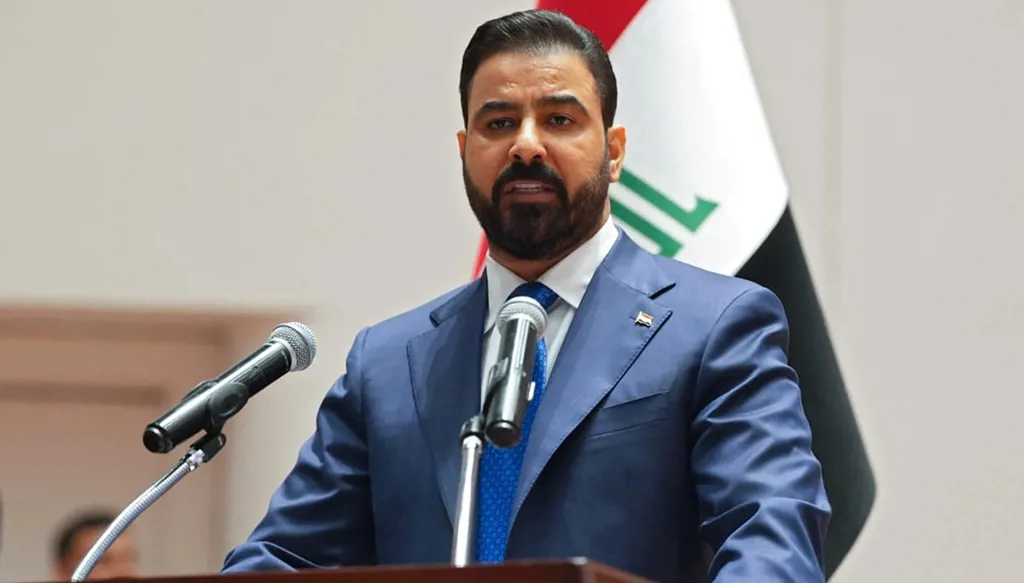


The Iraqi Prime Minister, Ali Al-Zaidi, has placed the fight against corruption at the forefront of his government's priorities, launching a series of measures that his supporters describe as the boldest in years. These include reviewing government contracts, reopening files suspected of corruption, and recovering public funds.
However, by taking these steps, Al-Zaidi is entering into a direct confrontation with one of Iraq's most complex networks of influence—a battle that could determine the future of his government and its ability to achieve a meaningful breakthrough on one of the country's most challenging issues.
An Entrenched Corruption System
For more than two decades, corruption in Iraq has evolved from an administrative and financial problem into a deeply entrenched system that has permeated state institutions, becoming one of the main obstacles to building effective governance, delivering services, and strengthening political and economic stability.
Despite successive Iraqi governments spending hundreds of billions of dollars since 2003, the country continues to suffer from chronic crises in the electricity, health, education, and infrastructure sectors, amid widespread accusations that a large portion of public funds has been lost through corruption networks, fictitious contracts, and questionable deals protected by political and partisan interests for years.
International and local reports and estimates indicate that Iraq has lost tens of billions of dollars due to corruption and mismanagement. Previous official estimates suggested that wasted or smuggled funds exceeded $150 billion, while other assessments put the figure at more than $300 billion as a result of corrupt contracts and financial waste.
Against this backdrop, Al-Zaidi announced the formation of the "Higher Sovereign Council for Integrity, Oversight, and Recovery of Public Funds" alongside a comprehensive review of government contracts and the reopening of all files suspected of corruption, regardless of the individuals or entities involved.
These measures signal an effort to address the roots of the problem rather than merely pursuing isolated cases or lower-level employees, as has often been the case in previous anti-corruption campaigns.
Political Support for Government Steps
Mukhtar Al-Moussawi, a member of parliament from the Coordination Framework, told Annahar that "the steps taken by Al-Zaidi in the fight against corruption represent an important beginning on the path of administrative and financial reform. It is necessary to translate these measures into practical results that lead to holding those responsible accountable and recovering public funds."
Al-Moussawi noted that "corruption has long been one of the most serious challenges facing the Iraqi state. For years, it has drained the country's resources, weakened its institutions, and obstructed development and service projects. The Iraqi public is waiting for concrete actions that restore confidence in the state's ability to enforce the law and hold the corrupt accountable."
He added that the prime minister's decision to establish the Higher Sovereign Council for Integrity, Oversight, and Recovery of Public Funds, combined with the review of government contracts and the reopening of corruption-related files, sends a clear message that the government is serious about tackling the issue.
According to Al-Moussawi, parliament will support any legal and constitutional measures aimed at protecting public funds and pursuing those implicated in corruption cases.
He further stressed that the success of the campaign requires close cooperation between the legislative and executive branches, as well as the support of oversight, judicial, and specialized institutions to ensure professional and transparent investigations free from political pressure or partisan interests.
Network of Interests and Political Obstacles
On the other hand, political affairs researcher Mohamed Salah Turki told Annahar that "Al-Zaidi may have a genuine desire to move forward on this issue, but determination alone is not enough when influential political forces from various factions and affiliations have directly or indirectly benefited from the quota-based system that enabled them to control state institutions and resources. Any attempt to open sensitive files may face significant resistance from parties concerned about exposing their records or losing sources of influence."
Turki argued that political protection has been, and remains, one of the main reasons corruption persists in Iraq. Previous governments launched similar campaigns and made comparable promises but encountered major obstacles once investigations reached individuals or entities with significant political or partisan influence.
He added that the government's success in this effort will depend on its ability to neutralize political interference and ensure the full independence of oversight and judicial institutions, while also securing broad national political support that prevents partisan, sectarian, or ethnic affiliations from being used to shield suspects or obstruct investigations.
Crucial Test for the Government's Future
Turki emphasized that "the real battle is not only between the government and the corrupt. It is also a struggle between a state project seeking to impose the rule of law on everyone and a network of interests that has taken shape over many years and sees the continuation of corruption as a guarantee of its political and economic influence."
As a result, he said, achieving a major breakthrough in this file remains an extremely complex challenge—one that requires far more than government initiatives or administrative decisions alone.