

The end of Iran’s Lebanon card? A new regional consensus emerges
As pressure mounts on Hezbollah and diplomatic positions harden, foreign powers appear determined to keep Lebanon’s fate separate from Iran’s broader negotiations.



 Messenger
 Whatsapp
 Threads
 Email
Email
 Print
Print
 X
X
 Facebook
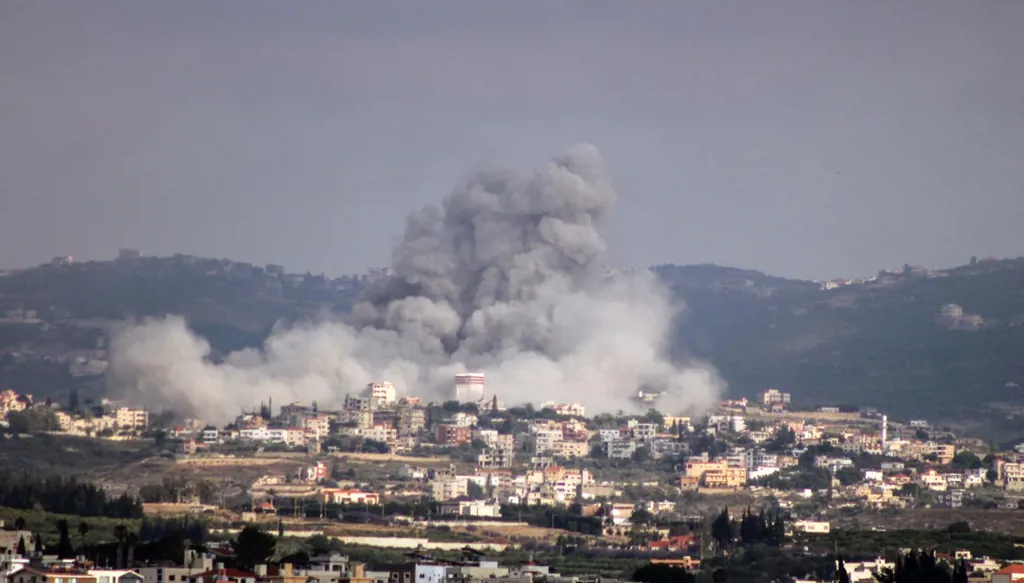


Hezbollah will not succeed in taking the negotiation card away from the Lebanese state as long as it continues to engage in war and refuses to stop it in order to reclaim this card and hand it over to Iran. This is confirmed by diplomatic assessments indicating that there is a foreign consensus, as perceived by diplomats abroad, in favor of separating the negotiations Iran is conducting with the United States from the Lebanese track.
There is no prospect of accepting the linkage Iran seeks between the two tracks, based on an objective that is not necessarily in Lebanon’s interest or out of affection for it, but rather on the understanding that keeping Lebanon as a card in Iran’s hand means maintaining Iran’s strength in the Gulf countries.
The separation is decisive and not open to discussion
This position gained further significance, according to observations abroad, following the latest statement issued by the Gulf Cooperation Council. Greater clarity emerged after the events of recent months, offering lessons that must be taken into account.
A fundamental principle remains, regardless of whether Lebanon advances in negotiations or not: the separation of the tracks.
Hezbollah’s exposure, or its voluntary abandonment of the fig leaf it used by claiming that its recent wars were in support of Gaza and later Iran, weakened all the arguments and justifications that had prompted some countries to tolerate its weapons. At the same time, it has become imperative to cut Iranian influence over the Palestinian issue and prevent Lebanon from being used as a platform for Tehran’s objectives.
Moreover, no one wishes to revisit the Syrian model in Lebanon or see the country controlled as it was during Syria’s period of dominance, especially when recent wars since at least 2006 have demonstrated the activation of the Lebanese front with Israel at Iran’s behest, as well as the mobilization of Palestinian factions through the same dynamics from Lebanon or through Lebanese territory.
Consequently, diplomats argue that linking the tracks, regardless of the attempts to soften its implications, confirms that Lebanon remains a card in Iran’s hand. More significant still is the Israeli-Palestinian conflict card, which also remains in Iran’s possession.
This issue is becoming increasingly important, as the Shiite duo must recognize that prolonging dependence on Iran and linking the ceasefire in Lebanon to Iran’s negotiations with the United States has become unbearably costly for Lebanon as a whole, and particularly for the south, amid the destructive Israeli advance into its villages and towns while Iran remains in a state of uncertainty in its negotiations.
Waiting for the outcome of these negotiations, specifically the announcement of an American-Iranian understanding and whatever ceasefire arrangement in Lebanon it may entail, whether to justify Hezbollah’s commitment or to portray as a victory the linkage with the Iranian file in pursuit of gains that are no longer available or permissible as they once were, only provides Israel with increasingly stronger bargaining chips regarding its withdrawal from Lebanon.
Calm on the Iranian front undoubtedly benefits Lebanon, but it is not a substitute for a negotiation process between Lebanon and Israel, as Iran and Hezbollah would like or imagine. Nor does it mean returning to arrangements resembling the 1996 Understanding or even something similar to UN Security Council Resolution 1701, where each side interprets provisions according to its own interests.
Hezbollah’s political presence cannot simply be erased and may diminish only gradually over time, but the decision of war and peace will no longer remain in its hands, and therefore in Iran’s hands, particularly after the long period of calm in southern Lebanon from 2006 to 2023, during which there were no significant violations.
That calm was reignited under the banner of supporting Gaza and the unity of fronts for Iranian strategic reasons rather than Lebanese ones. Neither regional nor Western actors will accept a return to that reality, not to mention the strong likelihood that Israel itself would reject it.
The “Call of Tyre” and subsequently the “Call of Nabatieh,” both of which strongly rejected involving the south in power politics and called for the state and its protection, may prove embarrassing for Hezbollah because they align closely with the position of the president and the prime minister on this issue.
They could also serve as the foundation for a dignified Lebanese solution emerging from the war, without arrogance from any side, provided that Hezbollah continues to claim that it belongs to and defends the people.
Beyond this reality, the ongoing debate in Iraq among Shiite factions over integration into the state and the surrender of weapons to state authority reflects the threats these weapons posed to Gulf countries and the refusal to tolerate or accept such a situation, especially when Iran has violated both the Iraqi and Lebanese arenas in pursuit of defending its interests.
The culmination of these developments is a push toward a complete break with the patterns that prevailed in the past. In other words, achieving calm, as occurred at various stages over the past decades, while southern Lebanon remains a card in Iran’s hands through Hezbollah.
The Lebanese state may not possess strong bargaining chips, and the Shiite duo refrains from supporting it by standing behind it or participating in its efforts. Instead, it grants Iran this position, or feels compelled to grant it, until an understanding is perhaps reached and announced. However, the alternative it proposes—surrendering Lebanon’s card to Iran—has failed, if not already collapsed in practice.
Disclaimer: The opinions expressed by the writers are their own and do not necessarily represent the views of Annahar.