

Israeli army announces expansion of operation in southern Lebanon, claims control of Beaufort heights



 Messenger
 Whatsapp
 Threads
 Email
Email
 Print
Print
 X
X
 Facebook
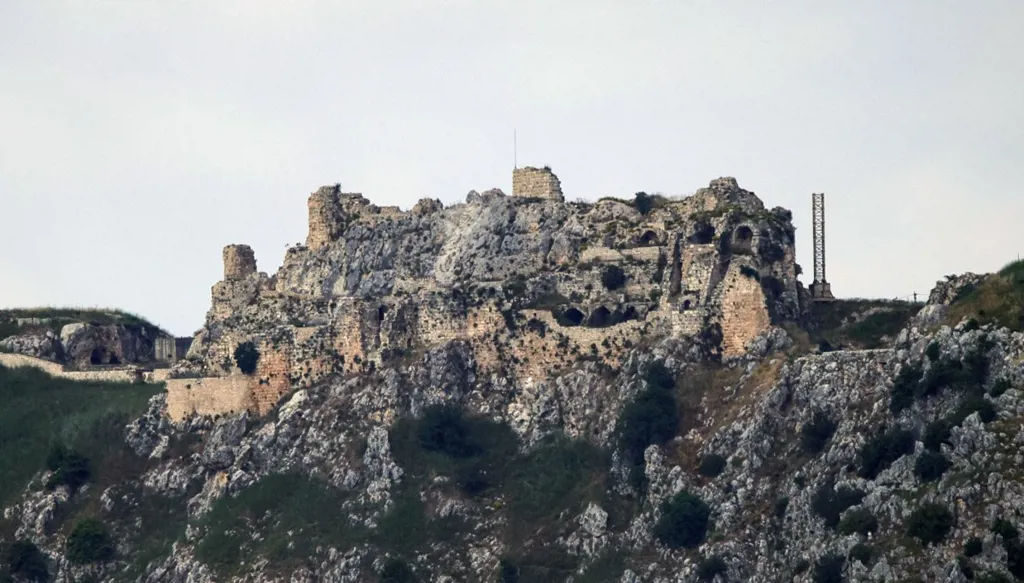


Israeli army spokesperson Ella Wawya announced that the Israeli army launched a “field operation in the Beaufort Heights and in the Wadi Saluqi area in southern Lebanon,” approved by the Chief of Staff and carried out after completing organized planning and operational preparations.
She added that Northern Command forces, led by the 36th Division, advanced beyond the front defense line, crossed the Litani River, and expanded the offensive against Hezbollah, confirming that the forces achieved operational control over the heights.
A photo was published of Beaufort Castle claiming that the Israeli flag was raised over the fortress.
The Israeli army had previously announced the start of a “large-scale operation in the Beaufort Heights and the Wadi Saluqi region in southern Lebanon.”
قالوا: سنخوض البحر معًا…
— Lieutenant Colonel Ella Waweya | إيلا واوية (@CaptainElla1) May 31, 2026
فخاضوا الوهم وانكسر الادّعاء.
ومن الشقيف إلى الليطاني،
سقط الشعار…وبقي الميدان شاهد pic.twitter.com/7jZB215hrt
Israeli army spokesperson Avichay Adraee stated via X that “the Northern Command began a leadership operation in the Beaufort (Shaqif) Heights and Wadi Saluqi area in southern Lebanon, aiming to destroy infrastructure and neutralize Hezbollah elements, as part of enhancing operational control in southern Lebanon and eliminating the direct threat to the Galilee Finger and the town of Metula.”
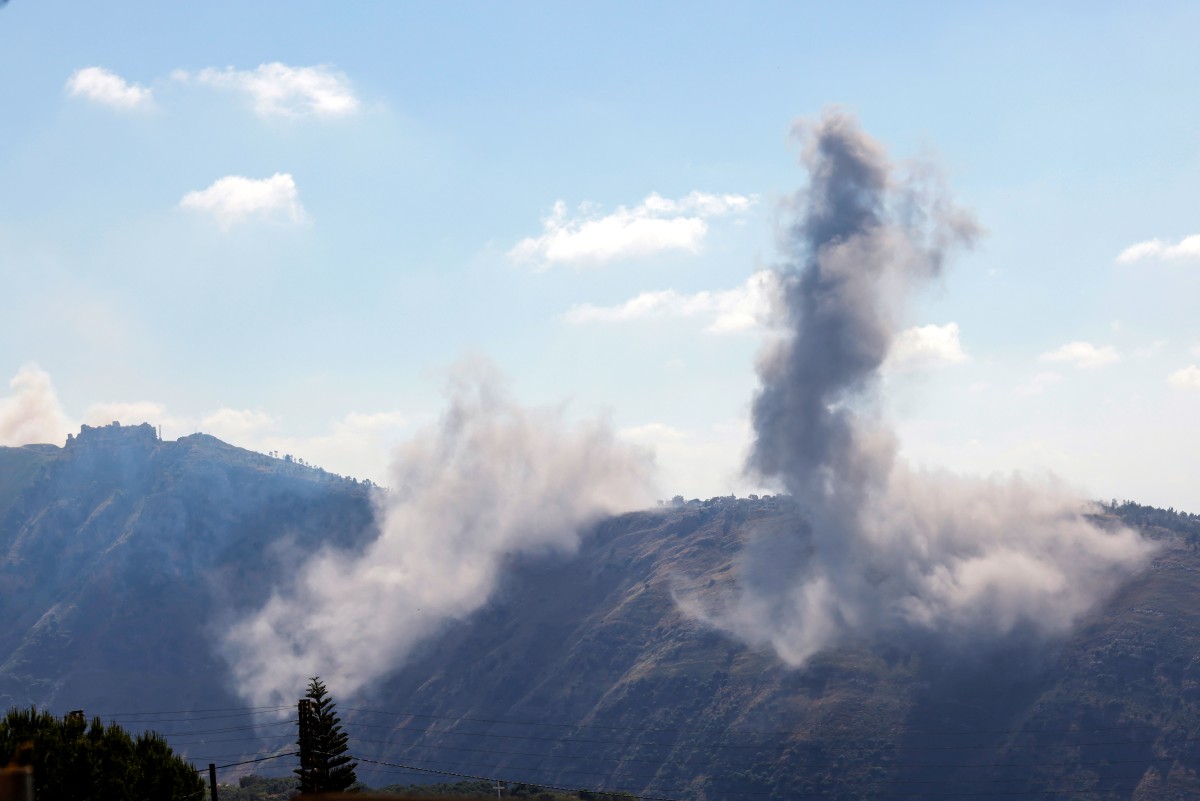
He added that the operation started a few days ago, involving a major ground force including the Golani Brigade, the 7th Brigade, Givati Brigade, Fire Brigade, and the Multidimensional Unit, operating under the 36th Division’s command and with intelligence guidance from the Military Intelligence Directorate. These forces have been conducting an offensive to expand the front defense line.
The Chief of Staff, General Eyal Zamir, approved the operation, and organized combat readiness procedures were implemented, including fire preparations and prior operational preparations under Northern Command leadership.
The operation focuses on imposing control over the Shaqif Heights and the Wadi Saluki area, intensifying targeted strikes against Hezbollah, and destroying central infrastructure established in the heights under Iranian guidance and used by Hezbollah to manage combat and execute various plans.
He said that the forces are operating against launch infrastructures established in the area, from which hundreds of launch operations were carried out against Israeli citizens and forces operating in southern Lebanon.
He stated that Israeli forces crossed the Litani River and expanded their attacks against Hezbollah north of the river, with operations currently expanding to additional areas. Prior to the entry of the forces, the Air Force carried out intensive raids on Hezbollah infrastructure in the area, under wide fire coverage that also included artillery and tank fire.
The forces also completed a series of significant strikes against dominant sites in the area, conducted sweeping operations, and neutralized military infrastructure in the Litani area, alongside necessary engineering works to create suitable conditions for the offensive operation.
He added: “We operate in the vicinity of Nabatieh, one of Hezbollah’s main power centers in southern Lebanon. It is ready and prepared to expand the attack as needed. This operation joins dozens of other activities carried out by our forces in recent weeks as part of continuing targeted strikes against Hezbollah in southern Lebanon.”
In another post, the Israeli army spokesperson said: “Between the promises of slogans and the truth of the field… here is the true news. Our soldiers are writing a new chapter of dignity with their stand at Beaufort Castle.”
He continued: “Glory is not built by speeches, but by the march of soldiers. The control over Beaufort Castle is not just a military achievement, but a new blow to Hezbollah’s symbolic pride, which threatened us with weakness, and its forts collapsed before our strikes.”
"The Battle is Not Over Yet"
Meanwhile, Israeli Defense Minister Yisrael Katz said that “the battle is not over yet,” adding: “We have controlled the strategic Shaqif Heights and crossed the Litani River, and we are determined to crush Hezbollah’s power and complete the mission. They will lose their strategic sites one by one.”
Israeli Finance Minister Bezalel Smotrich congratulated the capture of Beaufort Castle, saying: “Returning to Beaufort Castle is an expression of correcting old mistakes, and war costs are expensive but necessary for our security.”
"Hezbollah" Announces Repelling Infiltration Attempts
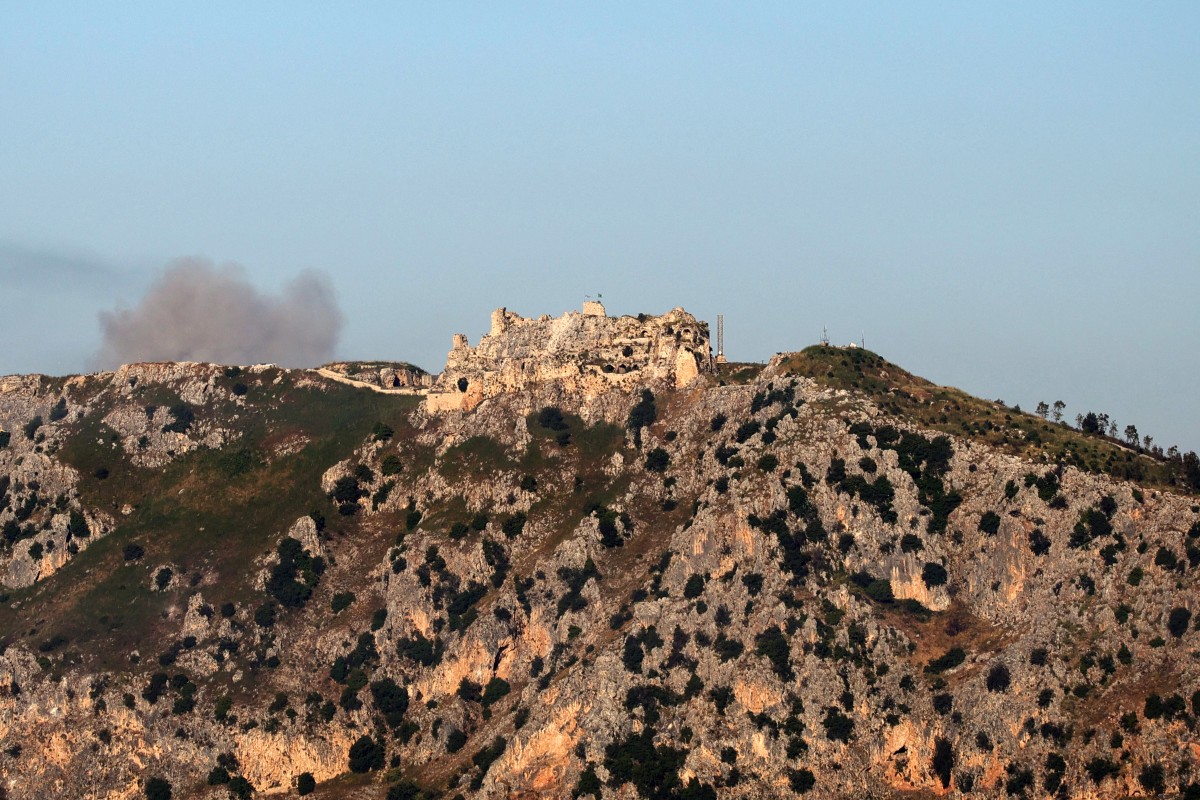
Yesterday, Hezbollah announced in a statement that it is engaged in confrontations and clashes with Israeli forces, saying it is repelling attempts by the Israeli army to advance towards the outskirts of the towns of Zawtar Sharqiyya, Yohmor Al Shaqif and Dibbine.
The statement clarified that Hezbollah is targeting entrenched Israeli forces with complex operations using various types of weapons, affirming that Israeli forces suffered “heavy losses in personnel and equipment.”
Hezbollah’s statement confirmed that Israeli forces have not been able so far to control the mentioned towns and are still maneuvering at their outskirts, while the area is experiencing intense aerial and artillery shelling.
It reported that it targeted, with guided missiles, two Merkava tanks and an Israeli force on the outskirts of Zawtar Sharqiyya in southern Lebanon, and a military vehicle of the “Yagi” type on the outskirts of Yohmor Al Shaqif with an Ababeel drone.
Yesterday, Channel 12 Israel revealed that “the army has prepared an offensive plan deep into Lebanon and Beirut, awaiting political approval,” indicating that “Hezbollah fired more than 100 rockets and drones.”
It alleged that “Hezbollah is trying to create a new equation in response to the army’s advance in Lebanon,” noting that “the government is considering tightening civil defense instructions in light of Hezbollah’s attacks.”
A ceasefire that was supposed to halt the fighting between Israel and Hezbollah, supported by Tehran, officially took effect on April 17, but it was not fully respected, while Iran insists on including Lebanon in any agreement with the United States that ends the broader war that erupted in the region in February.
PM Salam: Israel Targets Archaeological Landmarks
Lebanese Prime Minister Nawaf Salam said yesterday that Israel targets archaeological landmarks, some of which are globally classified, in violation of Lebanon’s sovereignty and territorial integrity.
He added: “We face a dangerous and unprecedented Israeli escalation,” noting that Israel does not target specific areas alone but implements a comprehensive destruction policy and practices mass displacement. He reiterated that Israel targets archaeological landmarks, some of which are globally classified, in violation of Lebanon’s sovereignty and territorial integrity.
He confirmed that the state will spare no effort in achieving a ceasefire, Israeli withdrawal, and reconstruction, emphasizing that this war was imposed and its cost today is high, and that Israel will not gain security through destruction.
Salam added: “We are determined to protect our country from becoming a mailbox for regional messages, and we have decided to go to negotiations as the most suitable option, being the least costly path. Full withdrawal, prisoner release, reconstruction, and return of displaced people to their land cannot be compromised.”
Beaufort Castle: History and Strategic Location
Beaufort Castle, also known as “Castle Beaufort,” is one of the most prominent historical castles in Lebanon, located over 700 meters above sea level near the town of Arnoun. It overlooks the Litani River and the plains of Marjeyoun and Nabatieh and Upper Galilee. Its geographic location gives it strategic importance, making it a focal point for battles and fortifications over long centuries.
The castle holds immense strategic importance in Arnoun due to its role as a key point for controlling the entire Nabatieh area.
During the 1982 invasion, the Israeli army took over Shaqif (referred to as Beaufort by Israelis) in a major landing involving the Golani Brigade, after an unequal resistance that led to full Israeli control over the fortress until its liberation in May 2000.
With the expansion of the aggression, attempts to reach the Litani River by advancing towards the outskirts of Zawtar Sharqiyya are being repeated.
According to retired Brigadier General Dr. Hisham Jaber, “The occupation army cannot advance towards Nabatieh without occupying the Shaqif Castle, which overlooks Kfartabenit, Arnoun, and Marjeyoun, reaching Jezzin district, along with the western and eastern regions and the Litani River.”