

WHO chief visits Ebola epicenter in eastern DR Congo




 Messenger
 Whatsapp
 Threads
 Email
Email
 Print
Print
 X
X
 Facebook
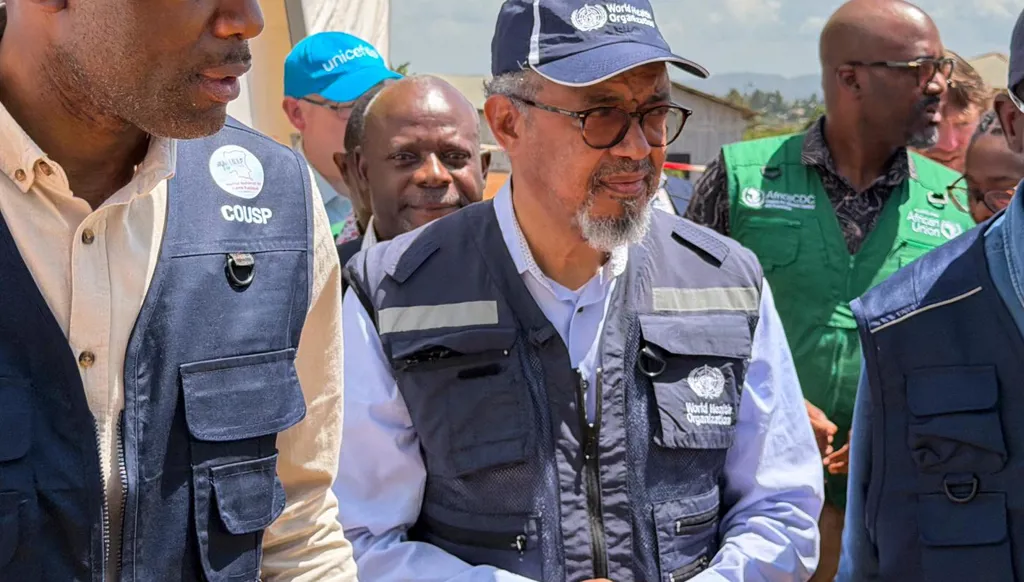


The Democratic Republic of Congo is facing a severe Ebola outbreak, with the epicenter located in Ituri province in the country’s east.
Since the outbreak was declared on May 15, health authorities have recorded more than 1,000 suspected cases and at least 246 deaths.
The virus has also spread beyond Ituri into North and South Kivu provinces, and across the border into Uganda, where nine cases and one death have been confirmed.
Officials warn that the true scale of the outbreak may be far larger than current figures suggest, given the challenges of monitoring and reporting in conflict-affected areas.
WHO’s Call for Precaution
World Health Organization Director-General Tedros Adhanom Ghebreyesus visited the epicenter to urge communities to take precautions, particularly during burials. He stressed that the bodies of Ebola victims remain highly contagious, and traditional practices of washing and handling the deceased without protective equipment pose grave risks.
“While we grieve for those we have lost, we must do everything we can so that we do not lose another,” he said. Tedros also highlighted that the Bundibugyo strain driving this outbreak has no approved vaccines or treatments, making early medical care and isolation essential for survival.
Local Response and Challenges
The Congolese government insists it has the experience to manage the crisis. Health Minister Samuel Roger Kamba Mulamba pointed to past successes in containing Ebola and called on neighboring countries to keep their borders open, warning that closures discourage transparency and cooperation.
Yet the response has been hampered by cuts to international aid, limited WHO funding following the U.S. withdrawal from the agency, and the ongoing armed conflict in eastern Congo. Fighting between government forces and the M23 militia continues to destabilize the region, complicating efforts to deliver aid and medical support.
How Ebola Spreads
Ebola spreads through direct contact with the bodily fluids of infected individuals or contaminated objects, and symptoms can take up to 21 days to appear. The WHO has cautioned that the reach of the outbreak is likely wider than reported, underscoring the need for vigilance and international cooperation.
With no approved vaccines or treatments for the Bundibugyo strain, supportive care such as rehydration and pain management remains the only option for patients.
The Path Forward
Tedros emphasized that community ownership of the response is as important as global support. He urged countries to reconsider border closures and to work alongside Congolese authorities to contain the disease. “Closing borders, as some countries have done, only discourages transparency.
The Democratic Republic of Congo is reporting the situation openly and transparently,” he said. As the outbreak continues to unfold, cooperation between local communities, national authorities, and international partners will be critical to preventing further spread.