Blue Moon and Mini Moon set to align on May 31 in rare sky event

Offbeat 30-05-2026 | 10:01

Blue Moon and Mini Moon set to align on May 31 in rare sky event

A rare full Moon will appear as both a Blue Moon and a Mini Moon, offering skywatchers a subtle but unique astronomical display visible worldwide.


Blue Moon and Mini Moon set to align on May 31 in rare sky event
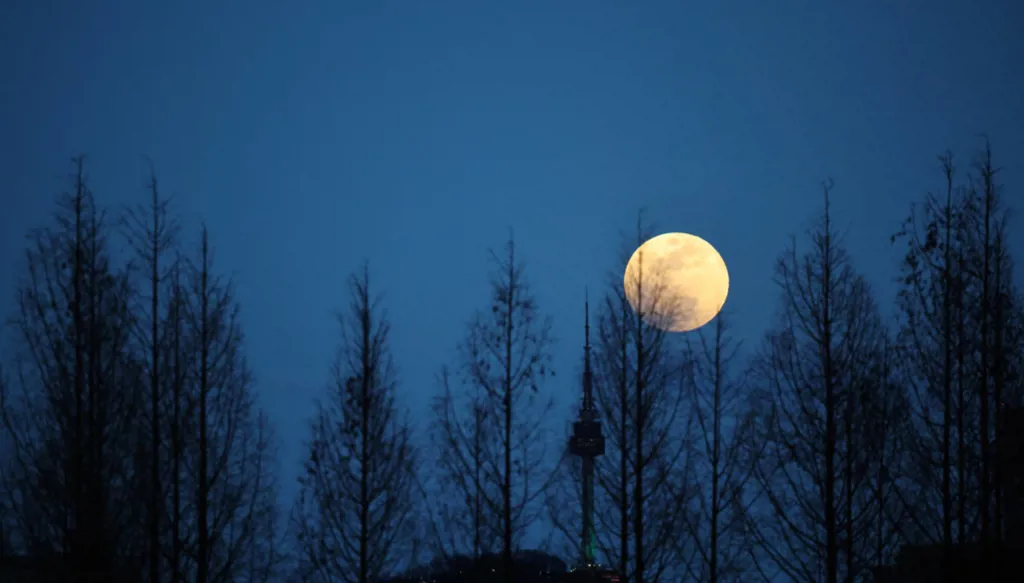
The full moon rises behind the trees in a peaceful scene adorning the sky.
Smaller Bigger


The world will witness a distinctive astronomical phenomenon on May 31, when two rare events occur simultaneously, as the Moon will appear as both a “Blue Moon” and a “Mini Moon.


Despite being called “blue,” the Moon will not actually turn blue; the name reflects an unusual coincidence between the lunar cycle and the Moon’s orbit around Earth.


According to a report published by National Geographic, the full Moon will reach its peak brightness at 8:45 a.m. UTC, which corresponds to 11:45 a.m. Saudi Arabia time on May 31. It will appear slightly smaller and less bright than a typical full Moon, although these differences are subtle and difficult to notice with the naked eye.


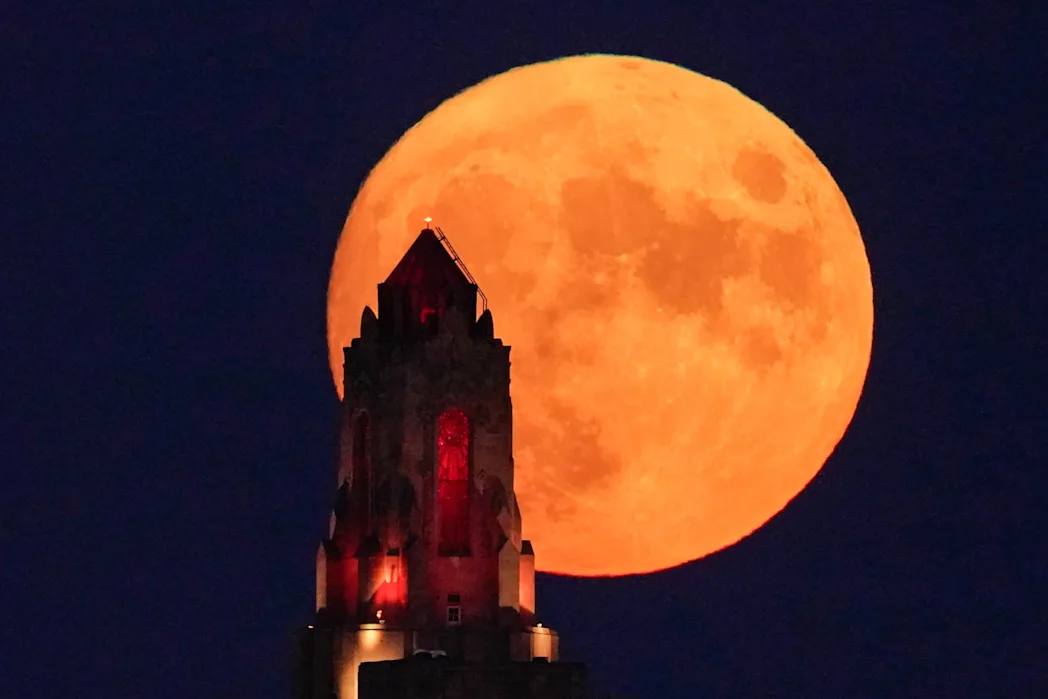
The Mini Blue Moon rises behind the skyline of Kansas City, Missouri, sparkling above the top of the Kansas City Power and Light Building, an Art Deco-style building (AP).


What is the Blue Moon?


The term “Blue Moon” does not refer to the color of the Moon, but to an astronomical definition related to the calendar. It is most often used to describe the second full Moon appearing within a single calendar month, a definition that applies to the full Moon in May this year.


There is another, less common definition referring to the third full moon in an astronomical season that includes four full moons instead of three.


While the English expression "once in a blue moon" suggests the rarity of the event, the Blue Moon phenomenon occurs approximately every two to three years due to the mismatch between the lunar cycle, which lasts about 29.5 days, and the length of the Gregorian months.


Why Doesn't the Moon Appear Blue?


Researchers suggest that the name dates back to old expressions used to describe rare or unexpected things. However, there have been a few instances in which the Moon appeared slightly blue following massive volcanic eruptions or widespread fires, as smoke and ash particles in the atmosphere scatter red light and allow more blue light to pass through.


One of the most famous of these instances occurred after the eruption of Krakatoa in 1883, when observers around the world reported seeing the Moon with a bluish tint.
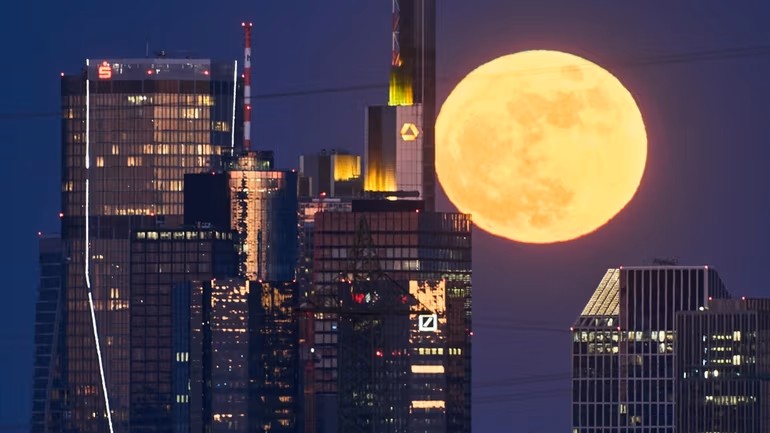


The full moon rises behind the towers of the financial district in Frankfurt, Germany (AP).


What is the Mini Moon?


The term “Mini Moon” refers to the oval shape of the Moon’s orbit around Earth, as the distance between them constantly changes.


The “Mini Moon” occurs when a full Moon coincides with the Moon reaching its farthest point from Earth in its orbit, a point known as the “apogee.” Conversely, a full Moon that coincides with its closest point to Earth is known as a “Super Moon.”


Due to this additional distance, the Mini Moon appears smaller and less bright than a regular full Moon, and it may appear about 10 to 15 percent smaller than a Super Moon. However, this difference is limited and difficult to notice without direct comparisons or photographs.


How Can the Phenomenon Be Observed?


The best time to observe the Mini Moon is after moonrise on the evening of May 30 or during the early hours of May 31, depending on the observer’s geographical location. If the sky is clear, the Moon can be seen toward the eastern horizon.


Viewing the phenomenon does not require the use of a telescope, but binoculars can help reveal details of the Moon’s surface, including craters and dark volcanic plains.


Astrophotography enthusiasts are advised to compare photos of this full Moon with photos of the upcoming Super Moon expected to appear on December 24, 2026, to observe subtle differences in the Moon’s apparent size.


Although the visual changes will not be dramatic, the conjunction of the “Blue Moon” and the “Mini Moon” on a single night offers sky enthusiasts a rare opportunity to enjoy one of the most distinctive astronomical phenomena of the year.