

Security or statehood? The doctrine clash shaping Israel-Lebanon talks



 Messenger
 Whatsapp
 Threads
 Email
Email
 Print
Print
 X
X
 Facebook
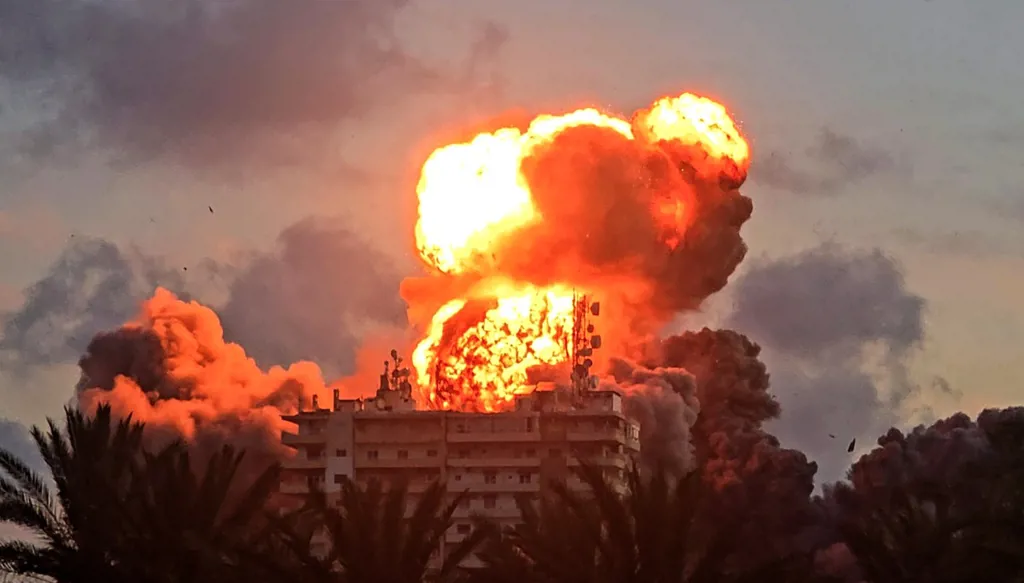


Sources familiar with the vision of Lebanese Army Commander General Rodolphe Haykal reveal that the military institution considers that a valuable opportunity was lost on the morning of March 2, when rockets were fired from Lebanese territory toward Israel.
According to this perspective, that incident could have turned into a completely different practical model. The army was ready to move and pursue those responsible for firing the rockets, while the government and Ministry of Justice were expected to support this course with strict legal and judicial measures to affirm that the Lebanese state would not allow any entity to drag the country into a military confrontation outside its authority.
Inquiries with Ministry of Justice sources about that phase indicate that Minister Adel Nassar was indeed preparing to move in this direction, based on a firm legal and judicial approach aimed at referring the culprits to the Judicial Council, thereby cementing the state’s responsibility in pursuing anyone who endangers Lebanon’s national security.
However, Israel’s rapid expansion of military operations following the rocket launch changed the situation. The priority shifted to addressing the fast-moving field repercussions, and the political and security conditions that could have enabled such a course became more complicated, leading to a retreat from the initial momentum and generating hesitation among decision-makers.
This, in turn, limited the ability to implement the Cabinet’s decision mandating the army and security forces to arrest anyone carrying weapons, regardless of affiliation, and to refer them to the competent judiciary.
In the view of the Lebanese army, the problem was not only in firing the rockets, but also in the state not being given the full opportunity to prove its ability to handle the matter itself.
If that path had succeeded, the situation today would look different. The state would appear before both the Lebanese public and the international community as the entity that initiates, pursues, and holds accountable, rather than one that merely reacts. It would have been possible to establish a new model in which any security breach originating from Lebanese soil is addressed by the state itself—legally, security-wise, and militarily. This is precisely the framework Lebanon seeks to establish today.
The Lebanese army does not present itself as merely a force deployed on the ground, but as a practical alternative to the Dahiya Doctrine. It implicitly argues that granting the Lebanese state full capacity to exercise its security and judicial powers is the only path to a sustainable ceasefire.
Stability is not achieved through mutual destruction, preventive raids, or keeping Lebanon an open arena for military interventions. Stability is achieved when the state becomes the sole authority over weapons, security, and law.
For this reason, the real battle behind the scenes is not just about borders, nor merely about a ceasefire, but about the identity of the entity that protects the borders.
Israel is still seeking guarantees for the security of its north. Lebanon is trying to persuade it, and the international community before it, that this guarantee can be provided by the Lebanese state itself.
If this path succeeds, the outcome will not be merely a cessation of war, but a transition from the Dahiya Doctrine to a doctrine of the state.
Disclaimer: The opinions expressed by the writers are their own and do not necessarily represent the views of Annahar.