Lebanon amid high-stakes Pentagon talks as U.S.-brokered Israeli negotiations and regional diplomacy intensify

Lebanon 30-05-2026 | 09:42

Lebanon amid high-stakes Pentagon talks as U.S.-brokered Israeli negotiations and regional diplomacy intensify

Ceasefire push stalls as military talks drag on, while Netanyahu and Israeli commanders escalate claims of battlefield gains against Hezbollah amid rising regional tensions.


Lebanon amid high-stakes Pentagon talks as U.S.-brokered Israeli negotiations and regional diplomacy intensify
The preliminary meeting between Israeli and Lebanese ambassadors at the U.S. Department of State (AFP).
Smaller Bigger


Lebanon anxiously awaited pivotal hours to uncover and receive detailed information about highly sensitive developments coinciding with the Lebanese-Israeli military negotiations in their first round at the Pentagon and the American-Iranian negotiations, which would at least mean a ceasefire for Lebanon and then the repercussions of the “understanding” on it due to Hezbollah’s organic connection with Iran.


While the initial results related to the second track, which did not lead to the announcement of an understanding yesterday, do not bear positive news for Lebanon naturally, the bet on the progress of Lebanese-Israeli negotiations under the auspices of the American administration also requires deep scrutiny, reflecting the enormous difficulties faced by Lebanon amid a destructive regional free-for-all affecting most of the south. However, the high level of participation, management, and sponsorship by two senior American officials at the U.S. Department of Defense in yesterday’s negotiation session reflected a serious American decision to push the Lebanese-Israeli track toward breakthroughs, albeit amid significant complexities.


Another notable development in this round was that, as the meeting began at 3:00 PM Beirut time at the Pentagon between the Lebanese and Israeli military delegations, President Joseph Aoun received a phone call from U.S. Secretary of State Marco Rubio at the same time.


Official information from the Presidency reported that President Aoun affirmed during the call the necessity of exerting all possible efforts to reach a ceasefire, considering it the essential gateway to transitioning to any other step and the necessary passageway to prepare the appropriate conditions for addressing various pending files and issues.


For his part, Marco Rubio renewed the U.S. administration’s commitment to continue its efforts to stabilize the outcomes of previous Washington meetings, as well as support Lebanon’s stability, independence, and sovereignty over its entire territories, and its full natural right to self-determination.


The U.S. Department of State announced that Secretary of State Marco Rubio informed Lebanese President Joseph Aoun of the U.S. administration’s support for the Lebanese government’s efforts to achieve peace, praising President Aoun’s courage in seeking direct negotiations with Israel. The U.S. Department of State confirmed in a statement that Rubio emphasized during the call with Aoun the necessity for Hezbollah to immediately cease its attacks on Israel, considering the party responsible for the current fighting in Lebanon. It noted that Hezbollah continues attempts to obstruct talks with Israel at the expense of the Lebanese people.


Information obtained by “Annahar” from Washington stated that a meeting was held the day before yesterday between the Lebanese delegation and the American side at the U.S. Department of Defense.


The information indicated that the outcomes of yesterday’s meeting will be built upon for subsequent steps, especially regarding expected meetings at the level of the U.S. Department of State and the upcoming diplomatic process.


The military delegation for the negotiations included six officers led by Brigadier General George Rizk Allah. Information reported that the President and Army Commander General Rodolphe Haykal followed the Pentagon meeting from the presidential palace with a group of advisors, insisting on a ceasefire before any other step. It noted that during several hours of discussions at the Pentagon, Lebanon insisted on its position that securing a ceasefire is the necessary gateway for other issues, while the Israeli Broadcasting Authority revealed that the Israeli delegation rejected Lebanon’s request to withdraw from areas occupied by Israel in the south as long as the threat exists. The Lebanese delegation insisted on the demand for a ceasefire and related points, working to prevent the discussion from deviating from this demand. It pointed out that if a ceasefire is not secured, discussion of all other points will remain suspended or hypothetical.


The information indicated that the American sponsor informed the Lebanese and Israeli military negotiators that the priority is the security and military track, and that any progress on this track will inevitably lead to progress in the political track.


By midnight, military talks were ongoing after about nine hours since their start; however, according to the information, they had not reached a resolution on the key issue related to announcing a secured ceasefire as Lebanon insisted, while Israel rejects any withdrawal from the right to undertake operations in response to any threat from Hezbollah. It was reported that several other clauses were discussed in the round, related to the monitoring mechanism for the ceasefire, developing the mechanism system, the issue of army deployment to ensure exclusive weaponry, Israeli withdrawal from the south, as well as support for the Lebanese army and the proposal for a demilitarized experimental zone.


Meanwhile, Israeli Prime Minister Benjamin Netanyahu rushed to announce that “Israeli army forces have crossed the Litani River south of Lebanon and control overseeing areas.”


Netanyahu said during a visit to Israel’s northern border with Lebanon: “I came here with the Defense Minister and the Deputy Chief of Staff, with the Northern Command Commander, the Division Commander, and the commanders you see here, with the soldiers on the ground.”

He added: “I spoke with the brigade commanders who are now inside the area. I listened to them and also to the soldiers, some of whom are here behind me. There is tremendous fighting spirit here. From here, the battle against Hezbollah is managed in the north.”


The Israeli Prime Minister continued: “I am compelled to tell you that there are extremely impressive results here. Our forces crossed the Litani River and ascended to the commanding (overseeing) areas. We also operate in Beirut and the Bekaa across the entire front, delivering crushing blows to Hezbollah.”


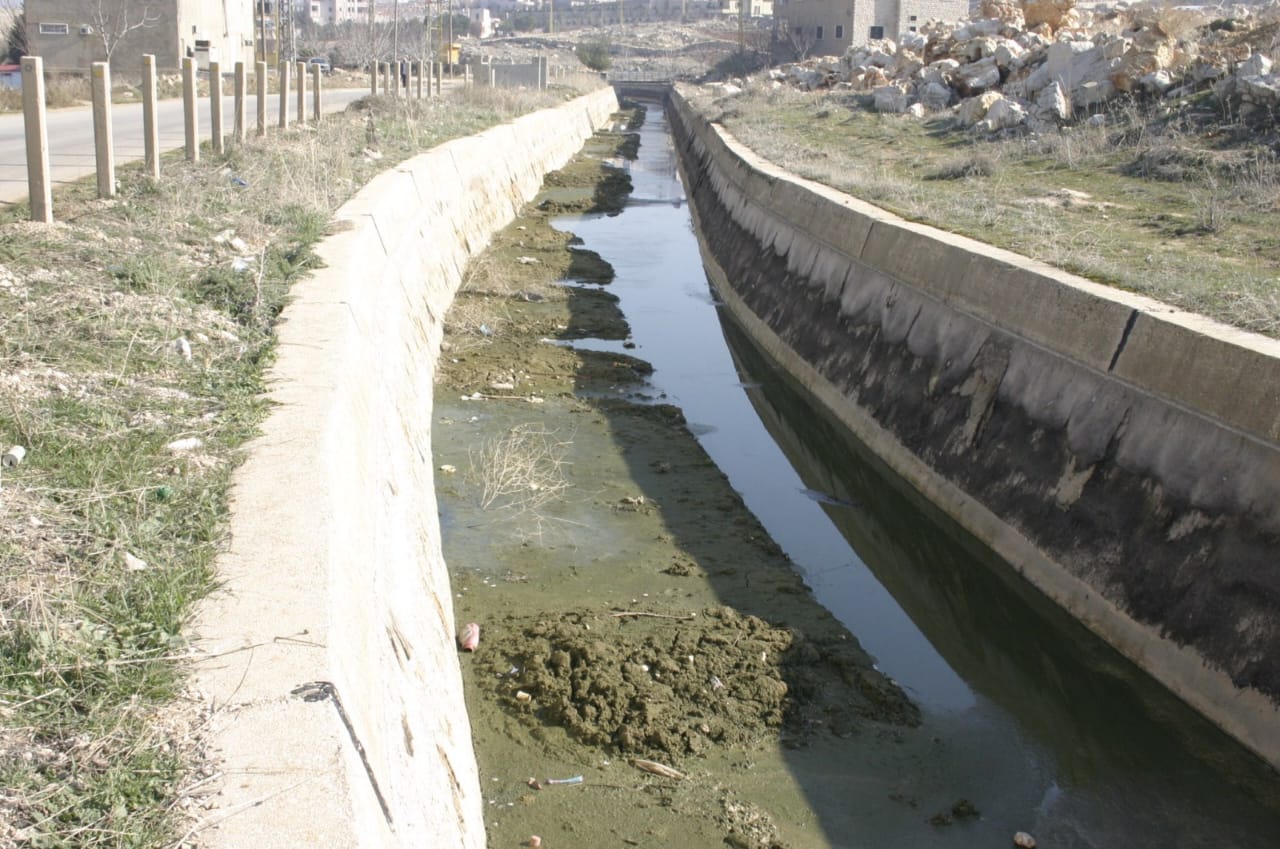
Flow of the Litani River (Annahar Archive).


He confirmed: “When I say this, it’s not just a passing comment. The brigade commanders and soldiers tell me that in every contact with them and in every clash, we eliminate Hezbollah elements and also make them flee.” Benjamin Netanyahu added: “We hit Hezbollah relentlessly and eliminate their elements in every confrontation.”


Netanyahu further stated that Hezbollah is in a “state of collapse,” affirming the continuation of Israeli military operations on multiple fronts within Lebanon.


Israeli Chief of Staff Eyal Zamir, in turn, confirmed that there is no place where Hezbollah enjoys “immunity,” stressing that the yellow line does not constrain their operations in Lebanon.


He said: “We have eliminated more than 7,500 Hezbollah members since the war began.” He added: “The cumulative and multidimensional strike against Hezbollah is severe and unprecedented.”


The Israeli newspaper “Maariv” revealed that Northern Command leadership estimates in the Israeli army indicate that the Lebanese Hezbollah is undergoing difficult circumstances and is pressuring Iran to reach an agreement for a ceasefire in Lebanon. The newspaper quoted a military source stating that “the operations and efforts implemented by Israeli forces in southern Lebanon have significantly weakened Hezbollah,” resulting in the killing of thousands of its members and the destruction of its military infrastructure, as confirmed by Israeli army data. The military source said Hezbollah now faces severe resource losses.