

The UAE food security model: Building resilience beyond agriculture
A long term national strategy that transforms food security from local production into a global system of investment, technology, reserves, and supply chain control.



 Messenger
 Whatsapp
 Threads
 Email
Email
 Print
Print
 X
X
 Facebook


In a country that imports more than 90% of its food, food security in the UAE goes beyond agriculture to become a long term sovereign project: how does a state with limited water and arable land ensure that food remains available, safe, and price stable, even during wars, the closure of sea routes, energy crises, and disruptions in supply chains?
The Emirati response has not relied on a single bet, but on an integrated network: smart domestic agriculture, strategic reserves, global investments in land and commodities, ports and logistics, emergency legislation, and partnerships with the private sector. Therefore, the statement that “the UAE has secured its food for the next 100 years” is not literal. It does not mean that the United Arab Emirates stores enough food to last a century, but rather that it has built a model that reduces its vulnerability to future shocks.
The story begins with acknowledging the problem: the UAE is a wealthy country, but it faces difficult climatic conditions. High temperatures, scarce groundwater, and limited agricultural land make traditional local production constrained. For this reason, it launched the National Food Security Strategy 2051, which aims for the country to rank among the best globally in the food security index and to develop a food system based on innovation, local production, and diversified import sources.
Smart agriculture instead of confronting the desert
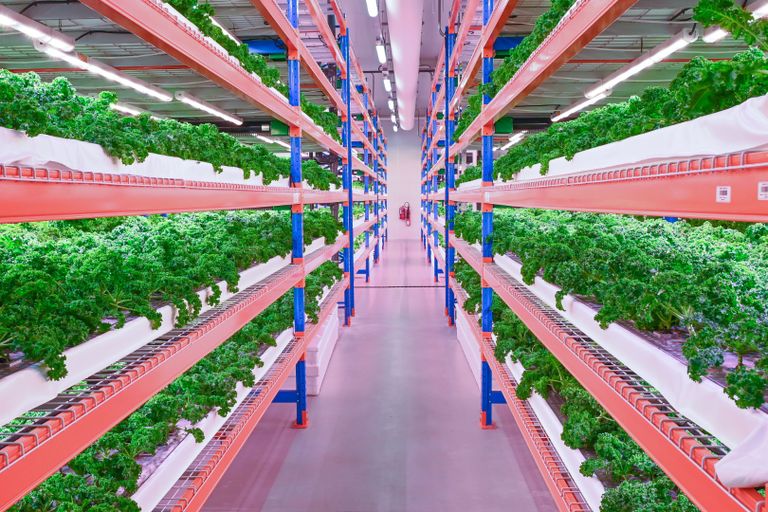
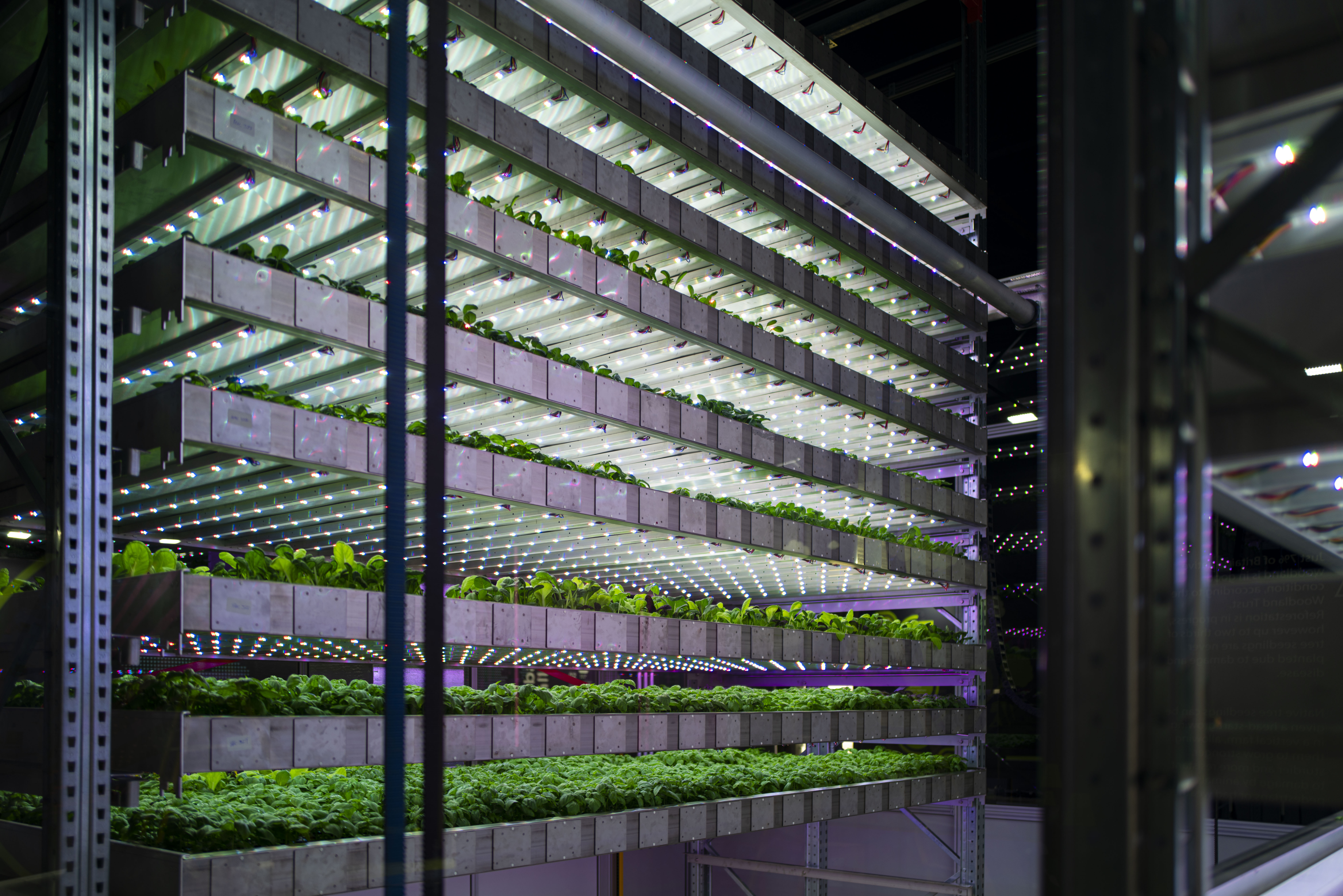
The most significant shift lies in the concept of agriculture itself. Instead of trying to confront the desert using traditional methods, the UAE has turned to vertical farming, hydroponics, and smart agriculture. In Dubai, “Bustanica” was launched as the world’s largest indoor vertical hydroponic farm, with an investment of 150 million dirhams (40 million dollars). The facility spans 330,000 square feet and produces more than one million kilograms of leafy vegetables annually, while saving over 250 million liters of water each year and using about 95% less water compared to conventional farming. These figures capture the essence of the Emirati experience: producing local, clean food close to consumers without depleting water resources.
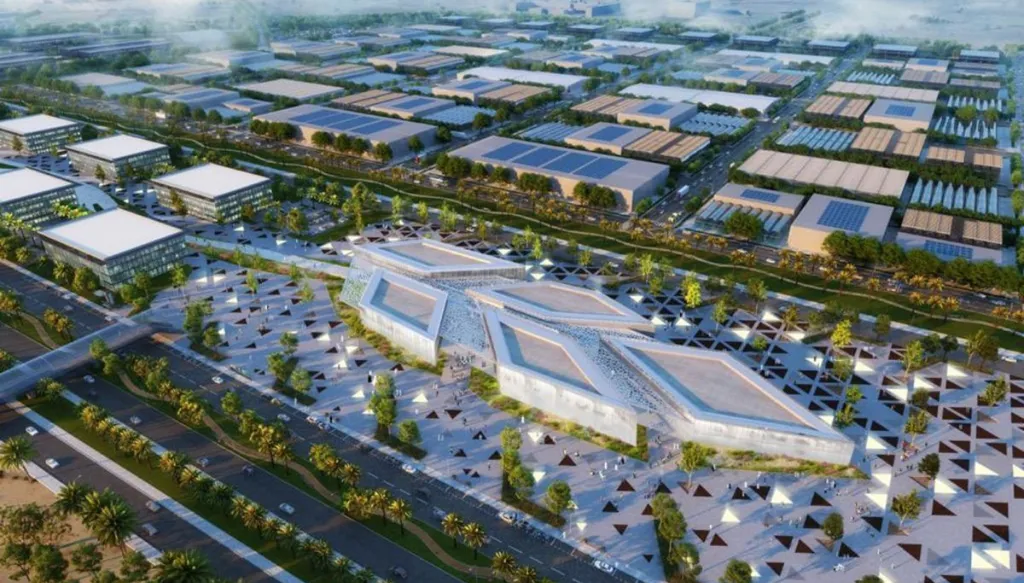
However, the UAE is not relying on vertical farms alone. The Food Tech Valley project in Dubai represents an attempt to build an integrated city for the future of food: vertical farms, aquaculture, research and development laboratories, cold storage and logistics hubs, as well as marketplaces for startups and investors. Upon launching the project, Sheikh Mohammed bin Rashid Al Maktoum, Vice President and Prime Minister of the United Arab Emirates and Ruler of Dubai, stated that “food and medicine are strategic sectors” to ensure a prosperous and sustainable future for coming generations. In the same project, it was announced that more than 60% of its area would be dedicated to advanced farming, and that it would produce more than 300 crop varieties using modern technologies.
An economic sector, not an emergency file
The economic figures reveal the scale of the UAE’s commitment. Food and beverage investments in the UAE have reached around 62 billion dirhams (approximately 16.9 billion dollars), meaning food security is no longer purely a defensive file but has become an independent economic and investment sector. The UAE hosts more than 500 companies and facilities specializing in food manufacturing, while the Food Tech Valley project serves as a platform to attract further local and foreign investment into this sector.
In Abu Dhabi, ADQ is moving on a parallel track: building a global food basket. ADQ owns or holds stakes in key companies such as Silal, Agthia, Al Dahra, Louis Dreyfus, and Unifrutti. These are not incidental names, but links in a chain that spans farming, production, trading, storage, and distribution. Al Dahra, for example, operates in more than 20 countries and owns or leases over 350,000 acres of land, making it one of the world’s largest fodder suppliers. Louis Dreyfus is one of the largest global players in grain and oilseed trading, with trading volumes exceeding the UAE’s grain and legume consumption by more than 20 times. In this way, the UAE does not wait for food at its ports; it becomes a stakeholder in the global supply chain itself and helps manage it.
One of the most important deals was ADQ’s entry into Unifrutti, a global fresh fruit group operating across four continents. The company sells around 560,000 tons of fruit annually, manages more than 14,000 hectares of farmland, and serves over 500 customers in 50 countries. The deal was valued at approximately 3.05 billion dirhams (830 million dollars). According to Gil Adotevi Executive Director of Food and Agriculture at ADQ, the investment aims to “enhance food resilience in the UAE and build a global platform for fresh produce.”
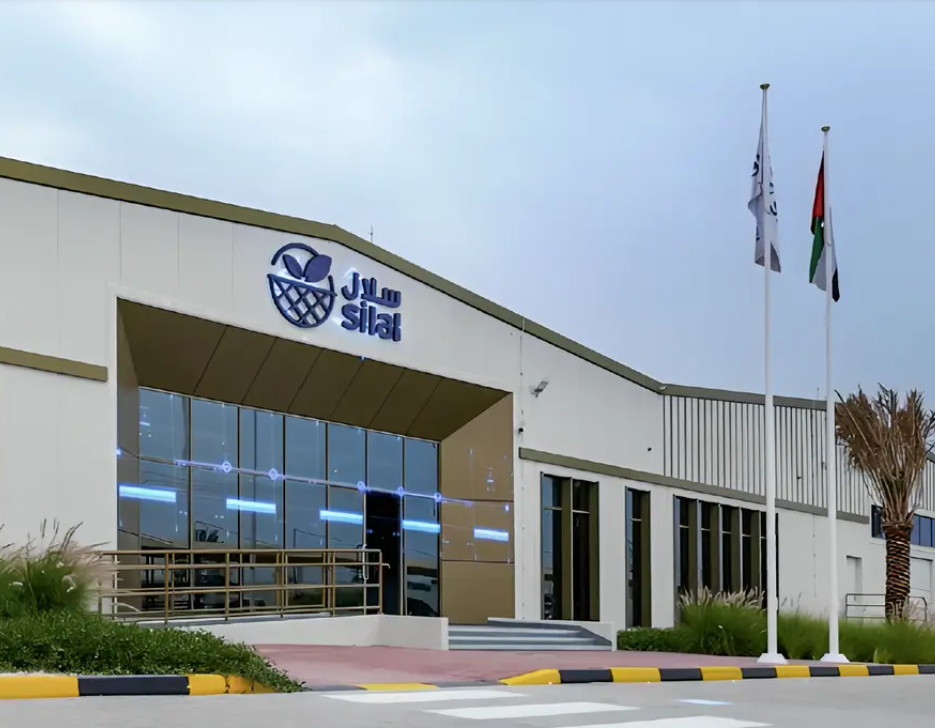
Domestically, Silal plays a central role in connecting local farmers to the market. It was established to support supply chains, diversify food sources, increase local production of fruits and vegetables, and manage procurement programs and strategic inventories. ADQ data indicates that the creation of Silal contributed to a 55% increase in local fresh production, and that it has become the leading supplier of locally produced fresh food in the UAE. The company has also introduced technologies such as the Internet of Things to monitor crop growth and improve irrigation, fertilization, and farm management.
Strategic stockpiles and market protection
Alongside production and investment, the UAE has built a legal layer of protection. In 2020, a federal law was issued to regulate the strategic stockpile of food commodities, aiming to organize supply during crises, emergencies, and disasters. The law does not only address storage, but also mandates knowledge of stock locations, quantities, suppliers, and intervention mechanisms when needed. In March 2026, the Minister of Economy and Tourism, Abdullah bin Touq Al Marri, announced that the strategic stockpile of essential goods is sufficient to cover the market for four to six months, with daily monitoring of stocks and prices through a digital platform connected to 627 major retail outlets, in addition to field inspection campaigns.
This point is highly significant: food security does not only mean having rice, wheat, and oils in warehouses. It also reflects the state’s ability to prevent panic, monopolies, and unjustified price spikes. For this reason, the UAE has focused on market monitoring, diversifying suppliers, and distributing stockpiles across different regions so that no external disruption immediately becomes a domestic crisis.
Persistent challenges within planning
Despite all of this, the model is not without challenges. Heavy reliance on imports remains a reality, vertical farming is costly and energy intensive, and climate change may increase pressure on global water and food systems. The difference is that the UAE does not treat these risks as sudden emergencies, but as part of national planning.
In conclusion, the UAE has not secured 100 years of food in the sense of storage. Rather, it has built something more important: a food resilience system. It produces part of its food locally using advanced technologies, holds stakes in global food supply chains, stores essential commodities, monitors the market digitally, and transforms food into a strategic investment sector. In a world of rising wars, extreme climate events, and trade disruptions, this is the model: food security is not created only in wheat, corn, and rice fields, but also in laboratories, ports, sovereign funds, laws, and warehouses—and most importantly, in sound strategic decision making.