

Gaza and Lebanon: Wars without end, victims without pause
As Eid passes without celebration, the violence continues to expand in silence, reshaping borders, lives, and the future of an entire region.



 Messenger
 Whatsapp
 Threads
 Email
Email
 Print
Print
 X
X
 Facebook
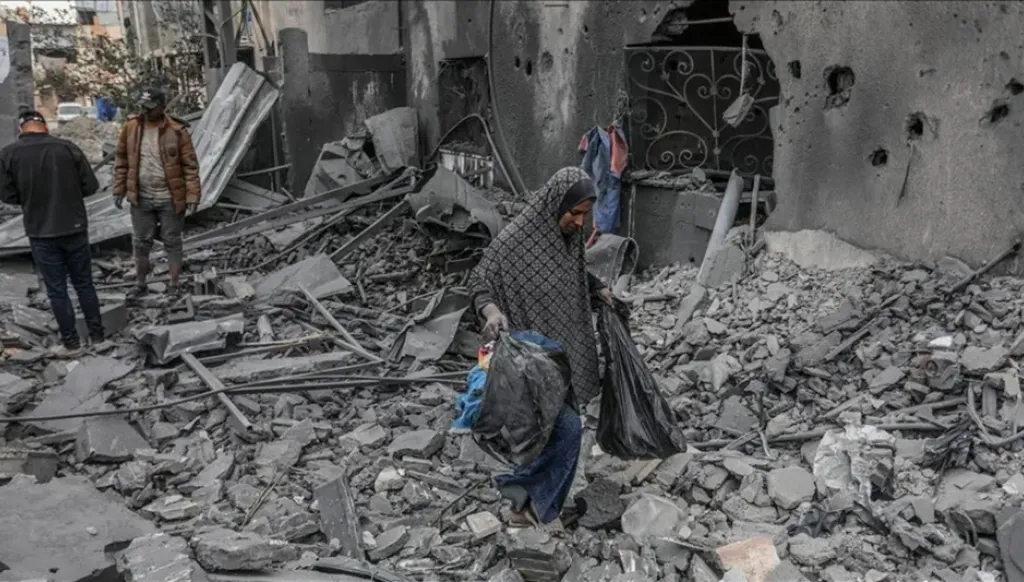


Wednesday was not a day of celebration, neither in Gaza nor in Lebanon. The victim does not celebrate.
In Gaza, there are no signs of Eid. A whole population lives in tents and among the rubble, with no money and nothing but hunger and suffering. Aid barely covers the bare minimum for survival, so how could there be sacrificial animals, which are at the heart of the holiday?
In Lebanon, there is no taste of Eid either. Every day, dozens of people are killed under brutal Israeli bombardment that claims to be searching for fighters but instead brings down entire buildings on civilians, while also targeting ambulance crews, civil defense teams, and journalists.
The war on Gaza has not stopped
Between Gaza and Lebanon there are nearly three million victims. Those killed by shells are not the only victims; the survivors are also victims, and for a long time, according to the facts.
The Gaza war did not end with the announcement of a ceasefire in January 2025, after two years of brutal war that destroyed the territory’s infrastructure and caused more than seventy thousand deaths, in addition to hundreds of thousands of wounded.
Israel continues to strike the territory and assassinate Hamas leaders, as if it had an international mandate to eliminate what remains of potential resistance capabilities, after having reduced the available space for Palestinians by half.
The war on Gaza continues in silence. Israel is carrying out its military plan alongside a political plan that faces no serious resistance or objection from the world. The highly extremist government of Benjamin Netanyahu enjoys full American cover in Gaza, while the West appears powerless in the face of Trump’s offensive against it regarding the Ukraine war, his demand for the Danish island of Greenland, and high tariffs, if it is not already complicit, despite some humanitarian positions here and there. Meanwhile, the wars in the Middle East have placed Arab countries in the midst of a complex conflict they did not choose to participate in.
The number of victims of the ongoing aggression on Gaza since the ceasefire is approaching one thousand, and the number of victims of the war on Lebanon is approaching three thousand five hundred, and the toll continues to rise. Agreements mean nothing to Israel, which violates them daily, exploiting loopholes, ambiguous language, and deliberately vague provisions.
Southern Lebanon: anew Gaza?
Walid Jumblatt said about two weeks ago that southern Lebanon is a small Gaza. He was being optimistic. Today, the south is Gaza in full form. While the number of victims is lower, thanks to the population’s ability to move to safer areas, the land itself is being burned just as Gaza was, and perhaps even more.
The stagnation of US-Iranian negotiations gives Israel a time window to continue its war in Lebanon, with no clear end in sight. This may well be intentional. Israel remains deeply involved in negotiations in Pakistan, Doha, and elsewhere, despite repeated claims that Trump is restraining his ally Netanyahu.
In reality, Trump appears to be giving Netanyahu a green light to continue the war in Lebanon. The negotiations sponsored by Washington between Lebanon and Israel appear to be part of the theatrical staging of the Israeli plan. The negotiations ended before they even began.
The Lebanese state is domestically and externally powerless. The state is at its weakest, and society is deeply divided over the war, over Hezbollah’s weapons, and over responsibility for causing the war. Lebanon today resembles its situation in 1982, when Israel invaded it all the way to its capital Beirut.
Israel has crossed the yellow line it had set for what it called the buffer zone, which erased the built environment south of the Litani River, and is now working to form a so called safe zone, a process that could expand in ways whose end cannot be predicted. It has not defined the new line, but its warnings indicate the extent it may reach. The Zahrani River appears to be a new line, but it may also be an imaginary one, just like its borders that know no fixed lines.
In practical terms, southern Lebanon today is partly occupied and erased, and partly under fire. The two major urban centers, Tyre and Nabatieh, are hostage to the threat of invasion.
Pressure on the ground
Israel is exerting pressure on the battlefield to shape negotiations and preempt any agreement regarding Iran. Lebanon, however, appears to be the second major victim after Gaza. This trajectory is likely to generate new forms of resistance, with new tools, whether under Hezbollah or other emerging actors.
Disclaimer: The opinions expressed by the writers are their own and do not necessarily represent the views of Annahar