

Iran–US talks edge forward amid escalation in the Gulf and disputed terms
As negotiations advance on a potential phased agreement between Tehran and Washington, unresolved security guarantees, economic relief measures, and renewed military skirmishes around the Strait of Hormuz continue to raise doubts over whether a final deal can hold.



 Messenger
 Whatsapp
 Threads
 Email
Email
 Print
Print
 X
X
 Facebook
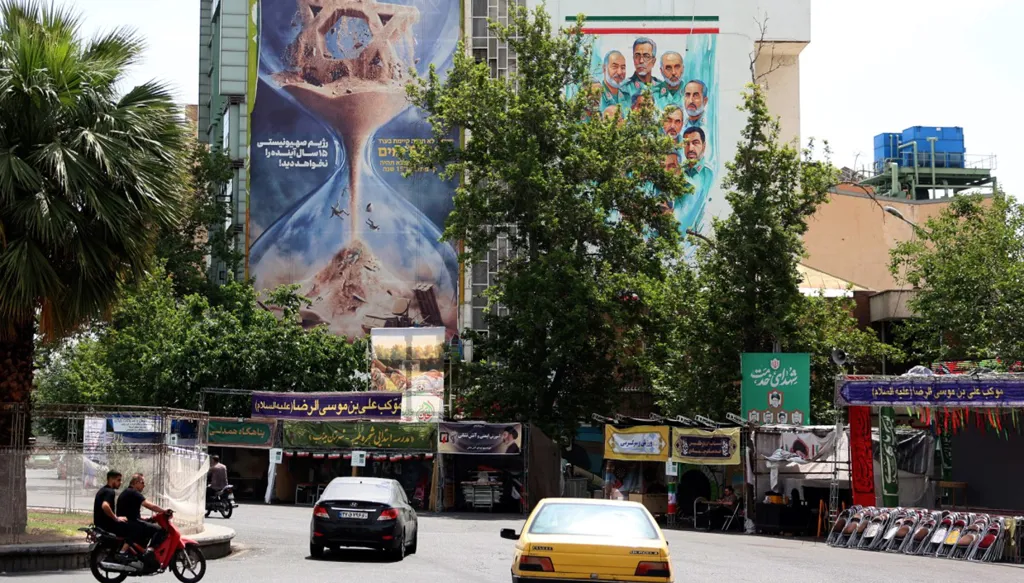


Amid conflicting reports about Iran and the United States moving closer to an understanding to end the war, Iranian state institutions have gradually begun acting as though the level of external threats has relatively decreased and that the post military confrontation phase is closer than ever. This has included the reconnection of international internet, the resumption of domestic flights, and the return of activity to the Tehran Stock Exchange.
However, these indicators coincided with a new field escalation in the waters of the Arabian Gulf and a violation of the ceasefire, which raises serious questions about the ability of negotiations to pass the test of the Strait of Hormuz and reach a final agreement.
Over the past few days, Iranian media has focused on covering the first memorial ceremony for the family of what it called the martyred leader of the Islamic Republic, Ali Khamenei, which observers see as additional evidence of reduced fears of a major military strike in the near term.
In the 28 February strike in which Khamenei was killed, his daughter, daughter in law, son in law, and grandson were also killed. After the end of the war, it is planned to hold funeral ceremonies for the deceased leader lasting three days in Tehran, Qom, Mashhad, Najaf, and Karbala, although these arrangements have not yet been officially finalized.
The Iranian street between vengeance and negotiation
On the other hand, the atmosphere inside Iran does not reflect a consensus on deescalation, as nightly gatherings that began since the start of the war continue in Iranian city squares amid a popular mood rejecting any possible understanding with the United States, with participants viewing themselves as avengers and seekers of retribution for the blood of the martyred leader.
Despite repeated warnings against turning these gatherings into a platform to weaken diplomacy or attack the negotiation team headed by Mohammad Bagher Qalibaf, some members of parliament and political activists continue their attacks on the option of negotiation.
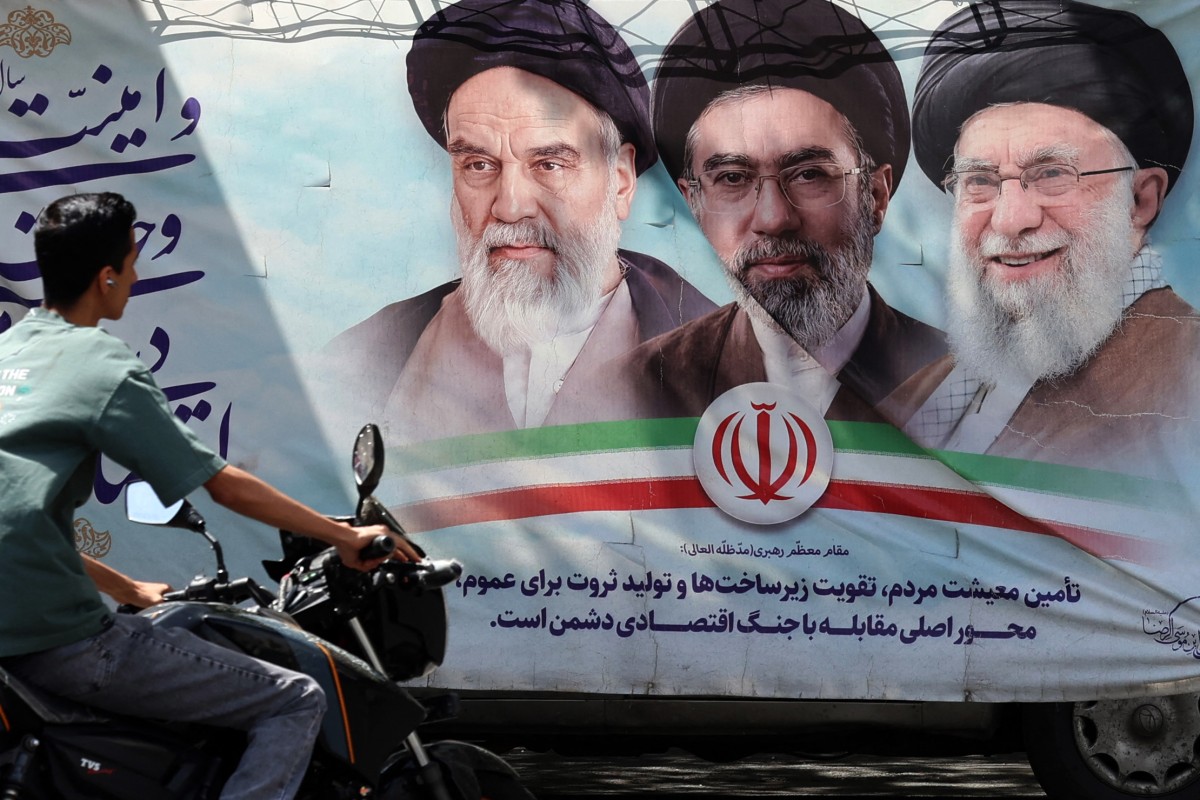
The situation has even reached the point where the leader of the Islamic Republic, Mojtaba Khamenei, sent a written message on the occasion of the start of the third year of the twelfth session of the Islamic Consultative Assembly, in which he praised Qalibaf while at the same time calling on political elites, especially members of parliament, to avoid futile disputes and the exaggeration of social divisions.
In parallel, media outlets and social networks are circulating reports claiming that the understanding between Tehran and Washington has advanced significantly, and that US President Donald Trump has, according to Israeli media, sent a draft agreement consisting of 14 clauses to Israel and Arab countries to provide feedback before a final decision is made.
However, reliable information indicates that despite the progress made in recent days, there are still disagreements over some clauses and wording, while exchanges of messages between the two sides continue.
Iranian conditions and the first phase of understanding
Among the main unresolved points is Iran’s demand for clear American guarantees that signing an agreement would mean a permanent end to the war across all theaters of confrontation, including Lebanon, and that it would prevent both the United States and Israel from resuming military operations after the understanding is signed.
Recent Israeli strikes on southern Lebanon and the targeting of officials from Hamas have raised concern within Iranian decision making circles. This concern reached a level where Mojtaba Khamenei again, in a message to pilgrims, reiterated what his father used to say about the disappearance of Israel within the next fifteen years, alongside the installation of a large poster in Palestine Square in Tehran suggesting that the existence of Israel is nearing its end.
Tehran has also demanded that any understanding be announced jointly and by mutual agreement, out of concern that Donald Trump could present the deal unilaterally in a way that allows him to frame it as an American victory.
According to what has been circulating, the release of 12 billion US dollars of frozen Iranian assets, the start of lifting the maritime blockade, and the initiation of reopening the Strait of Hormuz represent the first phase steps of a potential agreement, followed by a 60 day period, extendable, to negotiate the nuclear file.
In this phase, Iran would not commit to anything related to enriched uranium, nor to suspending enrichment activities, nor to shutting down nuclear facilities.
Tehran has also requested a freeze on sanctions that prevent the sale of oil and petrochemical products throughout the negotiation period.
Sources familiar with the matter indicate that the visit of Mohammad Bagher Qalibaf, Foreign Minister Abbas Araghchi, and Central Bank Governor Abdulnaser Hemmati to Qatar achieved progress on the issue of releasing part of the frozen Iranian funds, although disagreements remain on some details.
On the other hand, Iranian state broadcasting claimed on Wednesday evening that the so called seven new Iranian conditions for any agreement with the United States include a permanent end to the war, the withdrawal of American forces from areas surrounding Iran, lifting of sanctions, release of frozen funds, payment of 300 billion US dollars in compensation, and the consolidation of Iran’s influence over maritime navigation management in the Strait of Hormuz.
Some analysts believe these conditions were formulated in a hardline tone to absorb public anger among segments opposed to the understanding, rather than reflecting the actual state of negotiations.
Hormuz skirmishes complicate the scene
In the midst of this political back and forth, Iranian media announced that four boats attempted to pass through the Strait of Hormuz without authorization, and that Iranian naval forces fired warning shots forcing them to retreat, noting that one of the vessels was a US oil tanker that had turned off its radar system.
The US forces responded by striking an area near Bandar Abbas airport, without causing human or material losses, according to the Iranian account.
However, Tehran responded on Thursday morning by launching missiles at a US military base in Kuwait, which was said to be the point from which the attack had originated, while the Islamic Revolutionary Guard Corps announced that the response was a serious warning confirming that any aggression would not go unanswered.
This escalation also came in the context of accusations against United States Central Command of violating the ceasefire and causing the death of several Iranian forces in recent days, which sparked widespread anger inside Iran.
Nevertheless, observers believe that these scattered clashes, despite their ability to slow down negotiations, do not appear sufficient to prevent reaching a final agreement that is likely to be announced next week.