

Tyre under pressure: Strategic, humanitarian, and political stakes of a city in crisis
Beyond the immediate violence and displacement threats, Tyre’s position in southern Lebanon makes it a focal point where humanitarian consequences, regional security calculations, and deep political fault lines intersect.



 Messenger
 Whatsapp
 Threads
 Email
Email
 Print
Print
 X
X
 Facebook
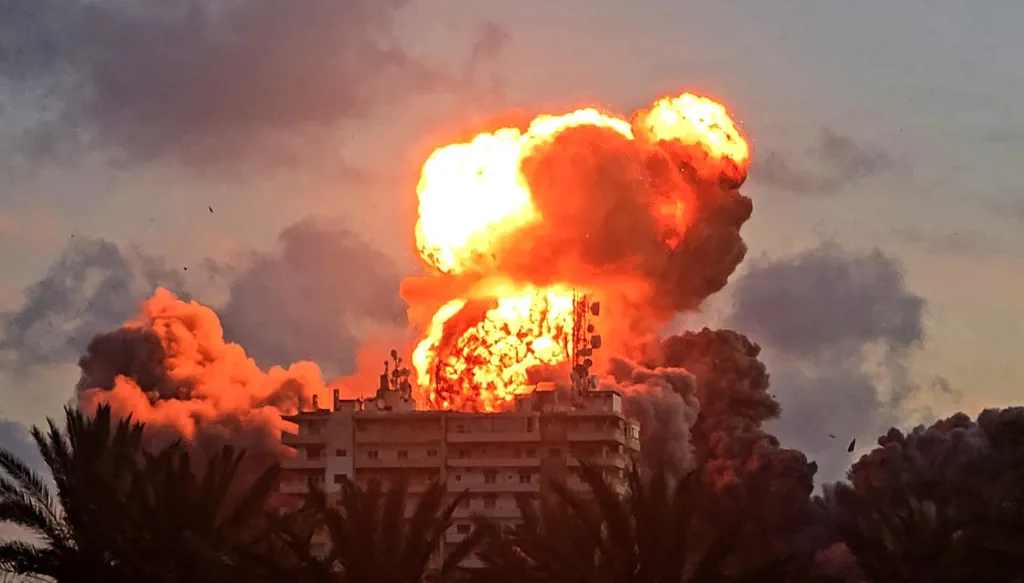


Suddenly, the Israeli army turned its attention to the city of Tyre in southern Lebanon, after having partially spared it since the beginning of last March. It threatened its residents, demanding that they evacuate the city, and on Thursday it announced that it had begun striking infrastructure belonging to Hezbollah in and around it.
The statement, which was accompanied by maps marking several buildings in red, said: “You are located near buildings used by the terrorist Hezbollah. For your safety, you must evacuate immediately and move north of the Zahrani River.”
The official Lebanese National News Agency reported that two waves of Israeli airstrikes hit the city of Tyre and an area to its east on Thursday morning, one of which targeted a building and caused a fire to break out.
Despite the pressure and the bombardment, Tyre remained a refuge for tens of thousands of displaced people from surrounding areas and towns, which led its municipality yesterday to request that the displaced move to the Sports City in Beirut.
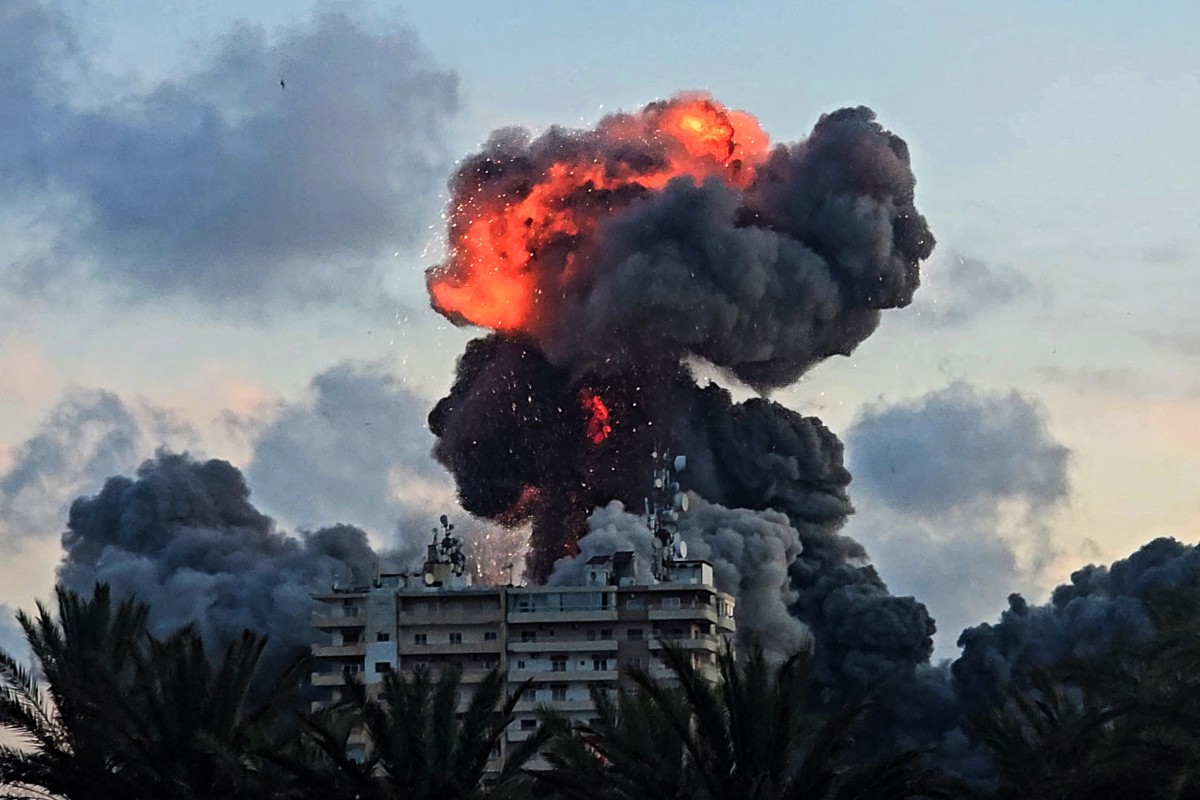
Tyre is not like any other city. Despite its historical value as a Phoenician city that contains many important archaeological sites, it has also been a historic center linked to Imam Musa al Sadr, where the “Movement of the Deprived” later known as the Amal Movement was launched.
UNIFIL has maintained a close relationship with the city of Tyre since the late 1970s because the city is considered one of the most important logistical and administrative centers for the international force operating in southern Lebanon.
Its earlier partial neutralization was seen as a form of neutralizing Nabih Berri, the Speaker of the Lebanese Parliament, who was negotiating on a different front, before he later set a position rejecting any direct negotiations with Israel. In addition, strikes on Tyre would accelerate the displacement of the international force, which has become confined inside its unsafe positions.
The historic city also includes several archbishoprics that continue to form a center of coexistence and social interaction. It is a key tourist destination in the south, as the presence of UNIFIL there has influenced lifestyles, nightlife, and access to the sea. Imam al Sadr was keen to preserve the city’s human and interactive character, and this approach has been maintained. Archbishops are still residing there to this day under bombardment and threats.
Tyre holds particular political importance in Lebanon and the region, stemming from the overlap of its history, geography, and social and political role, which can be summarized in the following points.
- It is considered one of the most important cities in southern Lebanon and represents a major demographic and political weight, making it present in any equation related to the south or to the internal Lebanese situation.
- The city gained major political significance during the Israeli occupation of southern Lebanon between 1978 and 2000, as it was one of the areas directly affected by the conflict with Israel. After the Israeli withdrawal in 2000, Tyre became a political and media symbol of liberation and resistance.
- The city and its surroundings form one of the main areas of influence for the Amal Movement, which gives it direct weight in Lebanese political and sectarian balances, especially within the Shia community.
- Tyre witnessed a significant presence of Palestinian refugee camps, such as Rashidieh and El Buss, which made it historically connected to the Palestinian cause and to related security and political developments.
- The name of Imam al Sadr is deeply connected to Tyre, to the extent that the city is considered one of the most important bases of his religious, social, and political presence in Lebanon.
When Imam al Sadr came to Lebanon in the late 1950s, he settled in Tyre and assumed leadership of the Supreme Islamic Shia Council in the city. From there, he began building his influence within the Shia community and within Lebanese public life.
What consequences to the displacement of Tyre?
Any large-scale displacement of the city of Tyre represents a major danger, not only on the humanitarian level but also on the political, security, economic, and symbolic levels. Israel considers that it would have significant implications, in addition to its objective of emptying the south of its population and turning it into a population free area resembling scorched earth.
The displacement of Tyre would lead to humanitarian chaos and large internal displacement due to the number of people who have already been displaced into it.
It would create massive pressure on Beirut and other areas.
It would turn the region into an open arena of confrontation.
It would impose a new security reality that could affect the deployment of the Lebanese army and UNIFIL.
It would raise the level of political tension within the Shia community due to supporters of Amal blaming Hezbollah for the displacement and destruction.
It would deepen internal Lebanese divisions over the war, weapons, and the state.
It would generate pressure on major political forces, especially the Amal Movement and Hezbollah.
For this reason, the displacement of Tyre is not viewed only as a local event, but as a shift that could change the balance of the entire southern Lebanon region.